life expectancy, racial gap, healthcare

Older Americans Are Working Longer As Social Security Reforms Are Spotlighted

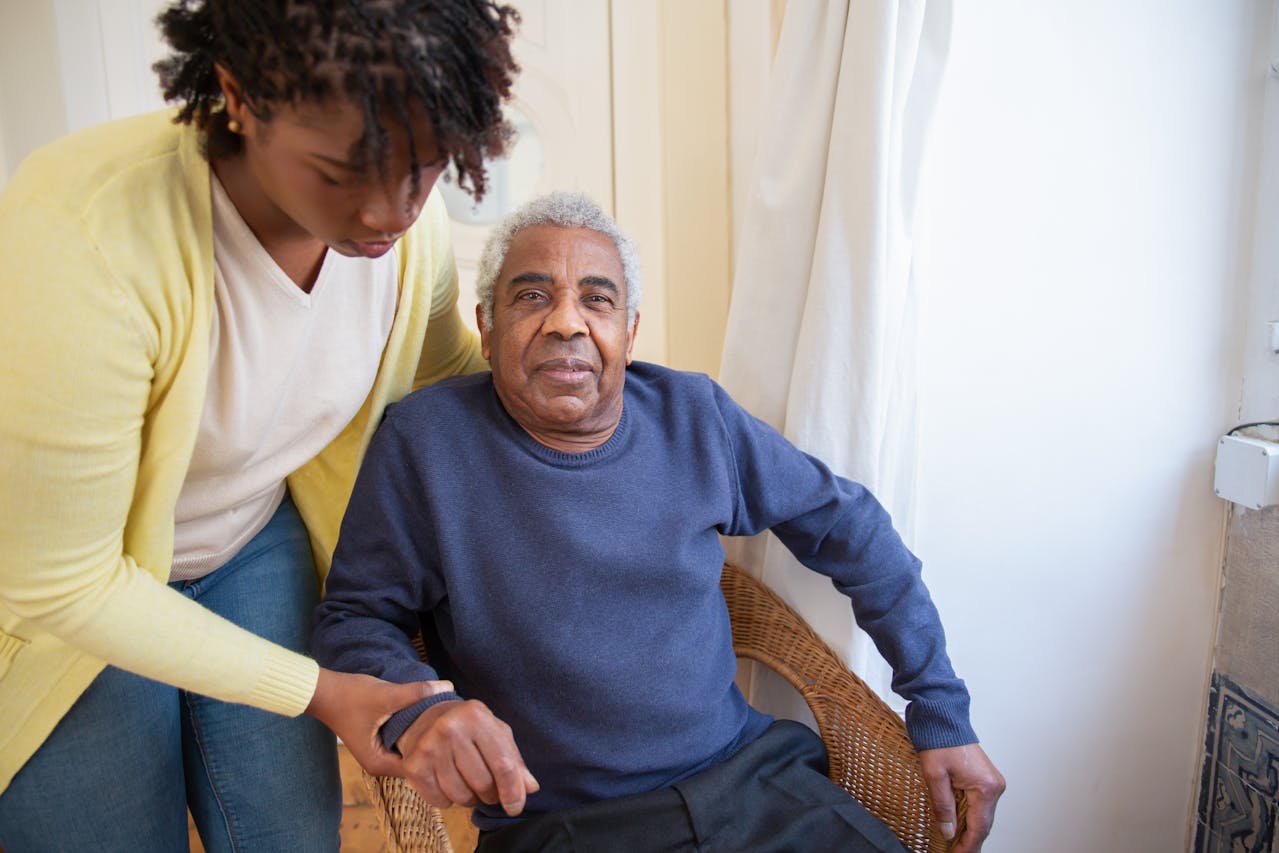
67% of single Black retirees have incomes below the Elder Index, a University of Massachusetts Boston data set that measures whether or not older people can afford their basic living expenses


As BLACK ENTERPRISE previously reported, older Americans are still in the workforce, working longer than they have in previous years because many cannot afford to retire.

According to Visual Capitalist, 22% of retirement-age workers nationwide are still employed; however, the number of self-employed workers is 25%.

There are, of course, some states where retirement-age workers far outpace those averages.

In New Jersey, 33.8% of the workforce is composed of retirement-age workers, followed by North Dakota (32.8%), Maryland (31.2%), New Hampshire (30.9%), and Connecticut (30.3%). According to the Federal Reserve, only 51% of American adults between 65 and 74 had a retirement account.

For adults who are 75 and older, that number drops to 42%.

According to HR Dive, for Black retirement-age adults, those numbers are lower.

According to The New York Times, 67% of single Black retirees have incomes below the Elder Index, a University of Massachusetts Boston data set that measures whether or not older people can afford their basic living expenses. In contrast, for white Americans, that figure drops to 50%.

According to Kilolo Kijakazi, a fellow at the Urban Institute who focuses on income, wealth, and race, the disparities are related to the racism present in the labor market that extends back to the enslavement of Black people.

“We have a history of discrimination in hiring, pay, promotions and benefits. Discrimination in hiring also contributes to occupational segregation. White people dealt in human trafficking of people of African descent to create wealth for white people, but Black people did not benefit from the wealth of their labor,” Kijakazi told the outlet.

Kijakazi concluded, “After Emancipation, we had laws and regulations designed to maintain that effect and even strip Black people of wealth they were able to create for themselves in the face of these odds.”

As Darrick Hamilton, an economist and the executive director of the Kirwan Institute for the Study of Race and Ethnicity at Ohio State University, told the Times, a head start for white Americans in wealth creation puts Black people behind the everyday eight ball.

“The way that wealth is generally created for most Americans is that wealth begets more wealth,” Hamilton said. “Having access to a capital foundation that puts you into assets that will passively appreciate over your life — that’s how most Americans generate wealth.”

Social Security, the entitlement program that pays out retirement benefits, does incentivize working longer. However, a majority of Black workers work in industries that make it more difficult for them to work until they reach the age they receive their full retirement benefits at 70 years of age.

Social Security Works, a progressive organization seeking to reform Social Security so that it works for the modern worker, has proposed a simple change that they surmise would benefit Black and other workers of color as they retire.

Under their proposals, workers who reach the age of 62 would receive 85% of their full retirement benefit, which would rise to 100% once they hit the full retirement age of 70.

According to a 2023 joint study from the Center for Retirement Research at Boston College and the Urban Institute, making the United States government’s retirement benefits formula more favorable to low-income workers would benefit Black workers, but not as much as simply paying them more for their labor.

According to the study, “Although many of the benefit adjustments we model would disproportionately help Black and Hispanic beneficiaries and narrow gaps in Social Security benefits, none would come close to eliminating those disparities.”

The study concludes, “Achieving equity in Social Security benefits for Black and Hispanic adults would require substantial progress toward equality in labor market outcomes. Although mortality and marriage also shape Social Security benefits by determining how long people will collect benefits and whether they have access to spouse and survivor benefits, lifetime earnings are the primary driver of benefits. This leaves Black and Hispanic workers at a disadvantage because they receive lower hourly wages and work fewer years, on average, than white workers. Our recent analysis of the structural factors responsible for the shortfall in Social Security benefits for Black adults found that improving Black workers’ lifetime earnings could most improve their retirement security.”

RELATED CONTENT: 1 In 5 Americans Ages 50+ Have No Retirement Savings

Black New Orleans Teens, Trigonometry Proofs, Pythagorean Theorem, St. Mary's Academy

Black Students Who Discovered ‘Impossible’ Proof Of Pythagorean Theorem Develop 9 More Solutions

In 2022, Ne'Kiya Jackson and Calcea Johnson were able to prove that trigonometry can prove the theorem.


Two Black students continue to showcase their prowess in math. The young women from Louisiana have found nine more solutions to the Pythagorean theorem after discovering proof to the problem in a way once considered impossible.

In 2022, Ne’Kiya Jackson and Calcea Johnson were able to prove that trigonometry can prove the theorem. According to Live Science, trigonometry “lays out how the sides, lengths, and angles in a triangle are related, and as such, the discipline often includes expressions of the Pythagorean theorem.”

The college students found this proof despite the long-held belief that the math practice was based on the assumption the theorem was true. The American Mathematical Society officially recognized that the solution held up to peer review on Oct. 23.

Now, they are discovering new solutions to the problem while still using trigonometry to do so. On their publishing accomplishment, Johnson referred to the honor as “mind-blowing.” Johnson is studying environmental engineering at Louisiana State University.

“To have a paper published at such a young age — it’s really mind-blowing,” shared Johnson in a statement to the publication. “I am very proud that we are both able to be such a positive influence in showing that young women and women of color can do these things.”

The duo was able to use a result of trigonometry called the Law of Sines, to avoid circular reasoning, a failure of logic that initially prevented enthusiasts from proving the theorem with the mathematical branch. Expanding upon their findings, the co-eds found four new ways to prove the theorem, in addition to a novel method that included five more proofs.

“I didn’t think it would go this far,” added Jackson, who studies pharmacology at the Xavier University of Louisiana. “I was pretty surprised to be published.”

The young women also presented evidence of the two ways to show trigonometry and its functions of sine and cosine. Instead of conflating the two, the ratios can be presented through a trigonometric method or one that uses polynomials of complex numbers.

Math enthusiasts can read the full paper, which describes all their latest proofs, now.

RELATED CONTENT: Alabama’s Magic City Classic Promotes $1.4B Economic Impact And Importance Of HBCUs

Marijuana, Recreational Weed, Drug, illegal weed

‘Dangerous’ Levels Of Mold And Other Contaminants Found In Illegal Weed In The UK

The research revealed that 90 percent of the samples were polluted with either mold or yeast, while 8 percent of the samples had lead, and 2 percent were infected with salmonella and E.coli.


A study that tested the levels of contaminants found in street marijuana in the UK discovered ‘dangerous’ levels of mold, yeast, lead, E. coli, and salmonella.

According to The New York Postresearchers from Manchester Metropolitan University and Curaleaf Clinic took 60 samples of cannabis seized by police in Greater Manchester and Northumbria to test what was in the weed. The research revealed that 90% of the samples were polluted with either mold or yeast, 8% had lead, and 2% were infected with salmonella and E. coli.

According to health experts, the contaminants could lead to respiratory issues, neurological damage, and gastrointestinal infections.

Curaleaf Clinic also stated that after a study of 500 users of the drug, it was revealed that 58% of cannabis bought on the street was purchased to help some people relieve some of the problems associated with certain medical conditions. Some of those conditions include anxiety (49%), depression (49%), and chronic pain (28%).

To try to combat the hazards associated with buying illegal weed, Curaleaf has started a public health campaign to try to warn people of the dangers of buying illegal weed. The promotion is entitled “What Are You Smoking?”

There was also a study of 2,000 adults that discovered that less than half of the people surveyed (46%) know that medical cannabis is legal and can be obtained through a doctor’s prescription.

Curaleaf Clinic’s Research Director Dr. Simon Erridge, said: “It is crucial for consumers to be aware of the hidden dangers in illegal cannabis, especially as so many people are buying it to manage health issues which could be exacerbated by these hazardous substances.

“The law changed six years ago, so there is a legal, regulated, and quality-tested alternative for those suffering with diagnosed chronic illnesses which haven’t responded to conventional therapies. Many people are putting themselves at risk when they don’t need to.”

RELATED CONTENT: NY Medics Report Epidemic Of Severe Reaction To Cannabis Called ‘Scromiting’

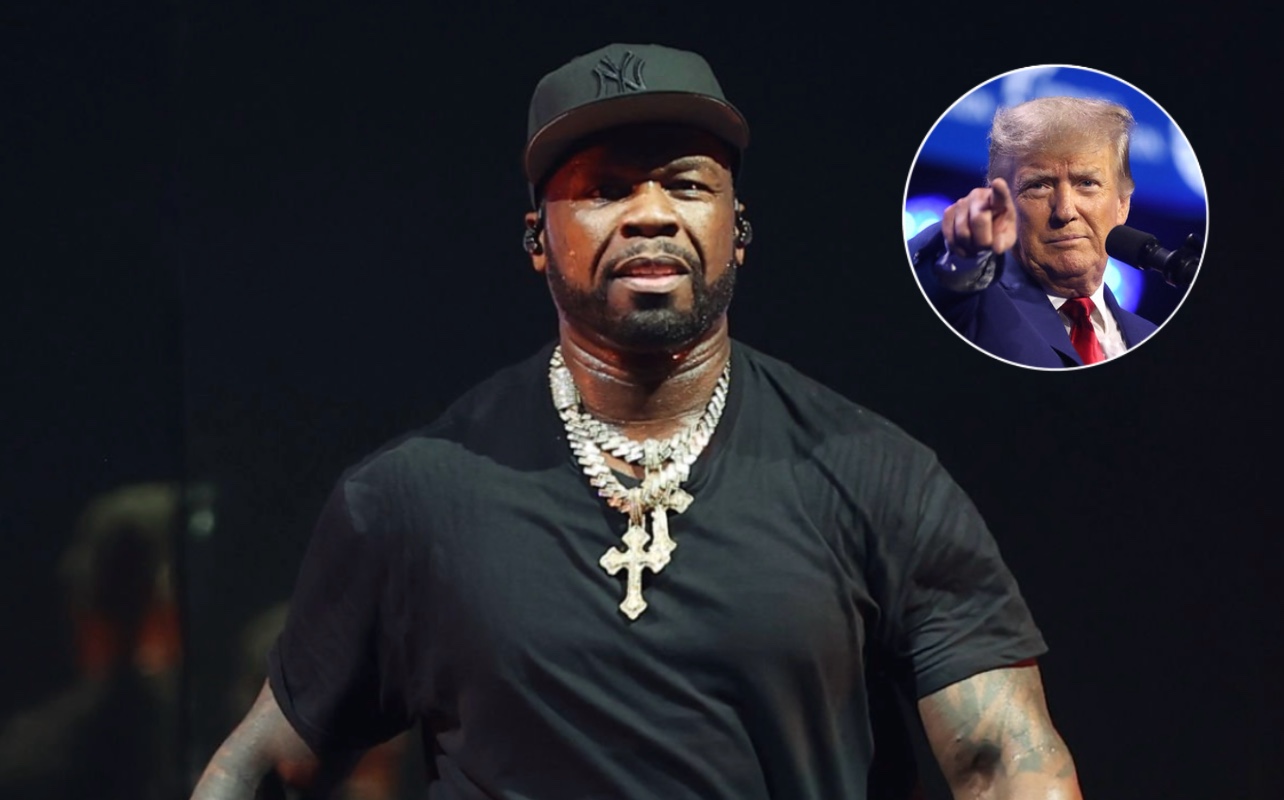
50 Cent, Trump

50 Cent Reveals He Turned Down $3M To Perform During Trump’s Rally At Madison Square Garden

50 Cent shared his reasoning was more-so to stay out of politics.


It’s not all about the money for 50 Cent. The entertainer revealed that he turned down a $3 million offer to perform at Donald Trump’s rally at Madison Square Garden.

While on The Breakfast Club, the “Many Men” rapper confirmed reports that he was offered to perform at the GOP nominee’s event on Oct. 27. However, 50 Cent shared that his reasoning was to stay out of politics; Complex reposted footage of the radio show interview.

“I wasn’t talking to them about that kind of stuff,” explained the 49-year-old. “I’m afraid of politics. I wouldn’t say I like it. It’s because when you do get involved with it, no matter how you feel, somebody passionately disagrees with you.”

The rapper, whose real name is Curtis Jackson III, shared how speaking on politics can lead to one’s ostracization, specifically mentioning Kanye “Ye” West. He faced exile from Hollywood following his anti-semitic remarks made over the years.

“That’s the formula for the confusion that sent Kanye to Japan,” he added. “He said something about both things — and now he can only go to Japan.”

While his reasoning for opting out of the Trump rally was not from a moral standpoint, 50 Cent dodged a lot of controversy. The rally made headlines for a controversial joke about Puerto Rico by one of its speakers, Tony Hinchcliffe. While speaking, Hinchliffe referred to the U.S. territory as a “floating island of garbage.”

Immediately following his remarks, the comedian received heavy criticism for his racist jokes. High-profile celebrities of Puerto Rican heritage, including Jennifer Lopez and Bad Bunny, supported Kamala Harris and her plans for the island shortly after. However, 50 Cent also lacked a comment on that drama.

While he’s staying out of politics, the “Power” executive producer continues to spread awareness on other matters. He is producing a docu-series on Netflix that covers all of Sean “Diddy” Combs’ allegations and legal troubles.

As for the rally, the Trump campaign has yet to comment on 50 Cent’s claims.

New Haven

New Haven To Consider Apology For Failure To Establish A College For Black Men In 1831

According to researchers, the rebellion of Nat Turner in Virginia may have played a role in the white men's rejection of the planned college, which had support from William Lloyd Garrison, the white publisher of Boston's abolitionist newspaper, The Liberator


Leaders for the city of New Haven, Connecticut, are asking the town to consider a formal apology for refusing to establish the first Black institution of higher learning for Black men in 1831.

According to Fox 61, in August, City Alder Thomas Ficklin Jr., a Democrat, submitted a proposal with help from City Historian Michael Morand.

The proposal requests a formal apology for the city’s inaction, which was followed by violent attacks on New Haven’s Black residents, their homes, and the homes of white abolitionists.

The proposal also calls for Yale University, known as Yale College in 1831, and New Haven’s city schools to provide educational programs regarding the eruption of violence after the city’s white male landowners voted 700-4 against creating the nation’s first university for Black men.

Officials are considering a second public meeting on Ficklin’s proposal, although he died suddenly in October, shortly after an interview with The Associated Press.

“My political ancestors were involved with this,” Ficklin told the AP. “Now we have a chance to kind of render our opinion not only on their actions, on our ancestors’ actions but how are we going to be judged in the future.”

Ficklin’s widow, Julia Ficklin, told Fox 61 that the proposal was of the utmost importance to her husband before his sudden death.

“I do know that it was very important to him,” she told the outlet via a phone interview. “And one of my prayers these last couple days as I’m grieving is that someone will step up and pick up where he left off with it and see it through, one way or another.”

The debate was ignited in earnest once Yale issued a formal apology for its ties to slavery in February, and a research project from the university uncovered that many of its founders, early leaders, and donors were enslavers.

Among those who expressed opposition to the creation of the city’s proposed Black college were prominent members of the Yale University community.

According to researchers, Nat Turner’s rebellion in Virginia may have contributed to the white men’s rejection of the planned college, which had support from William Lloyd Garrison, the white publisher of Boston’s abolitionist newspaper, The Liberator.

In 1831, slavery was still legal in Connecticut, although the practice was not as widespread as it once had been. In 1848, it became the last of the New England states to abolish slavery.

However, according to a resolution against the Black college, the emancipation of the enslaved would create “an unwarrantable and dangerous interference with the internal concerns of other States, and ought to be discouraged.”

The white freemen also warned that a school for Black men was “incompatible with the prosperity, if not the existence of” Yale and the other white universities in the area, as well as “destructive of the best interests of the city.”

According to Morand, the choice of the white freemen had the effect of “reinforcing the status quo of slavery and racial oppression.” Indeed, their decision was celebrated by many newspapers in the South, all enslaver-friendly states.

In Connecticut, well before the South would institute the Black Codes or Black Laws, they had their own version, popularly referred to as the Black Law, which forbade Black people from outside of Connecticut from getting an education in Connecticut without the permission of individual towns in the state.

The founder of Yale Law School, David Daggett, a Connecticut state judge who presided over the trial of Prudence Crandall, a white woman who was teaching elementary education to Black girls in Canterbury, ruled that since Black people were not citizens, they, therefore, had no rights to education.

Crandall eventually closed the school after a white mob broke into the school, ransacked it, and terrorized the students with clubs and iron bars.

As Yale University’s Community Engagement Program Manager Tubyez Cropper said in a press release for a 2023 documentary which examines New Haven’s failure, “The question ‘what could have been?’ Genuinely makes you think about what New Haven and the United States could have been like if a historic decision such as the creation of a Black college were approved,” Cropper said. “What would relations have been like between Yale and this college, and what impactful Black figures that we know of today would have attended the college?”

Cropper continued, “It took valiant Black leaders, like Bias Stanley and Scipio Augustus, along with the courageous abolition mindset of white leaders like Simeon Jocelyn and William Lloyd Garrison to make such an impact on the way the nation progressed. History is so important because acknowledging the past helps us understand the multitude of perspectives that make up this world.”

He concluded, “By understanding the stepping stones that were put in place, at a time where it seemed almost impossible, we can prevent similar things from reoccurring.”

RELATED CONTENT: First Known Black Man To Attend Yale University Honored With Posthumous Degree After 200 Years

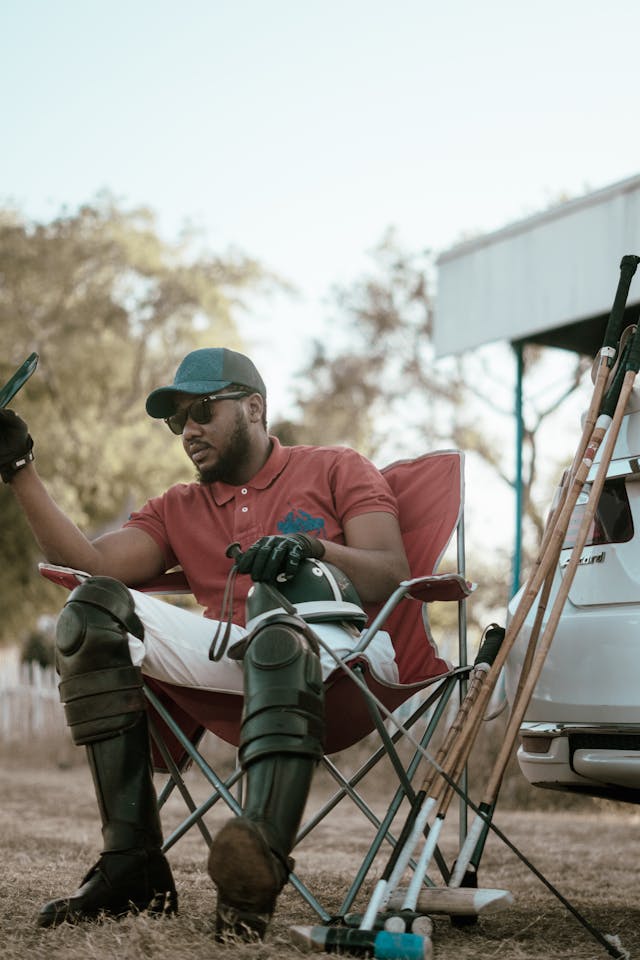
polo, morehouse, Yale

Yale Men’s Polo Team Beats Morehouse College

Morehouse College became the first historically black college and university (HBCU) to field a polo team


In 2019, Morehouse College became the first historically Black college and university (HBCU) to field a polo team. After discussing the possible matchup for two years, the team recently played against Yale University’s polo team.

According to Yale Daily News, the two teams met on Oct. 11 when the Ivy League school emerged victorious against the fledging HBCU team, 16-15. Organizers hope this is the first of many between the two schools. It was Yale’s first game of the season.

The matchup occurred after college clubs, the Afro-American Cultural Center at Yale, other sponsoring organizations, Calaway Swanson (a Yale Polo team senior), and Morehouse Polo President Tyrsten Williams organized the first contest between the teams.

“One of Morehouse polo’s goals is to inspire other HBCUs and people of color to not only play polo … but to be in places that they might want to be in, but may not have the chance to be in,” Williams expressed to Yale Daily News. “So with Yale and Morehouse, I think that was a good opportunity to inspire other people of color to do the same.”

Swanson stated that after two years of talk, the game was organized last month after his mother, Tonit Calaway, suggested that he reach out to Morehouse to arrange the historic match. As the only Black member of Yale’s Polo team, Swanson wanted to help the Morehouse team out. The game occurred at Yale because Swanson wanted the Morehouse players to have “the full experience” at Yale. Tonit and her company, Topcat LLC, sponsored all travel and food expenses for the weekend.

“I think it was a very monumental collaboration for both teams and a very monumental weekend. A lot of good experiences and good connections were made. So, forever grateful for that trip,” Williams told the media outlet.

Yale also held a reception at the Afro-American Cultural Center at Yale, co-hosted by the Black Men’s Union.

RELATED CONTENT: 100 Hungry Raccoons Pull Up To White Woman’s Crib, She’s Been Feeding Them For Years

Study Reveals HBCU Students Undergo More Hurdles In Gaining Admittance To Medical School

Study Reveals HBCU Students Undergo More Hurdles In Gaining Admittance To Medical School

The study, led by Dr. Jasmine Weiss, sought to uncover the issues HBCU scholars face when pursuing their medical degrees.


A new study has revealed that HBCU students face greater challenges than other groups when trying to attend medical school.

The study, led by Dr. Jasmine Weiss, sought to uncover the issues HBCU scholars face when pursuing their medical degrees. Noting the “tedious path” to entering medical school, Weiss spoke directly to advisors to better understand their challenges.

“We wanted to hear directly from advisors working with HBCU students from the time they enter college to understand the struggles and obstacles the students are facing as they navigate the tedious path to medical school,” explained Weiss, who works as an assistant professor of pediatrics at the UNC School of Medicine.

Weiss and her co-authors interviewed 26 premedical advisors at HBCUs to provide insight for the qualitative study. The advisors then shared their thoughts on the barriers and facilitators for Black premed students entering medical school.

The conversations led Weiss to discover three major recurring themes. The first was the relationship dynamics between HBCUs and medical schools. Weiss emphasized that schools must consider Black and Brown students’ underrepresentation more.

“There is so much room for PWI medical schools to engage directly with HBCUs and their students if they are serious about attracting and more importantly enrolling the best and brightest students into their respective student bodies; because unfortunately Black and Brown students are still sorely underrepresented in our physician workforce,” Weiss said.

Second, preferential treatment was given to those who attended predominantly white institutions (PWIs). The treatment stemmed from the assessment of clinical shadowing opportunities. Lastly, the emphasis on family and peer involvement, colloquially described as “taking a village,” remains important for students embarking on the journey to becoming doctors.

With only 5.7% of U.S. physicians identifying as Black, the need for more Black doctors remains essential. Incorporating a greater emphasis on Black medical students’ enrollment and successful journey continues to be a focus. Moreover, as nearly 70% of these doctors attended HBCUs, strengthening these relationships should take priority.

“HBCUs are an essential engine in the production of Black physicians in the U.S., by producing a vast number of medical school applicants, and by training physicians,” concluded the study. “By not addressing barriers for undergraduate students at HBCUs, medical schools and the medical field are missing critical opportunities to welcome unique insights into their communities and the field of medicine.”

RELATED CONTENT: A$AP Rocky To Buy Soccer Club In $16M Deal With Investment Group

Jordan

Jordan Brand Drops Women’s Sneakers, Jordan Heir Series

Nike relied on input from Jordan Brand athletes like Kiki Rice and Kiyomi McMiller


Nike’s Jordan Brand has introduced a new series of women’s sneakers that were inspired, in part, by two of the brand’s premier college athletes, Kiki Rice and Kiyomi McMiller.

The Jordan Heir Series has been unveiled after getting the necessary feedback and input from Jordan Brand athletes like Rice (UCLA guard who was the first Jordan Brand NIL signee) and McMiller (first Jordan Brand high school NIL signee, currently playing at Rutgers University).

“Understanding that the Heir Series is specifically designed from my insights as well as other women athletes on the roster is really representative of the change that’s going on right now in women’s basketball,” says Rice. “Being able to contribute to the design and feel of this shoe is something I don’t take for granted. I love the aesthetic and think the color blocking lends itself to be a great vehicle for storytelling and advancing the women’s game and basketball overall.”

Jordan Brand took advice from many of the 15 women athletes in the Jordan Brand Family to produce what became the Heir Series. The series is the brand’s lowest shoe in the basketball lineup of sneakers. The design was created to enable the kind of running and cutting that women basketball players of today have become accustomed to, and it ranks as the top priority for a growing number of those who play on the court.

“We’re currently witnessing a pivotal and transformative era for sports, especially women’s sports,” says Rhyne Howard, a Jordan Brand athlete and Atlanta Dream guard. “This shoe allows us to leverage our understanding of how women play to create products that can benefit all athletes and push the entire sports landscape forward.”

The Jordan Brand Heir Series can be purchased globally at jordan.com and select retail locations.

RELATED CONTENT: Jordan Brand Exec Tapped As President Of Business Operations For Detroit Pistons

200,000 Washington Post Subscribers Jump Ship After Jeff Bezos Blocks Kamala Harris Endorsement

200,000 Washington Post Subscribers Jump Ship After Jeff Bezos Blocks Kamala Harris Endorsement

Something is off here.....


NPR reported that The Washington Post lost more than 200,000 subscribers after owner Jeff Bezos blocked the publication from issuing an endorsement for Vice President Kamala Harris

The influx of digital subscription cancellations started to pour in on Oct. 28. While not all cancellations take effect immediately, The Washington Post is scheduled to lose close to 8% of its paid circulation, with approximately 2.5 million subscribers, including print subscribers. Former executive editor Marcus Brauchli says the number might not seem like a lot, but it is, and the team is in the dark as to why the decision was made. “It’s a colossal number,” Brauchli said. 

“The problem is, people don’t know why the decision was made. We basically know the decision was made, but we don’t know what led to it.”

Both current and former Washington Post editors have gone back and forth on the real reason.

Chief Executive and publisher Will Lewis claims the decision to not endorse any candidate in the 2024 presidential race is all about The Post’s “roots,” saying, “it has for years styled itself an independent paper.”

However, former executive editor Marty Baron raised some issues with that narrative and questioned the timing of the decision, as the race between Harris and former President Donald Trump is neck and neck with Election Day being only seven days away. “If this decision had been made three years ago, two years ago, maybe even a year ago, that would’ve been fine. It’s certainly a reasonable decision,” Baron said. 

“But this was made within a couple of weeks of the election, and there was no substantive serious deliberation with the editorial board of the paper. It was clearly made for other reasons, not for reasons of high principle.”

Even Bezos himself acknowledged that the timing wasn’t ideal. 

In a nine-paragraph op-ed published in The Post on Oct. 28., the Amazon billionaire admitted some fault.

“I wish we had made the change earlier than we did, in a moment further from the election and the emotions around it,” he wrote. “That was inadequate planning and not some intentional strategy.”

In the same article, Bezos defended the choice, pushing a narrative that endorsements do nothing for candidates.

“Presidential endorsements do nothing to tip the scales of an election. No undecided voters in Pennsylvania will say, ‘I’m going with Newspaper A’s endorsement.’ None,” he claims. 

“What presidential endorsements actually do is create a perception of bias. A perception of non-independence. Ending them is a principled decision, and it’s the right one.”

Following the announcement, the publication is now in damage control mode. After Bezos’ decision, The Post lost two columnists and two writers from the editorial board — one being David Hoffman, who accepted a Pulitzer Prize for editorial writing on Oct. 24. The other writer, Molly Roberts, announced her resignation on X. In the post, she warned what the damage of staying silent on a presidential campaign can do. “Donald Trump is not yet a dictator,” she wrote. 

“But the quieter we are, the closer he comes.”

RELATED CONTENT: DC Ghana Week Celebrates Art, Culture, and Soccer

Kai Cenat, Streamer, live, twitch, mental health

Kai Cenat, Druski, Flau’Jae Johnson: Black Influencers Top Forbes’ 2024 Creators List

Many of these influencers will take part in Forbes' inaugural Creator Upfronts event in late October.


Black influencers are building up their own following within the ever-evolving social media sphere. Many of whom, including Kai Cenat, Druski, and Flau’Jae Johnson, have secured their spot in Forbes Top Creators List of 2024.

Forbes released its extensive ranking of the most engaging content creators on Oct. 28. The influencers are heavyweights in the booming creator economy, garnering millions in checks and views. Across multiple platforms, suchs as TikTok, YouTube, and video-streaming app Twitch, these creators have built a steady following that has led to their massive influence.

The top Black influencers listed are contributing to the nearly $720 million earned thus far from this cohort, while also taking part in the over 2.5 billion following shared amongst them all. Through their expanding business portfolio, engagement rates, and earnings, Black influencers are a smaller, but mighty force within the overall industry.

“This year’s list shows that the creator economy is growing fast––and growing up,” said Steven Bertoni, an Assistant Managing Editor for Forbes. “Creators are harnessing their social influence to evolve from entertainers to entrepreneurs and building their own brands. Others continue to jump from phone screens to mainstream media. And in an industry once built on selfies, many are building streaming studios. The ecosystem will only get bigger and more powerful.”

The highest ranked Black influencer is Khaby Lane, returning to the list to close the top 10. With $20 million in earnings and 255 million followers, the “Charlie Chapman of digital media” has entertained billions with his short-form comedic chops. Right behind him at #11 is Druski, whose has taken skits to new heights with his “Coulda Woulda Shoulda” tour and accompanying Coulda Fest, which sold out Atlanta’s State Farm Arena. His $12 million in earnings also comes from his multiple deals with big companies like Nike, Google, and PrizePicks.

Other influencers are dominating the review and tech space, with Marques Brownlee combining both. With $10 million in earning, and over 32 million followers, the “gadget guru” thinks that consistency paved his way to stardom more than viral videos.

“It was steady growth. I think it’s a good thing that no one video propelled the whole thing,” he explained to the publication that ranked him at #17. ” I think going viral is overrated. It’s the best thing that never happened to me.”

At #24 comes Kai Cenat, known for his antics on Twitch while hosting mega-celebrities like Kevin Hart and Nicki Minaj. Now, the 22-year-old stars in commercials for McDonald’s as he scales up his $8.5 million in earnings and nearly 50 million followers.

However, Black women creators are also claiming their spots as well, as Flau’jae Johnson ranks in at #37. While Johnson shoots hoops at LSU, she still can make a bag through multiple NIL deals and a growing social media presence. With partnerships with Bose and Powerade, the collegiate star has earned $7 million. Not to mention, she raps, and has a record-deal with Jay-Z’s Roc Nation.

Other Black women creators include Nara Smith and Monet McMichael, both known for their lifestyle and short-form vlogs. DreaKnowsBest also makes the list at #49. The Nigerian-American teaches others how to find social media success as she did with her comedy skits. Another creator, Jordan The Stallion, has earned his place in the ranking through his viral fast-food recipe reveals.

Many of these influencers will take part in Forbes’ inaugural Creator Upfronts event in late October. The Los Angeles occasion will introduce these creators to wide-ranging brands, while also offering panel discussions on their rise to social media mega-fame.

RELATED CONTENT: Stream Of Consciousness And Coins: The Rise Of Kai Cenat

×