Rickey Henderson, baseball

Rickey Henderson, Baseball’s All-Time Steals Leader, Dies At 65

Two of Henderson's records are likely to stand unbroken--his 1,406 stolen bases over the course of his career and 130 stolen bases in a season.


Rickey Henderson, the man who redefined what it means to be a lead-off hitter and Major League Baseball’s all-time steals leader, died of pneumonia five days before he would have turned 66 on Christmas Day. Henderson’s wife, Pamela, confirmed his death on Dec. 21 via a statement provided to the media.

“We are deeply grateful for the outpouring of love, support, and heartfelt memories from family, friends, and fans,” Pamela Henderson said. “A legend on and off the field, Rickey was a devoted son, dad, friend, grandfather, brother, uncle, and a truly humble soul. Rickey lived his life with integrity, and his love for baseball was paramount. Now, Rickey is at peace with the Lord, cherishing the extraordinary moments and achievements he leaves behind.”

Henderson is a once-in-a-lifetime player who is most closely associated with Oakland Athletics. Although he had problems with asthma and sinus problems that necessitated surgery in 2023, according to former Athletic player and good friend Dave Stewart, he still seemed in good health.

Stewart told USA Today that Henderson was often on the go despite his body’s warnings to slow down.

“When I heard he was sick,” Stewart said, “I wasn’t surprised. He doesn’t know how to slow it down. He doesn’t give himself a chance not to be 100%.”

Stewart also reminisced on what it meant to him to lose one of his best friends.

“I couldn’t believe it,” Stewart said, “I still can’t. I can’t wrap my head around it. We’ve known each other practically our entire lives. That was my dude. It was a thrill of a lifetime to sit back and watch with that kind of ability. That talented. That once-in-a-lifetime thing. There will never be another player like him.”

According to The Athletic, two of Henderson’s records are likely to stand unbroken: his 1,406 stolen bases over the course of his career and 130 stolen bases in a season. His playing style endeared him to fans all over America, and he embodied Oakland, his hometown, according to Paul Freedman, the president of the independent league Oakland Ballers baseball club.

“There are some players that just personify the cities that they play in and Rickey brought the essence of Oakland onto the field,” Freedman said. “He was dynamic, he was tough, and he wasn’t afraid to stand out. He is synonymous with Oakland.”

According to The Athletic, Henderson acknowledged that his way of playing the game was flashy, but he framed it as fan service.

“In my way of playing the game, people have called me a hot dog,” Henderson said once. “But I call it (bringing) some style or entertainment to the people. I enjoy going out there and exciting the fans, because I feel like they come out here to see some excitement.”

According to Ben Davis, a teammate of Henderson’s during a stint with the San Diego Padres, his 2001 season when Henderson was 42 years old placed him in baseball’s Parthenon, epitomized by a home run trot which he ended by sliding into home plate feet-first.

“It was feet-first and he was always a head-first guy; that caught us more off-guard than anything,” Davis, a catcher on the Padres team, recalled. “But you never put anything past Rickey. I mean, that year, think about it: he got his 3,000th hit, he got the all-time walks record and he got the all-time runs scored record. The walks record was broken by Barry, but that’s unbelievable, to do all that in one year.”

Henderson’s impact on the game in general and baserunning, in particular, was so profound that his name came up when Major League Baseball made new rule changes to encourage stealing in 2023.

But there is, was, and will always be only one Rickey Henderson, as MLB Commissioner Rob Manfred made clear in a statement.

“Rickey was one of the most accomplished and beloved Athletics of all time. He also made an impact with many other Clubs during a quarter-century career like no other. Rickey epitomized speed, power and entertainment in setting the tone at the top of the lineup. When we considered new rules for the game in recent years, we had the era of Rickey Henderson in mind.”

Manfred continued, “Rickey earned universal respect, admiration and awe from sports fans. On behalf of Major League Baseball, I send my deepest condolences to Rickey’s family, his friends and former teammates, A’s fans and baseball fans everywhere.”

The Athletics, who no longer play in Oakland and named their field at Oakland Coliseum after Henderson in 2017, acknowledged the most important player in franchise history in its statement.

“Rickey Henderson is one of the greatest baseball players of all time,” the Athletics said. “His on-field accomplishments speak for themselves, and his records will forever stand atop baseball history. He was undoubtedly the most legendary player in Oakland history and made an indelible mark on generations of A’s fans over his 14 seasons wearing the Green and Gold.”

“For those who knew him personally, Rickey was much more than a franchise icon and a Baseball Hall of Famer. He was a friend and mentor to every player, coach, and employee who passed through the Oakland Coliseum or played a game on the field that came to bear his name. We are shocked and heartbroken by his passing. His loss will be felt not only by A’s fans but also by baseball fans around the world.”

RELATED CONTENT: Black-Owned Group Buys Remaining Oakland Athletics Coliseum Stake For $125M

HBCU, charter school, Michael Bloomberg

HBCU Founder’s Great Grandson Upholds Family Legacy With $2M Gift To School

Dr. Charles M. Stillman believes the school upholds his great-grandfather's vision and legacy.


The great-grandson of Stillman College’s founder continues his family’s legacy by donating $2 million to the HBCU.

Dr. Charles M. Stillman, a descendant of the college’s founder, Reverend Charles Allen Stillman, bestowed the funding in honor of his ancestor. According to HBCU Gameday, the donation will aid in the school’s financial sustainability for its diverse student body.

The school, founded in 1876 by the elder Stillman, is one of two HBCUs in Tuscaloosa, Alabama. Now, it may continue to educate its students as it strives for a greater future. Its Vice President of Institutional Advancement, Kimberly Woodard, stated this gift will tremendously help this mission.

“This remarkable gift from Dr. Charles M. Stillman and his wife not only honors the legacy of Rev. Charles A. Stillman but also propels the college toward a stronger and more sustainable future. As part of the funds raised during the Alabama Power Community Giving Reception, it reflects the collective commitment of individuals and organizations who believe in our mission to transform lives through education,” said Woodard.

The money will go toward investments for the school to utilize the returns. It plans to allocate this income for scholarships, faculty development, academic programs, and campus improvements. Dr. Stillman emphasized the honor of “securing [Stillman’s] future” through this financial offering. Furthermore, he revealed that the HBCU still upholds the ideals his ancestor had for it over a century ago.

“Stillman College represents the ideals and aspirations my great-grandfather envisioned when he founded this institution nearly 150 years ago. My wife and I are honored to play a role in securing its future and ensuring that generations of students continue to benefit from the transformative power of a Stillman education,” he shared.

He remains a member and two-term chairman of the school’s Board of Trustees. Furthermore, he hopes to carry on his great-grandfather’s belief in the school’s evolving potential. The school’s president, Yolanda Page, also amplified this generational faith in the school’s ability to mold future leaders.

“We are deeply honored by this extraordinary demonstration of faith in Stillman College’s mission. Dr. Charles M. Stillman’s legacy is not only one of familial ties but also of visionary leadership and unwavering commitment to the values upon which this institution was founded. This generous gift is a testament to the enduring legacy of the Stillman family and its belief in the power of education to transform lives,” she said.

Lululemon, Boycott, Viral Video, Racial Profiling

Will Lululemon Face Renewed Boycott Calls After Viral Video Of Alleged Racial Profiling At NYC Store?

Lululemon's founder, Chip Wilson, was called out earlier this year for criticizing the brand's DEI-focused advertising.


The calls for a boycott of Lululemon could soon resurface following a December incident of alleged racial profiling at a New York City storefront. After a Black woman purchased over $600 in clothing, the store accused her of stealing the items and called in the NYPD to confront the woman. The confrontation was caught on video and is going viral on social media. Social media influencer Tasha K reposted footage of the ordeal. After the police told the shopper she could leave, the outraged woman declared she wanted to return her purchase.

This isn’t the first time the popular athleisure brand has been criticized for racial incidents. Earlier this year, advocates for diversity, equity, and inclusion called for boycotts of Lululemon stores due to the anti-DEI remarks its founder once made.

The brand has tried to distance itself from its controversial founder, Chip Wilson. Wilson, who launched the company in 1998, has publicly refuted the need for DEI measures in its stores. Although Wilson stepped down in 2018, his words against inclusive standards still haunt the company and weary customers.

In a January interview with Forbes, he criticized the brand’s “whole diversity and inclusion thing,” specifically in its advertising. He notably deemed the people who modeled their clothing as “unhealthy,” “sickly,” and “not inspirational.”

Furthermore, he emphasized his belief that brands should not cater to all people. He stated the need for a company to showcase that it does not want “certain customers” coming in.

“They’re trying to become like the Gap, everything to everybody,” Wilson said of Lululemon. “And I think the definition of a brand is that you’re not everything to everybody. You’ve got to be clear that you don’t want certain customers coming in.”

In light of this, DEI specialists say customers of color should stop buying from brands aligned with this messaging.

“There should be a loud call to action for a widespread boycott of corporations that overtly disparage and label DEI as practices rooted in racism and discrimination,” said Tiffany Brandreth, an organizational psychologist who specializes in DEI, to NBC News. “It’s crucial for anyone who claims to be an ally for DEI to send a powerful message that these regressive values will not be supported that goes beyond mere rhetoric.”

However, Brandeth wants to remind shoppers of their power at the register. She urged them not to patronize stores that choose to undermine DEI’s importance.

“The combined purchasing power of diverse groups is massive, so the boycott doesn’t need to be loud,” she said. “The economic choices of consumers sends a silent yet powerful message on its own. The most impactful way to effect change is by making consequences felt, which is directly through impacting these individuals’ financial gain.”

While Lululemon’s origins remain questionable, the company has tried to state the differences in values from those of its founder. However, Wilson still owns a majority stake in the company, which Forbes values at $4 billion.

“Chip Wilson does not speak for Lululemon, and his comments do not reflect our company views or beliefs,” explained a statement. “Chip has not been involved with the company since his resignation from the board in 2015 and we are a very different company today.”

RELATED NEWS: Ex-Employees Allege Lululemon In Chicago Fosters Anti-Black Environment

New Orleans, Black Catholic School

Florida Mandates Black History In Schools, But Many Doubt Accuracy

Florida Gov. Ron DeSantis has faced criticism for actions seen as limiting the teaching of Black history in school.


Although Florida announced it would require Black history to be taught in public schools—and pointed out that it has for the past 30 years—some groups and organizations, like the Spady Cultural Heritage Museum, are concerned that the lessons greenlighted by the state’s Board of Education will not be historically accurate.

According to Inkl, programming like the Spady Cultural Heritage Museum is often supported by Black churches and is designed to fill in the gaps in Florida’s public school education pertaining to Black history.

Furthermore, teachers in some districts have expressed concern that the state’s rules regarding how race and history can be discussed in classrooms place constraints on what they can teach.

According to Brian Knowles, who oversees African American, Holocaust, and Latino studies for the Palm Beach County school district, “There’s so many other districts and so many kids that we’re missing because we’re tiptoeing around what is essentially American history.”

As Sulaya Williams, a Florida parent who launched her own community-based organization focusing on Black history in 2016, told The Associated Press, distrust of the state’s rules concerning Black history was a motivating factor.

“We wanted to make sure that our children knew our stories, to be able to pass down to their children,” Williams said.

Williams, who now has a contract to teach Saturday school at a public library in Fort Lauderdale, has influenced her 12-year-old daughter Addah Gordon to invite her classmates to learn at the library.

“It feels like I’m really learning my culture. Like I’m learning what my ancestors did,” Gordon explained. “And most people don’t know what they did.”

The beginnings of Florida’s mandate that public schools participate in teaching Black history came about as the result of the publication of an official report on the Rosewood race massacre in 1994; the experiences of the town’s Black residents would later be dramatized in John Singleton’s 1997 film “Rosewood.”

According to Marvin Dunn, a public educator who conducts tours of historic places in Florida connected to history, the moment of enlightenment did not last, similar to the DEI pledges in the wake of the deaths of George Floyd and Breonna Taylor in 2020.

“There was a moment of enlightenment in Florida, those decades ago. There really was,” Dunn told the AP. “But that was short-lived.”

As BLACK ENTERPRISE previously reported, Florida Gov. Ron DeSantis has faced criticism for actions seen as limiting the teaching of Black history in schools, including blocking an Advanced Placement African American Studies course, which he claimed violated state laws and was historically inaccurate.

Tameka Bradley Hobbs, a manager of Broward County’s African American Research Library and Cultural Center, told the AP that these developments have made it clear that the state of Florida cannot be trusted to teach Black history.

“People who are interested in advancing African diaspora history can’t rely on schools to do that,” Bradley Hobbs said. “I think it’s even more clear now that there needs to be a level of self-reliance and self-determination when it comes to passing on the history and heritage of our ancestors.”

RELATED CONTENT: Florida’s Backward Black History Standards Teach Kids That Slavery Was Beneficial

Stress free

Older Black Men Face Rising Fentanyl Overdose Deaths Nationwide, With Baltimore At Epicenter

According to the report, the majority of men who are dying of opioid overdoses are Black men between the ages of 54 and 73.


The majority of men across America who are dying of opioid overdoses due to fentanyl are Black men between the ages of 54 and 73, a forgotten generation in Baltimore and elsewhere in the country, according to joint reporting from The New York Times and The Baltimore Banner and other newsrooms.

According to the most recent data, Baltimore is at the center of the most severe drug overdose crisis among major U.S. cities.

From 2018 to 2022, the city’s overdose death rate was nearly double that of the next highest major city.

Compounding this crisis is the disproportionate impact on older Black men, who make up a significant portion of those dying from drug overdoses.

Despite this, one of the most prominent deaths attributed to a fentanyl overdose in Baltimore was that of 26-year-old Baltimore Ravens linebacker Jaylon Ferguson at an acquaintance’s home in 2022.

According to Tracie M. Gardner, executive director of the National Black Harm Reduction Network, as well as a former New York State health official, the deaths of older Black men are ironic because that particular demographic survived so many other epidemics.

“They were resilient enough to live through a bunch of other epidemics — H.I.V., crack, Covid, multi-drug-resistant tuberculosis — only to be killed by fentanyl,” Gardner told the New York Times.

Although the analysis by the Times and other outlets concentrates on cities in the Northeast and Midwest, there are other places represented, like San Francisco, where the combination of cocaine and opioids like fentanyl make treating their addictions more difficult.

The use of opioids by Black men in their 50s and 70s can be traced back to the Vietnam War, where many of them were exposed to heroin for the first time, and those men continued to use opioids when they returned home from the war.

As Mark Robinson, a 66-year-old Black man who runs a syringe exchange program in Washington D.C. told the New York Times, Black men of his generation didn’t all of a sudden just start dying from opioids.

“Black men didn’t just start dying,” Robinson said. “We’ve been dying for decades as a direct result of opioid use disorder.”

Further complicating matters, many of the cities with a pattern of drug deaths similar to Baltimore’s share characteristics with the city, including large Black populations, marked residential segregation, and an active heroin marketplace in the ’70s.

“You’re basically disarming them from having a good life,” Ricky Bluthenthal, a professor of public health at the University of Southern California, told the outlet. “They lose girlfriends, they lose houses, they lose connections to their children.”

In addition to this, policies that had the effect of targeting drug users meant that people who needed treatment often received incarceration instead, potentially making it harder for them to stay off drugs.

RELATED CONTENT: How Fentanyl Hit Los Angeles’ Black Community By Becoming The Deadliest Drug In 2022

Toledo, black-owned, pharmacy

Black-Owned Independent Pharmacy Opens In Toledo, Aims To Tackle Health Disparities

Anthony Pattin hopes to combat persistent health disparities in the Black Toledo community with his new pharmacy.


Anthony Pattin has opened up a pharmacy in Toledo, Ohio. With last week’s opening of the Junction Family Pharmacy, located at 1339 Dorr St., the community will now be able to get its medication and medical needs from an independent Black-owned pharmacy. Pattin’s goal is to combat health disparities in the community pharmacy sphere, and with more than 15 years of experience in the field as a professor at various schools, Pattin is qualified to do it.

Originally located in Buffalo, New York, Pattin decided to move back to his family home in Toledo. He told the Toledo Blade, “Actually going to New York and just being back in that space again, it let me know that I really want to do it. I thought about staying in New York and doing it, but I thought it would be great to come back with my family here, making it more of a family affair, being able to work with them, and also with my own community.”

As reported by the Toledo Blade, Pattin seeks to fill the void left after Rite Aid pharmacy left the city.

Pattin recalled, “I was thinking of waiting maybe a year to do this but then this really pushed it forward. With [them] leaving, it just leaves a big hole and people from here have to travel all the way out.”

The announcement of Junction Family Pharmacy’s opening already has locals calling in to transfer their prescriptions to the Black-owned independent business. This interest has fueled Pattin’s excitement to begin this new chapter in his life and to tackle the pervasive health disparities in Toledo’s Black community through the lens of a pharmacist.

“Another thing, too, is it just allows me to serve patients that look like me. I’ve worked in many other pharmacies where I haven’t had that opportunity,” Pattin told the outlet.

The father and husband opened up about what inspired him to start helping people. It began when he was still just a high school student.

The 2003 Central Catholic High School graduate said, “What inspired me was I had an elderly neighbor in high school. I would help her, and she was having difficulty with her medication. She had to do mail order — which I didn’t understand any of that at the time — but I helped her sort it out.”

Pattin’s drive to bring more equitable care to the pharmacy scene is driven by his extensive education. He received his undergraduate degree in pharmaceutical sciences and his doctorate of pharmacy from the University of Toledo and then went on to complete his residency at the Community Pharmacy Residency Program with Kroger.

His research in school focused on African Americans’ perceptions of vaccines, and he admitted that it helped guide his understanding of the diverse perspectives of the medical industry from the Black community now.

“I learned a lot. One thing is that not everyone feels the same way. I had a group of people who wanted vaccines but said, ‘As a matter of fact, when I go to the pharmacy, they don’t offer it,’ and that’s how I found out that there are some pharmacies, even in their community, that didn’t offer that service,” Pattin said. “So that was a disparity — that you were saying that maybe they don’t want the service, but they don’t have it available.”

Pattin added, “And that’s what we’re seeing here because it’s not that people don’t want their prescription medications, but if they don’t have availability close by in their community, that’s going to be detrimental to their health. So that’s where we’re talking about the social determinants of health in terms of access, which is a big part of that.”

Pattin opened an independent pharmacy to offer personalized, compassionate care often lacking in larger, high-volume pharmacy chains.

“The biggest thing is talking with people. You have to really talk with people and get to know them, and that’s just me. That’s me being here in the community, getting to know my patients. When they begin to trust you, they know that you’re really here for them,” Pattin expressed.

RELATED CONTENT: Pharmacy Closures Impact Minority Communities The Most

Hakeem Jeffries, spending bill

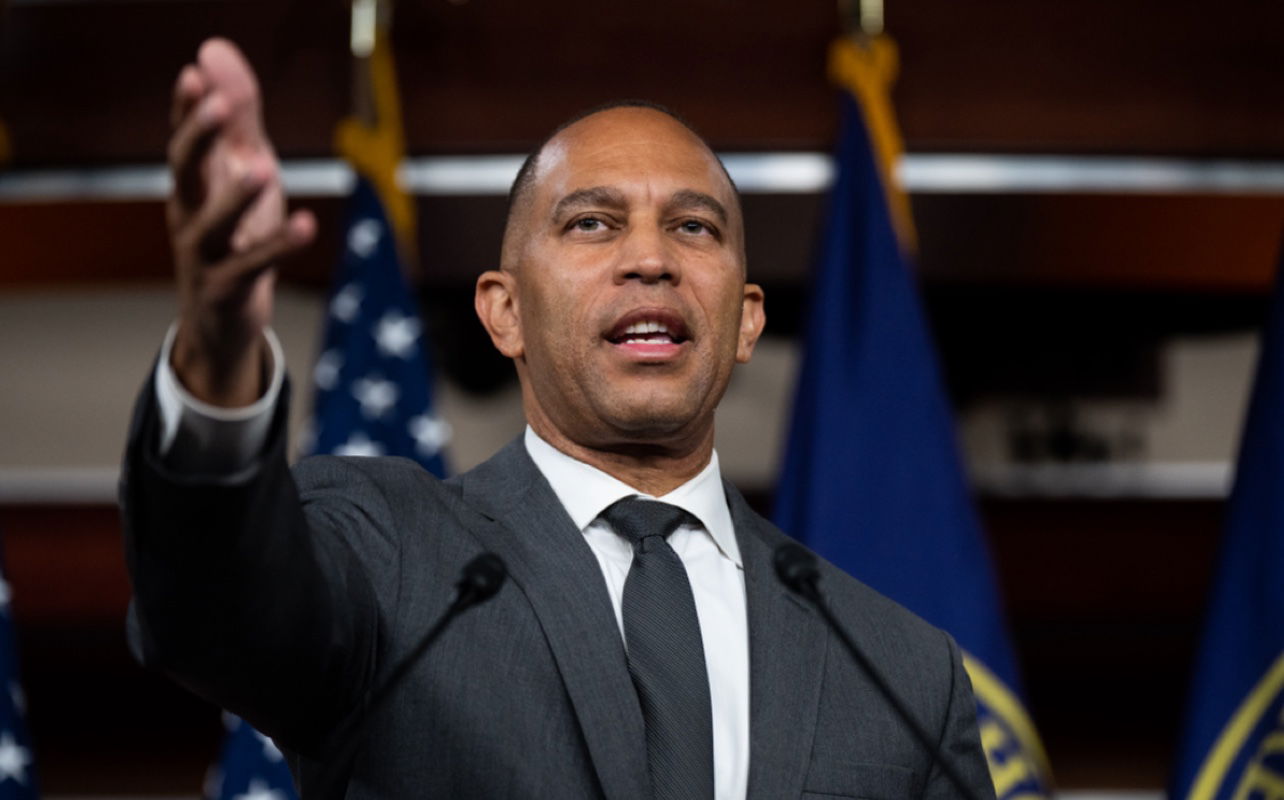
House Minority Leader Hakeem Jeffries Addresses Senate Funding Bill

The new agreement replaced a 1,500 page deal that was scrapped after President-elect Trump and Elon Musk objected to it and wanted to raise the debt ceiling.


House Minority Leader Hakeem Jeffries addressed the aversion of the impending government shutdown, which was narrowly avoided late on Dec. 20 via an 85-11 vote, and indicated in his comments that he believes the bipartisan spending bill represented the best path to take to avoid another government shutdown.

According to The Hill, in his comments to reporters, Jefferies also discussed the idea of a continuing resolution that would include only government funding, aid for farmers, and relief for natural disaster victims.

“House Democrats are going to continue to fight for families, farmers and the future of working-class Americans,” Jeffries told reporters. “And in order to do that, the best path forward is the bipartisan agreement that we negotiated.”

When reporters asked him if he thought the Democrats would support an alternative continuing resolution, he reiterated his support for a bipartisan agreement.

“We are prepared to move forward with the bipartisan agreement that we thought was negotiated in good faith with House Republicans, along with Senate Democrats and Senate Republicans, that meets the needs of the American people at this moment in time. We are fighting for everyday Americans — not for millionaires and billionaires,” he continued. “We are fighting for everyday Americans who will be hurt by a reckless Republican shutdown,” Jeffries said.

According to ABC 11, the agreement replaced a 1,500-page deal, which was scrapped after President-elect Trump and Elon Musk objected to it and wanted to raise the debt ceiling limit. This forced House Speaker Mike Johnson (R-LA) to create a new deal, which raised questions about Johnson’s job security after he failed to get a new deal through twice before the successful attempt.

The apparent influence that Musk showcased in getting the original deal abolished angered some Democrats, and Independent Sen. Bernie Sanders remarked that Musk’s interference was “not democracy, that’s oligarchy,” Republicans torpedoed Trump’s desired debt ceiling raise, and the bill still includes the funding Jeffries discussed.

According to The New Republic, several Democrats indicated on X that Musk was actually calling the shots, which seemed to get under his skin; the fracas even prompted a Trump spokesperson to remark on Dec. 19 that “President Trump is the leader of the Republican Party. Full stop.”

On Dec. 21, the White House issued a statement indicating that President Joe Biden signed the stop-gap funding bill passed by the Senate, which extends government funding until March 2025. The statement explained that neither side received everything they wanted in the negotiations.

“The bipartisan funding bill I just signed keeps the government open and delivers the urgently needed disaster relief that I requested for recovering communities as well as the funds needed to rebuild the Francis Scott Key Bridge.”

President Biden continued, “This agreement represents a compromise, which means neither side got everything it wanted. But it rejects the accelerated pathway to a tax cut for billionaires that Republicans sought, and it ensures the government can continue to operate at full capacity.”

RELATED CONTENT: Republicans Now Dominate Washington, D.C. As GOP Gets House Majority

accidental shooting, killing, arrested

Mother Of Fatally Shot Transgender Black Teen Says Incident Was A Hate Crime

Cameron Thompson was shot multiple times just after few blocks away from her home.


Nikki Matthews-Cunningham, the mother of Cameron Thompson, a Black teenager who was shot and killed in Alabama on Dec. 16, told the Associated Press that she believes her daughter was killed because she was transgender.

The 18-year-old girl was shot several times in the early morning hours on Monday, and her body was found later that afternoon, only a few blocks away from her home.

According to the Tuscaloosa Violent Crimes Unit’s Captain Jack Kennedy, 37-year-old Matthews-Cunningham believes that Thompson was killed because of her gender identity.

In an interview with the Associated Press, Matthews-Cunningham said, “Of course it was a hate crime.” She suggests that if a cisgender girl said something about the suspected shooting on social media, “He wouldn’t have lured her out of her home and killed her. But because my child was transgender, that’s why he did it. I hate this happened to her, all because of her choice of wanting to be who she was. That’s the only reason she is dead.”

Captain Kennedy said that Thompson knew the suspect and that she had posted about the suspected shooter’s sexual orientation on social media before her being killed.

Although the suspect is under 18 and his identity is being kept anonymous by authorities, he is being charged as an adult with Thompson’s murder.

As for Matthews-Cunningham’s belief that Thompson was a victim of a hate crime, legally, Alabama is one of only nine states that don’t recognize “sexual orientation, gender or gender identity in the legal classification of a hate crime” as opposed to race or religion.

Unfortunately, regardless of the narrowed hate crime definition in the state, the Human Rights Campaign reports that at least 36 transgender people have died from violence in just one year, and more than half of them were Black transgender women — drawing attention to the intersectionality between race and gender identity.

The campaign’s Alabama director, Carmarion D. Anderson-Harvey, said of the incident, “Cameron’s death is not just a profound loss for her family and loved ones — it is a heartbreaking and unjust loss for the entire transgender community in Alabama and beyond. Her life mattered. Her dreams, her light, and her limitless potential were stolen far too soon. Law enforcement must conduct a thorough, transparent investigation and find some measure of justice for Cameron’s loved ones.”

Matthews-Cunningham told AP that Thompson was only just beginning her journey in life and that she was gearing up to move to New York City and go to college before her death.

“She was just starting her life,” Matthews-Cunningham said emotionally. “She struggled with people not wanting to accept her for who she was. But she was such a good person.”

RELATED CONTENT: Black Transgender Woman In Missouri Shot And Killed On Christmas Eve

Google Headquarters, San Francisco, Guaranteed Income Program, class-action, llawsuit, tech. giant, $28 million

Stillman College, North Carolina Central University Receive $1M Donations From Google

The donations represnt the latest efforts to strengthen the tech giant's commitment to diversifying the cybersecurity field.


Stillman College, a private Presbyterian HBCU in Alabama, and North Carolina Central University, an HBCU in Durham, North Carolina, received $1 million in donations from Google, representing the latest efforts to strengthen the tech giant’s commitment to diversifying the cybersecurity field.

According to Al.com, Stillman’s donation came on Dec. 17 in honor of the Oct. 5 death of Kevin Lamar Harris, who founded the university’s HBCU Cybersecurity Clinic in 2022 and also received credit for playing a “pivotal role” in getting a $500,000 donation from Google’s Cybersecurity Clinics Fund in 2023.

According to a press release from the university announcing the donation, Maab Ibrahim, Google’s cybersecurity lead, said that Harris was the inspiration for the technology company’s funding of additional clinics at other HBCUs and minority-serving institutions.

“Dr. Harris played a pivotal role in Google’s decision to provide $500,000 to Stillman College in support of the first cybersecurity clinic at an HBCU. His leadership inspired and facilitated our funding for additional clinics at minority-serving institutions, which now includes four other HBCUs, as well as tribal and women-serving colleges — a legacy that will forever honor his memory,” Ibrahim explained.

The contributions of Harris were echoed by Dr. Yolanda W. Page, Stillman College president, in the press release.

“Dr. Harris’s untimely passing is a tremendous loss for Stillman and the HBCU Community,” Page said. “He was a trailblazer in establishing a cybersecurity clinic at Stillman. However, he didn’t just stop with Stillman, he also helped other HBCUs establish clinics on their campuses. We pledge to continue the work he started with the Consortium of Cybersecurity Clinics so that his work and legacy live on. We are thankful to Google for this gift to honor his legacy here at Stillman College.”

In a similar move, on Dec. 11, North Carolina Central University received a $1 million donation from Google to establish the Institute for Artificial Intelligence and Equity Research, the first such program at any HBCU in America.

According to NCCU Chancellor Karrie G. Dixon, the university’s partnership with Google will help prepare students to become leaders in artificial intelligence.

“North Carolina Central University is grateful to Google for their transformative $1 million investment to create the Institute for Artificial Intelligence and Equity Research, marking a historic first for an HBCU,” Chancellor Dixon said.

She continued, “This partnership will prepare our students with the tools and knowledge to lead the AI field, while developing technologies that benefit society at large. Through collaboration with corporations, local community colleges and universities, and the Research Triangle Park network, the institute will serve as an epicenter for workforce development, research and innovation, empowering students to lead one of the most impactful fields of our time and help make AI a force for good in the world.”

Melonie Parker, Google’s chief diversity equity and inclusion officer, echoed Chancellor Dixon’s sentiments in her own statement.

“Artificial Intelligence is transforming industries across the globe, and it’s essential that AI technologies are developed with equity and inclusivity at their core,” Parker said. “We’re thrilled that this grant will not only promote collaboration among HBCUs nationwide, but also fuel innovation in AI, empowering a diverse group of future leaders to tackle both the technical and ethical challenges in this rapidly evolving field.”

RELATED CONTENT: DEI Is Surviving Thanks To Artificial Intelligence And Employee Skill Set

Karen Huger, dui, guilty

‘Real Housewives’ Karen Huger Found Guilty Of DUI

Huger said that she was 'disappointed' in the verdict, but that she accepted it.


According to People magazine, Real Housewives of Potomac‘s Karen Huger is “disappointed” after she was found guilty of driving under the influence (DUI). She was found guilty on almost all counts for the Maryland incident that occurred in March.

“The Real Housewives of Potomac” reality TV star’s attorney, Scott Bolden, said, “Although we are disappointed in the jury’s verdict, we, of course, respect their decision and appreciate their time hearing our case.”

The Reed Smith law firm member added, “We continue to reserve Mrs. Huger’s right to an appeal and intend to fully pursue justice on her behalf. We appreciate your support and prayers for Mrs. Huger and her family at this time.”

On March 20, the Montgomery County Police Department confirmed that Huger was involved in a single-vehicle collision in Potomac, Maryland. According to law enforcement reports, the 61-year-old reality television star crossed over the highway median and hit multiple street signs as she skidded. She was not harmed at the time of the crash.

Before hitting the median, Huger was reportedly driving aggressively and speeding. Although she wasn’t arrested on the scene, she did receive several legal citations.

Huger was charged with a DUI and a DWI, negligently driving a vehicle in a careless and imprudent manner endangering property, life, and person, as well as recklessly driving a vehicle in wanton and willful disregard for the safety of persons and property. She also received charges for failure to control vehicle speed on the highway to avoid a collision, driving a vehicle in excess of reasonable and prudent speed on the highway, driving a vehicle on the highway with suspended registration, and failure to notify the administration of change of address within 30 days.

On the first day of court on Dec. 17, witnesses from the crash described Huger’s car smelling like alcohol. An EMT told the court that Huger was resistant to getting into the ambulance; she allegedly cursed at the medical workers.

The jury was also shown bodycam footage from the March incident, where one officer repeatedly told Huger that she was “hammered.”

She was found guilty on all charges except for reckless driving. According to People, “The Real Housewives of Potomac” star is scheduled to be sentenced on Jan 29.

Huger spoke out about the incident and emotionally shared that she was grieving at the time of the crash after losing both her parents back to back in 2017.

Huger recalled, “With the passing of my beloved mother, grief comes and goes in waves, and with Mother’s Day approaching it has felt more like a tsunami. [The night before] I met a girlfriend for dinner, we talked and brought up some very emotionally sensitive topics. I was crying on my way home and saw a car heading right for me.”

She continued, “I swerved to avoid the head-on collision, hit the divider, and then a tree. I’m hurt and bruised up a bit, but I am so grateful I am alive! I did receive citations, one of which was unrelated to the understandable incident, but what was most surprising is that the car that almost hit me just drove away!”

Huger told her fans that it’s important to “understate your emotional state” before getting behind the wheel to drive.

RELATED CONTENT: Maryland PD Releases Body Cam DUI Arrest Of ‘Real Housewives Of Potomac’s’ Karen Huger

×