Robert Smith Maintains That Diversity Is Good For Business Amid DEI Whitelash
Yet Smith also signaled his support for Elon Musk's unofficial DOGE's stated goal of cutting costs in the federal government.
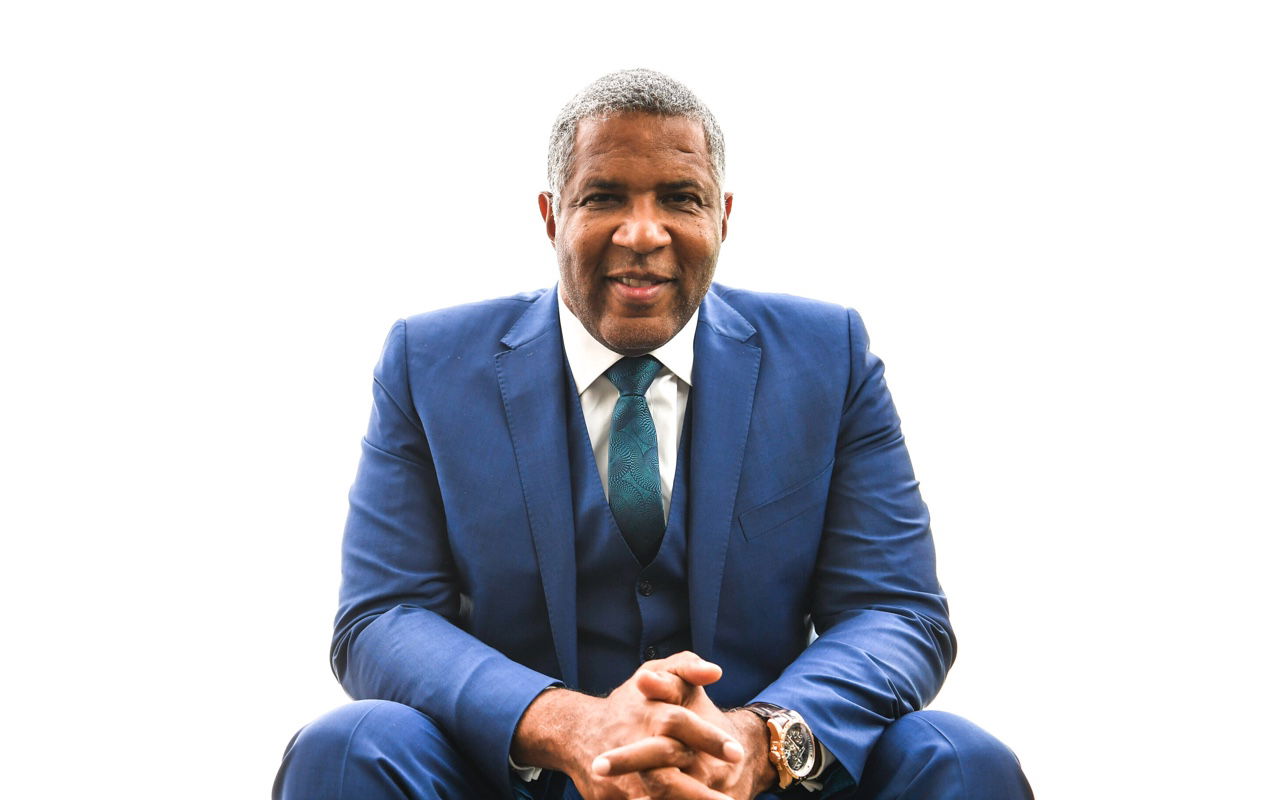
Robert Smith, one of the most prominent Black businessmen and philanthropists in America, recently reaffirmed his commitment to diversity, equity and inclusion, in contrast to the backlash against DEI, primarily from the Republican Party, in comments he made on Feb. 26 at the Economic Club of New York.
According to Fortune, Smith, who is the founder, chairman, and CEO of Vista Equity Partners, an investment firm that manages $100 billion in assets in concert with a vision for a more equitable path to prosperity for more people, laid out his vision for how businesses should operate even though the political party in power seems to believe that DEI weakens American corporations.
“America should be a place of meritocracy, but not just meritocracy in race, but meritocracy in an opportunity set,” Smith said.
“You’re going to not include them?…No, you are. People are just may be offended by the way that certain of the programs were administered,” Smith said.
According to Smith, companies, in most cases, will keep hiring the best candidates, which he noted would often also be diverse candidates, due in large part to how education has worked to broaden pathways in the United States.
“People have now been educated and have opportunities and so the best people are very diverse now relative to what it was maybe 40, 50 years ago, when people didn’t have access to education and educational opportunities to enable them to be successful in the workforce,” Smith said.
Smith also gave credit to the work of the Civil Rights movement of the 20th Century and in particular, credited Dr. Martin Luther King Jr., who is a central figure in his forthcoming book, Lead Boldly: Seven Principles from Martin Luther King, Jr., timed to release on August 12, in conjunction with the 62nd anniversary of King’s March on Washington.
In the book, speeches from Dr. King are prominently featured alongside personal anecdotes and reflections from Smith on themes and topics explored by King, such as economic justice, the Beloved Community, and the concept of two Americas.
Smith also said at the fireside chat-style conversation that Dr. King’s work enabled him to be part of the first generation of Black Americans who have all of their rights, and also cautioned that a more restrictive United States economy and business landscape threatens American prosperity in general, stating that “we cannot survive if only part of the American engine is prospering.”
Despite this, Smith also signaled his support for Elon Musk’s unofficial Department of Government Efficiency’s stated goal of cutting costs in the federal government, and voiced his confidence in Tom Krause, the CEO of Cloud Software Group, which is managed by Smith’s company, as the Treasury Department’s fiscal assistant secretary.
Clemson University Gymnast Brie Clark First Collegiate To Land Biles I In Competition
Only four gymnasts other than Simone Biles have completed the move.
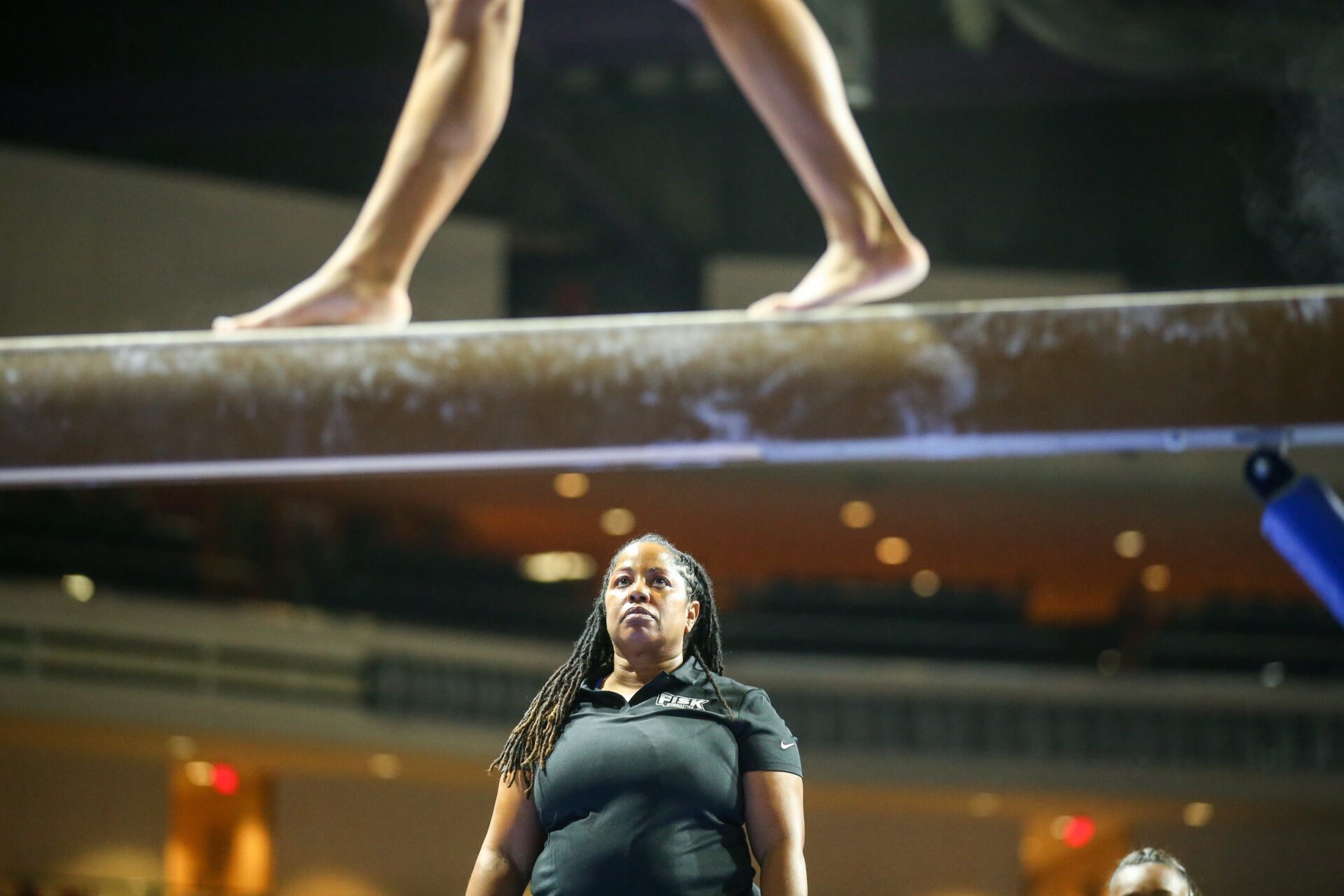
On Feb. 28, Clemson’s redshirt junior gymnast Brie Clark became the first collegiate gymnast to land the Biles I in competition, one of several elements that are signatures of the greatest gymnast of all time, Simone Biles.
According to Forbes, Clark, a standout for the Clemson gymnastics program, which has only been accredited for two years, duplicated Biles’ move that requires tremendous power, as she made a tumbling pass in competition.
What makes the move so difficult — only four gymnasts other than Biles have completed it — is the blind landing, that the move requires a gymnast to complete after completing two fully laid out flips, and finishing the second flip with a 180-degree twist.
Clemson gymnast goes viral for landing 1st Biles skill in NCAA gymnastics history. @Janai Norman spoke with Clemson gymnast Brie Clark about the historic moment of becoming the first NCAA gymnast to land one of Olympic legend Simone Biles signature moves.https://t.co/dU25se74DIpic.twitter.com/61W7YKutdN
Clark, however, made it look easy, even though she landed out of bounds. Despite that miscue, the fact that she completed the skill at all only adds to her growing legacy at Clemson’s gymnastics program. In 2024, Clark became the first competitor in program history to achieve a perfect score.
In 2022, while a freshman at Utah State University, Clark became one of only four freshmen to be named a Women’s Collegiate Gymnastics Association All-American on the floor, posting a school record National Qualifying Score of 9.940.
On the Clemson Gymnastics official Instagram account, Biles posted twice under the video they posted, acknowledging Clark’s contribution to Black History Month. “congrats 🎉🎉🎉🎉🤭🤭🤭🤭,” Biles wrote initially, following that up with “& closing out black history month! YES MA’AM 😮💨 iktr!!!!!!!”
Clemson Gymnastics also shared a video of the moment Clark realized that Biles had commented on the video, and she had a moment, fangirling out when she saw that Biles had commented twice.
Clemson gymnast goes viral for landing 1st Biles skill in NCAA gymnastics history. @Janai Norman spoke with Clemson gymnast Brie Clark about the historic moment of becoming the first NCAA gymnast to land one of Olympic legend Simone Biles signature moves.https://t.co/dU25se74DIpic.twitter.com/61W7YKutdN
“Guess who commented?” the person showing Clark the video said. “Shut up!” Clark responded after she realized that the legendary Biles saw the video. “Twice! She knows I exist.”
On March 2, as March is Women’s History Month, Clark was featured on Good Morning America after her historic routine and she told host Janai Norman that she still hasn’t quite come to grips with the fact that Biles knows who she is.
“It’s like a dream come true, I don’t think it’s really hit me yet…She’s (Biles) such a role model for me and I’ve always looked up to her and I think she’s one of the coolest people on the planet, so, like she knows I exist?” Clark said in disbelief.
Minneapolis City Council Overturns Mayor’s Veto On George Floyd Square
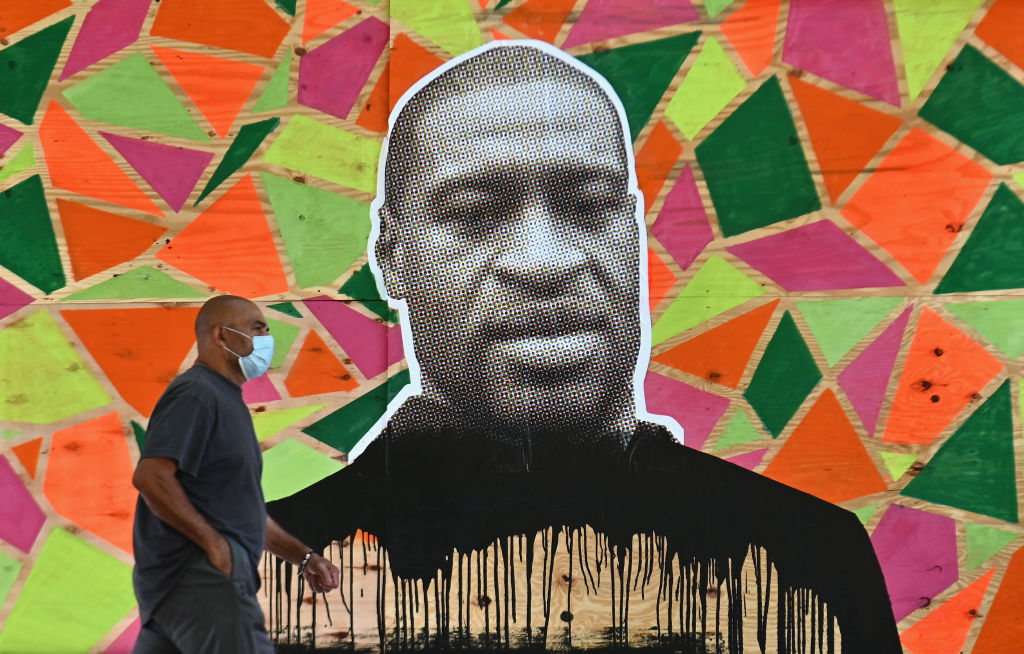
George Floyd was murdered by a white police officer in Minneapolis in May 2020.
After the family of George Floyd called on Minneapolis City Council member Emily Koski, she changed her vote from a no in December to a yes during the most recent vote on Feb. 27, helping the council override Minneapolis Mayor Jacob Frey’s previous veto regarding George Floyd Square.
According to The Minneapolis Star-Tribune, Koski, who will be opposing Frey in the mayoral race come November, indicated that the mayor has failed to work together with the council to find common ground on George Floyd Square.
“For nearly five years, his family has come to George Floyd Square to grieve and heal. To them, this is sacred ground, a place of resilience, justice and humanity. When decisions are made without centering the needs of those most affected, they disregard the heart of justice,” Koski said.
Frey, meanwhile, characterized the council’s 9-4 vote which overturned his veto as a betrayal of the community’s wishes and a waste of taxpayer money.
“The council’s decision is a betrayal of the community’s wishes and a colossal waste of time and tax dollars,” he said in a statement to the outlet following the override. “Why the council is content to let this site sit idle, without any meaningful development, and no legitimate plan, is beyond me. Our city staff have worked tirelessly alongside the community to bring forward a thoughtful, community-centered vision. Yet, this plan is being ignored by a small minority, which is simply not good governance.”
Council member Andrea Jenkins signaled her agreement with Frey in a statement on Feb. 27, alluding to community engagement data, other members, like Robin Wonsley, think the return of traffic sends a bad message to the community at large and is concerned about erasure.
“It’s not about street infrastructure, those investments can still happen,” Wonsley told MPR News. “We reduced George Floyd’s murder to street infrastructure and we’re packaging it [as] ‘this is how you get nice things,’ to a historically under-invested Black community.”
Wonsley continued, “You still can have that, you still deserve that, and that should be contingent upon your ability to concede to the fact that the City of Minneapolis and its White Supremacist dynamics wants to erase the history of what happened because we have a problem with holding ourselves accountable.”
The divide in City Hall is also reflected in the larger Minneapolis community, while some want the city to invest in housing and other community needs before changing things on George Floyd Square, others say objections to the pedestrianization of the square are being ignored.
“I’m grateful to all the community members who continue to engage with us about the future of this important site. Years of community input have guided the planning process, leading to a proposal that balances reverence for George Floyd Square with community needs for transit, emergency services, and flexible space for gatherings. I’m hopeful that we can move forward together to deliver much-needed infrastructure improvements to this community,” Anderson Kelliher said.
10 Business Grants For Black Women That Overcome DEI Eligibility Barriers
Black women-owned businesses can increase their chances of securing funding by exploring niche markets and specialized opportunities for which they qualify.
Despite the growing red wave attacking all things DEI, Black women business owners who meet specific eligibility requirements can still access grants and funding opportunities.
If you’re a first-time homeowner, running a business connected to a community initiative, or operating within a specific industry, identifying the niche markets your business aligns with can help you secure funding, Forbes reported. With the current political and economic climate making it harder for Black women to access grants tailored to them, refining your search to focus on opportunities with specific titles or criteria can serve as the loophole to accessing business grants.
Below are 10 business grants that Black women can apply to if eligible.
1. HerRise Micro Grant
The HerRise Micro Grant initiative provides financial support to visionary women entrepreneurs facing challenges in securing funding for their community-focused small businesses. With a rolling deadline, eligible applicants have the chance to receive a $1,000 award.
The micro grant is awarded each month to under-resourced women entrepreneurs, including women of color, across various industries. To qualify, businesses must be at least 51% women-owned, currently registered in the U.S., and generate less than $1 million in gross revenue. Those interested can apply HERE.
2. Amber Grant
WomensNet awards $2,000 in grants each month to eligible women-owned businesses. Established in 1998, the Amber Grant was created to honor the memory of Amber Wigdahl, a young woman who passed away at just 19 before realizing her business dreams.
Today, WomensNet continues that mission, distributing at least $30,000 in Amber Grant funding every month. To support a diverse range of businesses, the initiative has expanded to include Startup Grants, Business Category Grants, and three $25,000 Year-End Grants, among others. Grants are announced on the 23rd of each month, eligible recipients need only describe their business to WomensNet on the application page found HERE.
3. Cartier Women’s Initiative Award
The Cartier Women’s Initiative is a global entrepreneurship program dedicated to empowering women “impact entrepreneurs” and driving meaningful change through its efforts. Established in 2006, the initiative is open to women-led and women-owned businesses across all industries and countries, focusing on creating a lasting social or environmental impact.
Applications for the 2025 program will be accepted from April 18 to June 24. Selected recipients will receive $200,000 in funding, along with mentorship and ongoing support. An annual Impact Awards ceremony honors former fellows who have achieved success and made a meaningful impact through their business ventures. Those interested can apply HERE.
4. Nikon x Black Women Photographers Grant Fund
Founded in July 2020 by Polly Irungu, Black Women Photographers (BWP) launched with a $14,500 COVID-19 relief fund to support Black women photographers in urgent financial need. Since then, BWP has awarded over $185,000 in financial grants, along with brand-new mirrorless Nikon gear, to Black creatives.
Now in its fourth year, the Black Women Photographers x Nikon Inc. initiative returns with $50,000 in grants and an additional $20,000 in mirrorless gear for #BWPxNikon winners, providing recipients with opportunities to elevate their work. Available grants include a $10,000 grant for completing a visual project, $5,000 grants for project completion, and $3,000 grants to assist with business expenses.
Applications for the 2025 grants are now open with a March 28th deadline. Black Women photographers looking to take their careers to the next level can apply HERE.
5. Women’s Empire Grant
The Women’s Empire was launched in 2015 as a 501(c)(3) nonprofit organization that curates events for women of color in underserved communities. The social change movement eventually added the EmpowerHer Fund to further transform communities by supporting women-owned businesses in the New York City area.
Women-led organizations, community groups, and individual women entrepreneurs in NYC with projects that empower women and girls or support community development can apply for the $1,000 grants to grow their businesses and advance their mission. Applicants must submit a grant proposal that includes a detailed project description, budget breakdown, timeline, and supporting documents.
Remaining application deadlines for this year are June 1, Sept. 1, and Dec. 1, 2025. Applications can be found HERE.
6. Boundless Futures Foundation Grants
Launched to empower, embrace, and elevate female entrepreneurs through grants, the Boundless Futures Foundation created the EmpowerHer Grants and Her Village Grants to seek out its mission. The EmpowerHer Grants provide up to $25,000 in funding to U.S.-based female entrepreneurs aged 22 and older whose business models create a positive social impact.
Grant funding is issued as reimbursement upon submission of proof of payment for business-related expenses. Applications must include a comprehensive business plan and a detailed budget. Funds are disbursed to grantees after verifying business expense receipts. Applications are open for 4-6 weeks at the start of each quarter. More information can be found HERE.
Her Village Grants are dedicated to supporting U.S.-based nonprofit 501(c)(3) organizations that empower female business founders. In 2025, the grants will evolve to align with Boundless Futures’ mission of creating a meaningful impact in partnership with like-minded organizations. Details on the application process will be announced soon.
7. Texas Woman’s University Veteran Woman Grant
The Veteran Woman Grant aims to drive economic growth in Texas by supporting veteran woman-owned small businesses in launching new and innovative projects. This funding round offers five grants of $5,000 each, totaling $25,000. Winners for the 2025 cycle will be announced on March 11. More information on the application process can be found HERE.
8. Olga’s Kitchen Grant for Michigan Women Entrepreneurs
The Olga’s Kitchen Grant was created to support aspiring women entrepreneurs who embody the passion, ambition, and vision of Olga Loizon, the pioneering founder of Olga’s Kitchen. Eligible applicants must be women-led businesses based in Michigan and must submit a business plan along with a personal statement demonstrating financial need.
Selected winners will be awarded grants of up to $10,000. Applications are accepted on a rolling basis and can be accessed HERE.
9. The Mama Ladder International Grant
Established in 2018, the Mama Ladder created the International Grant to support mother-owned businesses. To apply, applicants must complete the application — an estimated 30-60 minute process per the website — and share their “High Five Why” on social media, tagging the title sponsor @theprofitabilityproject and using the hashtag #highfivegrant.
Applications are open Sept. 1-30 and winners are guaranteed a grant to grow their business. Those interested can apply HERE.
10. Women’s Giving Circle of Harford County Grant
The Women’s Giving Circle of Harford County (WGC) grant program supports a variety of nonprofit initiatives that directly benefit women, children, and families in Harford County. Over the past 14 years, WGC has awarded 178 grants totaling $644,509.97 to 61 nonprofit organizations dedicated to serving the community.
Recipients are awarded a one-year grant of up to $5,000 to support a nonprofit program, project, or activity that delivers services in Harford County, Maryland. The deadline to apply is March 14. More information can be found HERE.
These 10 grant options highlight the funding opportunity that still exists despite attacks against anything that says “Black women minority business grants.” Funding opportunities for Black women-owned businesses are available, but if direct funding seems limited, consider alternative strategies such as advocacy, data collection, and networking.
‘Pay Me What You Owe Me’: Jasmine McCall Brings Compensation To The Forefront At 2025 Women Of Power Summit
Jasmine McCall will be a featured speaker at the 2025 BLACK ENTERPRISE Women of Power Summit.
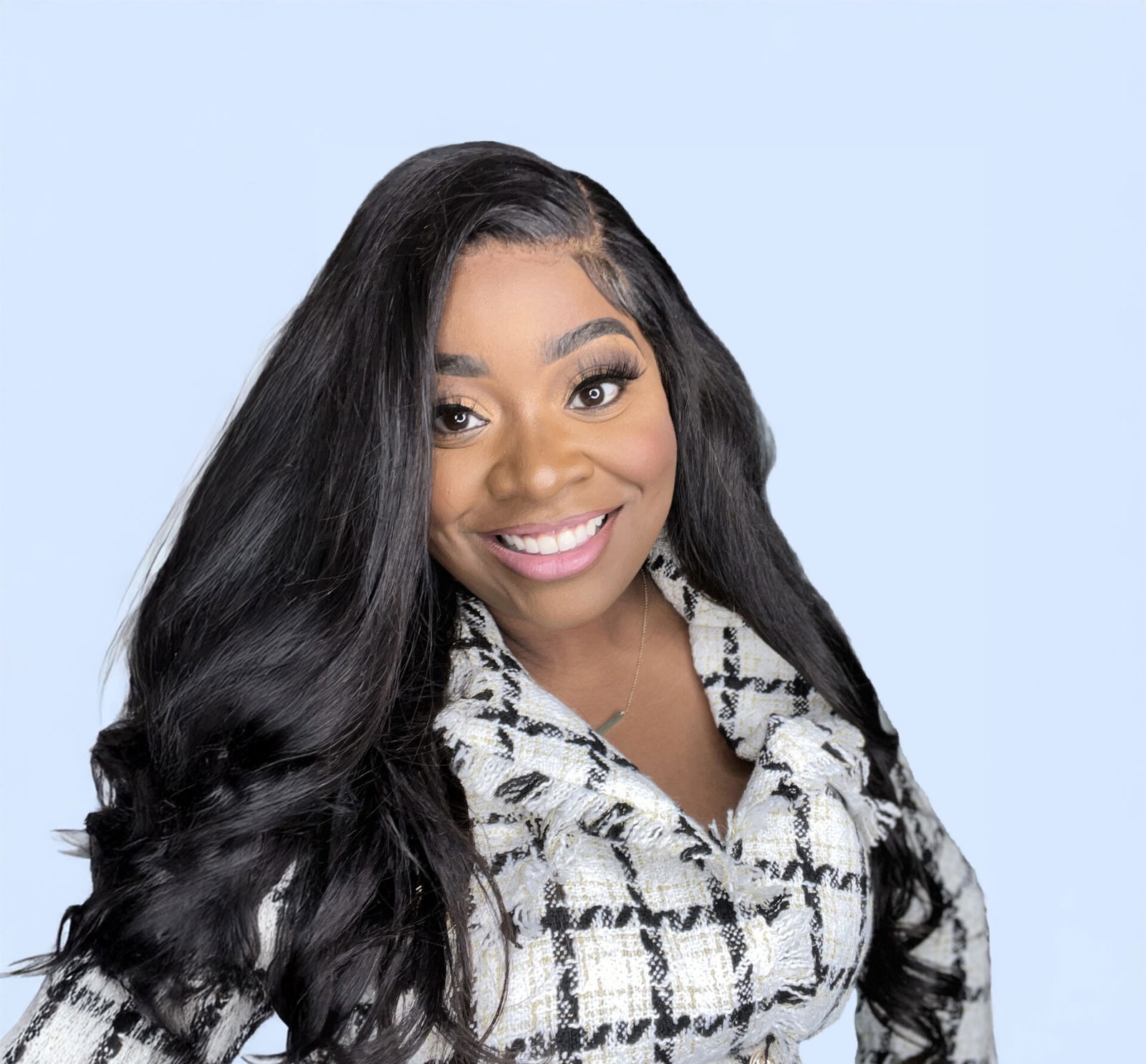
Jasmine McCall, founder of PayBump, is a featured speaker at this year’s BLACK ENTERPRISE Women of Power Summit, which will take place March 5-9 at the Bellagio Hotel in Las Vegas.
McCall will speak at the “Pay Me What You Owe Me” session on March 7. The social media content creator and businesswoman has had a profitable year.
In 2022, the 32-year-old entrepreneur quit her six-figure job as a staffing manager for Amazon. She sought to create multiple income streams on her own terms, so McCall resigned and shifted her focus to her online presence. She began curating content for her YouTube channel, where she provides other Black women with information on creating passive income.
According to McCall, her various sources of income have earned her up to $100,000 monthly in passive income.
McCall is also the founder and CEO of PayBump, a career services hub. Members gain access to “work from anywhere” job leads, interview training, and resume libraries for a monthly subscription fee. The platform also offers classes and resources designed to help members build their “career toolkit.”
The CEO uses her voice and many social media platforms to advocate for pay equity. A casual stroll through her content will showcase her discussions on negotiating wage contracts in 2025.
Her contribution to the “Pay Me What You Owe Me” speaker session is particularly relevant, as the limited progress made in pay equity seems to be diminishing.
In 2022, the Institute for Women’s Policy Research reported on Black women’s positioning regarding pay equality. According to its research, the gap varies by state.
“The annual earnings ratio for all Black women with earnings, including full-time and part-time workers, ranged from 41.8 cents in Utah to 75.3 cents per dollar in Hawaii. Black women who worked full-time year-round earned 49.6 cents for every dollar a White man made in Louisiana and 74 cents in Hawaii,” the report states.
Regardless of the state, no woman should earn less than a man with equal skills. That’s why the “Pay Me What You Owe Me” conversation is necessary.
Join other women of power in discussing ways to access higher salary bands and discover how to create both active and passive income so the power lies solely in your hands.
Check out what Jasmine McCall has to say at the 2025 BE Women of Power Summit.
First Black Queen Of ALLA Mardi Gras Parade Makes History
Gian Durand dedicated her ride to New Orleans activist Dorothy Mae-Taylor, who helped diversify Mardi Gras parades.
Gian Durand now reigns as the first Black queen of New Orleans’ ALLA parade during this year’s Mardi Gras festivities. The businesswoman has dedicated her inaugural ride to not only Dorothy Mae Taylor, but also diversity.
Durand rode down the streets of New Orleans on Feb. 26, with the evening representing more than her own accolade. Upon becoming the first Black queen in ALLA’s 93-year-old history, she remains inspired by the historic voices for change within Crescent City. She dedicated the ride to Taylor, who was a Civil rights activist and the first Black women to be elected to the Louisiana House of Representatives. The late educator also served a member of the New York City Council.
“If it wasn’t for her, I maybe wouldn’t even have the opportunity to reign,” Durand said to NOLA.
Taylor was instrumental in integrating Mardi Gras krewes. In 1992, she authored a city ordinance to eliminate discrimination, ordering krewes to implement an open admission policy. Now, her legacy is furthered by Durand’s newest crowning.
Durand grew up in New Orleans East, with parents who found economic mobility in construction and insurance. She graduated from two storied New Orleans institutions, St. Mary’s Academy, a Black catholic school, and Xavier University, an HBCU founded in the city. She later attended law school at Loyola University.
Her time interning at the Orleans Parish Juvenile Court led her to create Loving Hearts of Louisiana, a behavioral clinic for youth needing mental health care and support. The former regular on former Bravo series Southern Charm New Orleans has remained a vocal figure in her community. Her continued love for Mardi Gras also led to her membership in the infamous, and disbanded, all-female krewe, NYX. After a scandal-plagued NYX, Durand joined ALLA, once known as an all-white, predominately white club.
Since joining, Durand has seen ALLA transform into a more inclusive cohort reflecting its diverse city. After sponsoring a float and becoming a parade lieutenant, her ongoing contributions to the cultural festivity led to her appointment as queen. Her ride also coincides with a new time for their float. They will take over NYX’s place after racial tensions during the height of Black Lives Matter prompted diverse members to leave in droves. The exodus came after NYX’s previous captain posted “All Lives Matter” on social media amid protests for George Floyd. With the krewe’s dwindling members and likability, New Orleans City Council unanimously voted to remove them from the 2025 Carnival.
Durand campaigned to get the City Council’s approval for ALLA to take over. Now, her historic role holds greater meaning for the inclusive shift at Mardi Gras.
NYC Mayor Adams Defends Remarks on ‘Negroes’ Calling for His Resignation
A news anchor questioned Adams on what he meant specifically by using the word.
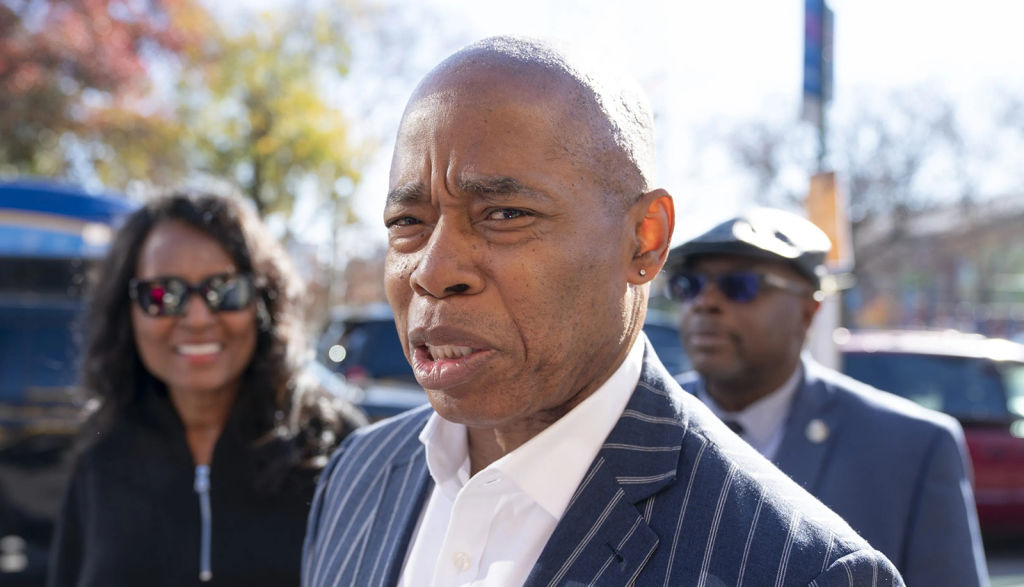
New York City Mayor Eric Adams is facing questions over his recent use of the word “negroes” during a Black History Month event.
During a reception to commemorate Black History Month, Adams reaffirmed his bid for re-election amid his ongoing corruption case. In his statement, he referred to the “negroes” who are against his continued political career.
“All these Negroes who were asking me to step down, God, forgive them,” Adams said at the Feb. 25 event, as reported by The Hill. “Are you stupid? I’m running my race right now.”
The bold claim brought new headlines to the controversial politician. Many of New York’s lawmakers have called for Adams to step down, especially after allegedly entering a “quid pro quo” agreement with the Trump administration. The agreement would allegedly have Adams fulfill Trump’s immigration agenda in exchange for his corruption charges dropped.
In light of his faux pas, Adams was asked by Good Day New York anchor Curt Menefee about the statement.
“Are you implying that if you’re Black, you have to support you?” questioned Menefee during their broadcast the following day. Adams stated he wanted all New Yorkers to support him. Menefee followed up by asking who he meant by “Negroes.”
“If you look at that whole speech, the speech talked about the continuation of lighting your flame and continuing to light and shine, and that’s what we’ve done in this administration with our team,” Adams responded. “So those who have called for me to allow my flame to prematurely be extinguished, that’s who I’m talking about.”
However, Menefee continued to press the NYC leader on his choice of words.
“So you’re saying all New Yorkers are Negroes?” Menefee argued.
“I thought I was very clear,” responded a ruffled Adams. “In my definition of what I said, all New Yorkers — we got 8.3 million New Yorkers, [and] 8.3 million people didn’t call for me to step down. I get just the opposite when I’m in the streets.”
Adams then claimed that calls for him to step down are undemocratic. He also shared that people should pray for his opposers.
“Our democracy is based on who the people of the city elect,” Adams continued. “Why are we trying to disrupt and take the power away from the people of the city who elected me to be the mayor? What have I done that we’re going to usurp that power from the people? I have not been convicted of a crime. I’ve moved the city forward. I’ve done the job that New York is asking me to do. So, when you have those that are trying to use the power of the voting rights of the people, that is not democracy, and God forgive them.”
As Adams moves forward with his reelection campaign, former New York governor Andrew Cuomo has now entered his bid for the position.
Alvin F. Poussaint, 90, Advocate For Black Mental Health And Social Justice, Dies
Poussaint's work had a tremendous impact on medicine and civil rights.
Dr. Alvin F. Poussaint, a psychiatrist and author who helped to expand on the understanding that racism is a pathology that cannot effectively be legislated away or dealt with by protests alone, died on Feb. 24 at his Chestnut Hill, Massachusetts, home; he was 90 years old.
According to The New York Times, Poussaint got his start assisting civil rights protestors straight out of medical school in the 1960s before he started producing scholarships in the 1970s that straddled the line between addressing systemic racism and advocating for Black Americans to embrace personal responsibility and traditional family structures.
In addition, Poussaint is believed to be the model for disgraced actor Bill Cosby’s defining role on The Cosby Show as Heathcliff “Cliff” Huxtable, a role which earned Cosby the title of “America’s Dad.”
Although Poussaint denied being the inspiration for the character, he was a script consultant for the show and often sent notes to the show’s writers regarding avoiding stereotypes or deepening storylines.
On this last day on #BlackHistoryMonth, I'm both proud and saddened to share about this Black icon – the psychiatrist, mental health advocate, and civil right activist, Alvin F. Poussaint, MD.
Yesterday, while speaking to @DowJones for Black History Month, someone asked if Dr. Alvin Poussaint had influenced my work. Before I could answer, she told me he had passed away recently. I hadn’t heard. The moment hit me like a collapse in the room’s foundation. Dr. Poussaint… pic.twitter.com/iMgj9jloqt
Poussaint often argued that the sexual assault accusations against Cosby should not overshadow the messages presented in The Cosby Show, as he told Ebony Magazine. “(The Cosby Show) dramatically altered the image of blacks as poor, downtrodden, yet happy-go-lucky clowns. The Huxtable family help[ed] to dispel old stereotypes and to move its audience toward more realistic perceptions. Like Whites, Blacks on television should be portrayed in a full spectrum of roles and cultural styles.”
Poussaint also worked behind the scenes on another show that centered on a Black family, Family Matters, which introduced America to Steve Urkel, a brainy, goofy teenager portrayed by Jaleel White.
Regarding the character’s reflection of Black Americans in the larger society, Poussaint told The New York Times in 1991, “The fact that he’s a nerd and very bright may be a step forward, accepting that a Black kid can be bright and precocious and might end up in an Ivy League school.”
Poussaint’s focus on families and sometimes on fatherless children fit well with the conservative views of Cosby, which were infamously put on display in his much maligned 2006 “pound cake” speech, part of a tour series Poussaint went on with the actor during the 2000s in which he interviewed Black men and families.
Conversely, Poussaint’s message that racism is partly a mental disorder drew criticism, in contrast to his earlier scholarship which established that racism is largely embedded in the psyche of white American culture itself, not necessarily a disorder, which he reflected on to The Boston Globe in 1996.
“When I was involved in the civil rights movement in the South, I believed, like a lot of the people I was working with, that we were going to turn this around in 10 or 20 years; we were going to eliminate racism. Afterward, I began to understand how deeply it was embedded in American culture: It was part of the way the country saw itself, the way people behaved and established their own sense of worth, using blacks and some other groups as scapegoats,” Poussaint said.
Dr. Poussaint is survived by Tina Young Poussaint, his wife, a daughter they shared, a son from a previous marriage to Ann Ashmore, and his sister. One of the great tragedies of his life involved his older brother, Kenneth, who died in 1975 of meningitis after battling drug addiction.
According to Bernard Chang, the dean of the Harvard Medical School at Harvard University, which honored Poussaint with a Diversity Lifetime Achievement Award in 2014, Poussaint’s work had a tremendous impact on medicine and civil rights.
“Dr. Poussaint’s life and work had an immeasurable impact on the profession and practice of medicine in this country, the social movements for civil rights and human rights, the representation of people of color within our institution and in medical education more broadly, and our collective understanding of the impact of racism on the health and lived experiences of Black Americans,” Chang said.
Descendants Of Black Tenant Farmers In Virginia Speak Out As Ancestors’ Graves Displaced For Industrial Park
Plans to honor the sharecroppers buried there include a memorial archway at the new site.
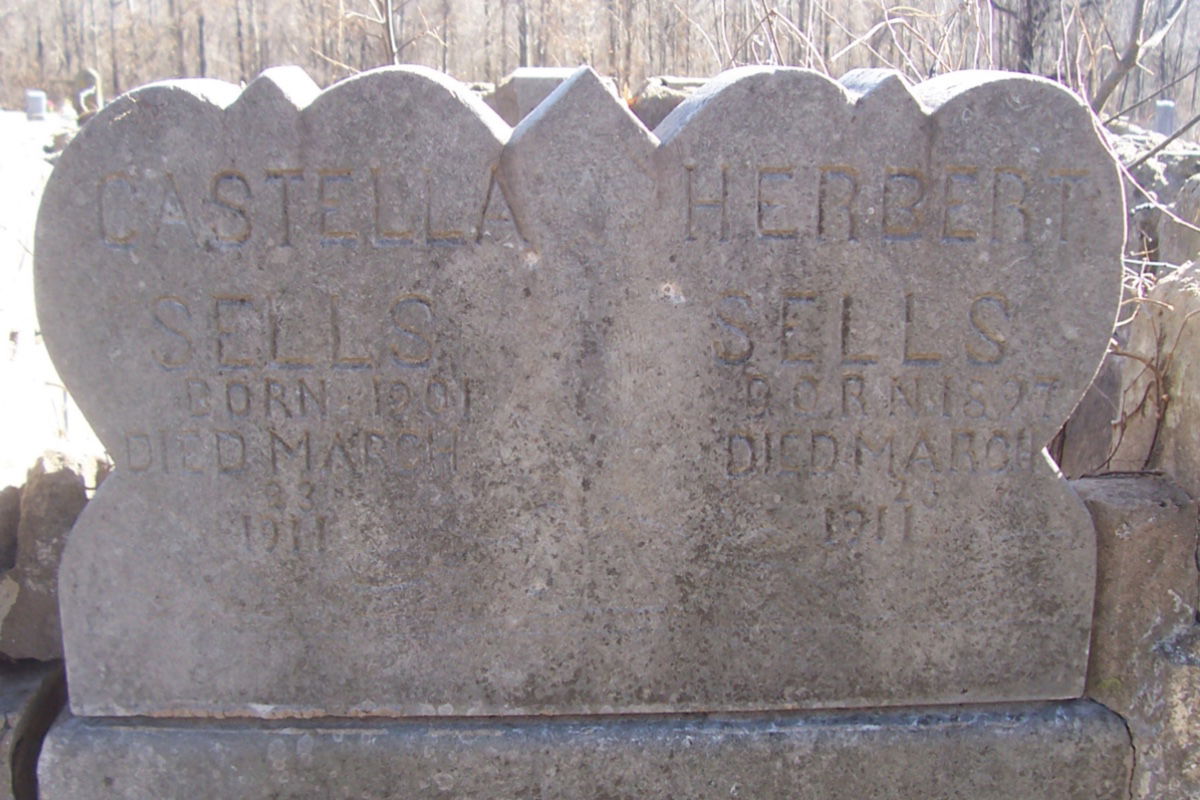
The graves for hundreds of Black tenant farmers on a Virginia tobacco plantation will soon be moved to a dedicated burial ground.
However, the decision to do so has sparked backlash and mixed feelings from the surrounding community, especially as the displacement makes way for an industrial park. Opposers believe that the graves’ upheaval will disrespect those enslaved and exploited during their lifetimes. Supporters expressed their own hopes that the remains’ identification could lead to a proper reburial.
Despite this conflicting feelings, archaeologists have already began exhuming 275 graves, according to ABC News. Plans for a cemetery a mile away from the original site is also in development. The now above-ground remains, many of which belong to the tenant farmers and their families, currently await placement at a funeral home.
However, officials have initiated discussions with the descendants on processes to identify their ancestors, including genetic testing. As for the cemetery itself, a memorial archway may be created to note the significance of the burial ground. Jeff Bennett, a man whose great-great-great grandfather is one of the many buried in the area, thinks the additions will grant his ancestor a dignified resting place.
“I don’t think anybody would want their ancestors exhumed or moved,” said Bennett. “But for them to give us a lot of say so in the new cemetery, down to the design details and the plaques and memorials that we put up, I feel like (they’re) really doing it in a dignified way, in a respectful way.”
He added, “I feel like we’re reemphasizing the significance of our ancestors. It’s been generations since people used that area to bury people. And now we’re rediscovering their stories. And hopefully, we can continue to tell those stories to the next generations.”
However, the plantation’s gruesome history still bothers some descendants who want their ancestors’ remains to have peace. The Oak Hill plantation, owned by Samuel Hairston, was part of a family empire that thrived off slavery and, subsequently, sharecropping. A 1999 book, The Hairstons: An American Family in Black and White, details its 45 plantations and farms across the South, as well as the white and Black families that took the surname.
“It just seems that 100 or so odd years after their death, there’s still no rest,” shared another descendant, Cedric Hairston.
Despite the generations of families that lay on its grounds, mostly marked by moss-covered stone, the Pittsylvania-Danville Regional Industrial Facility Authority now owns 3,500 acres of this land. The public entity hopes to create a $1.3 billion battery production facility there, which would bring 2,000 jobs as well.
While Virginia courts granted a permit for the graves’ removal, they did so based on the belief that descendants approved the matter. However, the descendants still want overdue recognition of the people who lived and died at the plantation. The industrial authority raised $1.3 million to fund the project, hiring consulting company WSP to manage it. They plan to hold a dedication ceremony after transferring the graves this month.
Hazel Dukes, NAACP Legend And NYC Civil Rights Activist, Dies At 92
At the time of her death, Dukes was still the president of the NAACP New York State Conference.
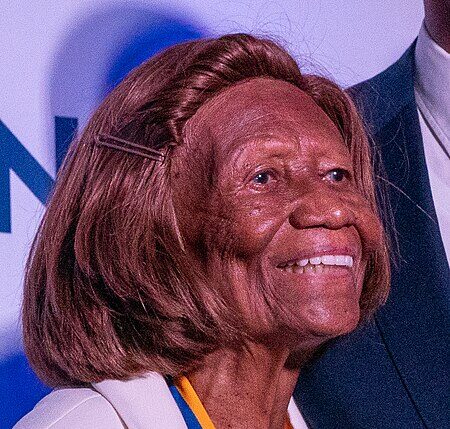
Hazel Dukes, a New York City and national civil rights leader died during the early morning hours of March 1 in her Harlem home, according to former NY Gov. David Paterson, a close friend and associate who had known her since he was a child.
According to The Gothamist, Dukes, at the time of her death, was still the president of the NAACP New York State Conference and remained a towering figure in politics who was sought after by presidents, mayors, governors, and reporters for advice and opinions for generations.
As Paterson told the outlet, Dukes was a tremendous force for justice.
“She was really a tremendous force,” Paterson said. “Behind the glamour of her advocacy and forcing her way in as a woman — and at times, forcing her way in as an older woman…was not just that people listen to what she had to say, but they understood why she was saying it.”
In a 2024 profile for New York Amsterdam News, Dukes shared that she grew up in the same neighborhood as Rosa Parks in Alabama and was deeply influenced by activism, thanks to her father. A Pullman porter, he was a member of the Brotherhood of Sleeping Car Porters, the first all-Black railroad union and the first all-Black labor union in the U.S., led by the renowned labor leader A. Philip Randolph.
In the 1950s, the Dukes family moved to Long Island, New York, and Hazel enrolled in a community college in Nassau County where she would eventually become the first Black woman to work for the Nassau County attorney’s office, and the first Black vice chairwoman of the Nassau County Democratic Committee.
In the 1960s, President Lyndon B. Johnson appointed her to his Head Start program, a fixture of his Great Society initiatives to help lift Americans out of poverty. As a result, education and anti-poverty programs would be a focus of her career in activism throughout her life.
We mourn the loss of Dr. Hazel N. Dukes, President of the NAACP New York State Conference and Member of the National Board of Directors. Dr. Dukes was one of the giants on whose shoulders we will continue to stand as we continue to do God’s work on earth. https://t.co/eNsK2YFnmYpic.twitter.com/gAymZqxBGv
I speak often of the heroes upon whose broad shoulders we stand. Dr. Hazel Dukes was one of those heroes.
Hazel was an educator, an advocate, and an activist. Her leadership within the NAACP moved New York state and our nation forward, whether through the fight for economic…
Hazel Nell Dukes—NAACP legend, lifelong civil rights activist, champion of Black people, omnipresent force of nature & Harlem queen—is now an ancestor. “Ma Dukes”, we thank you for being the example. Grateful for your extraordinary leadership and service. Rest in peace and power. pic.twitter.com/HQe4bqAvCD
This morning at the National Action Network’s Saturday Action Rally, we opened Women’s History Month by honoring a true legend, our mother of the modern day civil rights movement, Hazel Dukes. She fought for justice in the streets, in the halls of power, and right beside us in… pic.twitter.com/IpQQBu51vv
Dukes eventually became a part of the “Gang of Four” in Harlem, where she was the only woman to get a “seat at the table” alongside Percy Sutton, David Dinkins, Charles Rangel, and Basil Peterson, David’s father; the group’s goal was to create a base of Black political power in New York City.
According to Paterson, “When these groups would get together they were all male. But it was understood that Hazel would be there.”
Hazel’s son, Ronald Dukes, told CBS News New York that she worked tirelessly for civil rights her entire life, but the family was taking solace in the fact that she was now resting.
“Mom was a committed civil rights leader in New York City and the nation and worked tirelessly on the frontlines almost to the end. We find comfort in knowing that while she’s no longer with us physically, but resting in the bosom of Jesus,” Ronald Dukes said.
Dukes was one of the few women to serve as the national president of the NAACP; she was elected in 1989, a position typically occupied by men, and was previously chosen to be the leader of its New York Conference in 1977.
After a scandal, which involved Dukes pleading guilty to embezzling money from Velma McLaughlin, a woman who had leukemia and had given Dukes power of attorney, she lost her national NAACP reelection in the 1990s.
Rev. Al Sharpton, himself a fixture in New York City politics and a friend of Dukes for over 40 years, called her a force of nature in his remarks to the outlet.
“She was a force of nature for justice and an activist of the highest order. She made a difference, and we will forever be indebted to her. I spoke to her by phone just two days ago. She was weak and somewhat conclusive that her work was done,” Sharpton said. “We will never have another Hazel Dukes, but I am grateful that we had this one.”
New York City Mayor Eric Adams, whom Dukes supported, also issued a statement to the outlet regarding Dukes’ legacy in New York.
“For over 40 years, Ma Dukes has been an unwavering presence in my life — a trusted advisor, a cherished friend, and a guiding light during some of my most challenging times. Ma Dukes was a true trailblazer who dedicated her life to uplifting our community. As the longtime leader of the NAACP New York State Conference, she fought tirelessly for civil rights, education equity, and economic justice. Her fearless advocacy opened doors for countless New Yorkers — including myself — and helped shape our city and state into what it is today,” Adams said. “Her legacy lives on in the countless lives she touched and the changes she helped create in our city and our nation. New York City has lost a giant, but heaven has gained a warrior.”