BREAKING: Multiple People Injured in Florida State University Shooting; Shelter-In-Place Ordered
In 2014, a gunman opened fire in the campus library, wounding three people before being killed by police
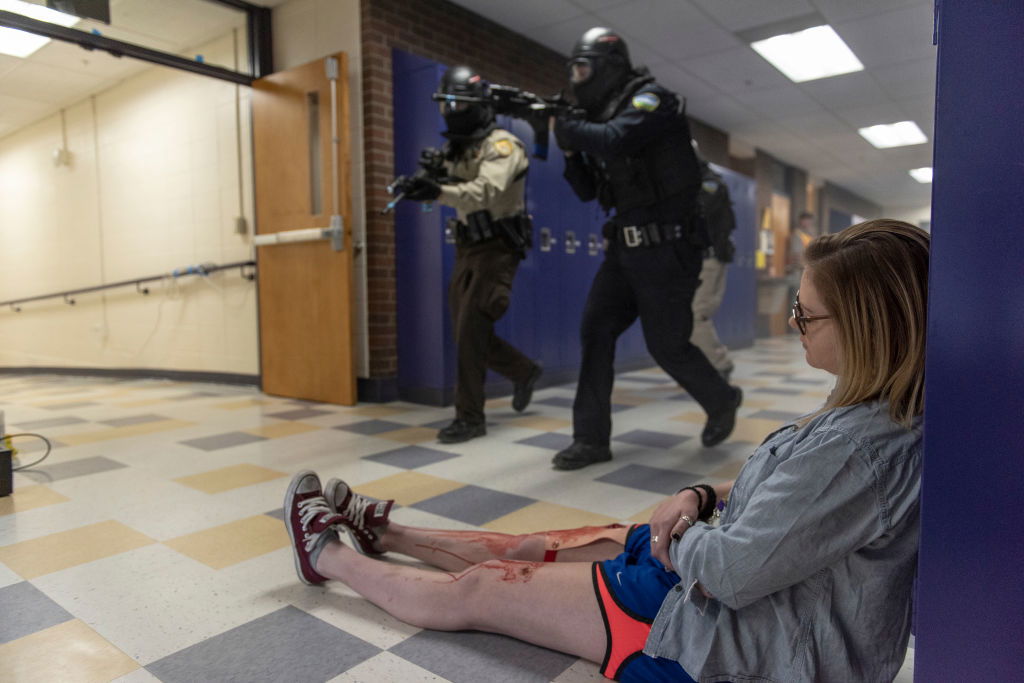
Multiple people were injured, one critically, in a shooting Thursday at Florida State University, prompting a campus-wide shelter-in-place order.
FSU issued an alert shortly after noon telling individuals on its Tallahassee campus to “shelter in place” due to an “active shooter call at the Student Union.”
Tallahassee Memorial HealthCare confirmed to NPR via email that it had received six patients from the incident, “one in critical condition and the rest in serious condition.”
On X, Florida Gov. Ron DeSantis addressed the situation: “Our prayers are with our FSU family, and state law enforcement is actively responding.”
President Donald Trump, speaking at the White House, said he had been briefed on the shooting, calling it “a horrible thing. It’s horrible that things like this take place.”
Reid Seybold, an FSU senior, recounted being in class when the shooting occurred. He described how someone barricaded the door until police arrived to escort everyone out.
“I’m honestly terrified,” Seybold told WTSP. He also expressed concern for friends elsewhere on campus, but had since heard that they were safe.
Another student called out leadership on the state and federal level.
“I’m gonna call on Governor Ron DeSantis [and] Donald Trump. This stuff keeps going on. We’re praying every day. Praying is good. Spirituality is good. But prayers don’t do much. It’s good for the soul, but is this still happening? I think it is. So we need to make some gun reforms.”
On the scene at the FSU shooting this Florida State University student calls out Donald Trump and Ron DeSantis:
"I’m gonna call on Governor Ron DeSantis [and] Donald Trump. This stuff keeps going on. We’re praying every day. Praying is good. Spirituality is good. But prayers… pic.twitter.com/YoX7Gs1O4G
FSU Shooter captured on camera shooting at victims. There also appears to be a victim on the ground beside him at the start of the video. pic.twitter.com/3Fesu10s0M
The university advised students to avoid the Tallahassee campus and canceled all “classes and business operations” through Friday. Later, FSU extended the cancellations to include all “athletics home events” through Sunday.
This is not the first shooting incident at the university. In 2014, a gunman opened fire in the campus library, wounding three people before being killed by police.
Founded in 1851, Florida State University has an enrollment of 45,000 students and employs approximately 6,000 faculty and staff members.
More information will be provided as this story develops.
Over 300 Female Physician Assistants Sue Michigan Medicine, Claiming Wage Discrimination
The plaintiffs claim UM knew about this disparity for years but failed to act on it
More than 300 current and former female physician assistants (PAs) have sued the health system affiliated with the University of Michigan (UM), Michigan Medicine, over allegations of wage discrimination.
In the lawsuit, filed April 15, current PA Christine Oldenburg-McGee was named the plaintiff as she brought the lawsuit forward on behalf of herself and other colleagues.
The group was allegedly paid $9,000 less per year on average than their male counterparts doing the same amount of work. The president of the United Physician Assistants of Michigan Medicine (UPAMM) union, Oldenburg-McGee said the systemic and long-standing gender-based pay disparities violate Michigan’s Elliott-Larsen Civil Rights Act (ELCRA) as well as other state and federal laws.
“This case could have been avoided with action years ago,” the PAs’ attorney Sarah Prescott said in a statement, according to MLive. “Instead, our clients have waited long enough. It’s time for accountability.”
The plaintiffs claim that UM was aware of this disparity for years but failed to address it, instead negotiating a contract in 2021 that “rather entrenched it further” and perpetuated the wage gap.
“Despite the UM Defendants’ knowledge of the gender wage gap, and despite expressions of intentions to address the disparity, the UM Defendants have for years failed and refused to correct for it,” the suit read.
The defendants in this lawsuit are the University of Michigan Board of Regents, the University of Michigan, Michigan Medicine, and the University of Michigan Medical School. Some executives named include Dr. David Miller, Jovita Thomas-Williams, and Hakim Berry, as well as Dr. David Miller, the CEO, who allegedly exercised policymaking oversight and managerial control over Michigan Medicine during the specified periods listed in the suit.
The case, filed in the Washtenaw County Circuit Court, is expected to move forward as a certified class action under Michigan Court Rule 3.501.
The plaintiffs seek not only back pay and related retirement losses but exemplary and punitive damages to deter future violations.
“This case is about equal pay for equal work – nothing more, and certainly nothing less,” Prescott said. “These women are highly trained medical professionals. They make the system itself operable, and they deserve to be compensated fairly and equitably.”
DOGE claims to have found thousands of 'unused or unneeded' federal credit cards
The Department of Government Efficiency (DOGE), led by Elon Musk, has deactivated more than 200,000 federal credit cards across 16 agencies as part of an initiative to minimize government spending.
The move follows an audit that DOGE claims identified numerous unused or unnecessary cards. According to to agency, 4.6 million federal credit cards have been issued. After seven weeks of investigation the entity has identified the “unneeded” cards.
Credit Card Update!
The program to audit unused/unneeded credit cards has been expanded to 30 agencies. After 7 weeks, ~470k cards have been de-activated.
As a reminder, at the start of the audit, there were ~4.6M active cards/accounts, so still more work to do. pic.twitter.com/G50NfsKeTm
— Department of Government Efficiency (@DOGE) April 16, 2025
The Department of the Interior had the highest number of cancellations, with nearly 20,000 purchase cards and 40,000 travel cards deactivated. The Department of Health and Human Services followed, with over 43,700 travel cards and 2,235 purchase cards canceled.
Elon Musk, who is overseeing DOGE, expressed concerns about excessive federal spending. He emphasized the need for continued efforts to streamline government operations.
The figures given by DOGE may not be accurate as the agency has been called out for false findings and misrepresented figures.
Initially, DOGE claimed to have saved $55 billion through various cost-cutting measures. However, investigations have uncovered substantial errors in these figures, Axios reported. In one instance there was a contract with ICE, which DOGE reported as an $8 billion cancellation. In reality, the contract was valued at $8 million, with $3.8 million already expended, resulting in actual savings of only $4.2 million.
Further analysis revealed that DOGE’s “Wall of Receipts,” intended to document savings, included numerous discrepancies. Many contracts were double or triple-counted, and some were listed despite having already expired or canceled prior to DOGE’s involvement.
Critics argue that DOGE’s approach may lead to increased costs in the long term. For instance, canceling bulk purchase contracts can result in the loss of negotiated discounts, potentially raising expenses if services or products are needed later.
Lawmakers are now calling for transparency in DOGE operations in an effort to mitigate the harm done under the guise of efficiency.
Gayle King ‘Very Disappointed’ By Backlash Over Blue Origin’s All-Women Spaceflight
Gayle King is responding to criticism over the all-woman Blue Origin spaceflight she took part in.
Gayle King addresses the backlash she and her fellow Blue Origin passengers have faced following their brief spaceflight on April 14.
The CBS Mornings anchor spoke out during an April 16 interview with ET, defending the all-women spaceflight she joined alongside Katy Perry and explaining why she is “very disappointed and very saddened” by the fallout. The celebrity-filled mission, supported by Jeff Bezos’ Blue Origin, has drawn criticism from several, including stars like Amy Schumer, Olivia Wilde, and Olivia Munn—but King believes much of it stems from a lack of understanding and research.
“This is what bothers me because I’ve certainly read some of the things online, coming from people that I know, that I like, that I consider friends,” King said about the famous faces criticizing the spaceflight. “And this is what I would say to that. Space is not an either-or. It’s a both-and because you do something in space, doesn’t mean you’re taking anything away from Earth.”
Gayle King responds to the backlash surrounding Blue Origin's all-female spaceflight: "I'm very disappointed… what it's doing to inspire other women and young girls–please don't ignore that." pic.twitter.com/Je7V61dGR3
The morning news host offered her explanation of how Bezos is reportedly investing his billion-dollar net worth into when it comes to space exploration, and according to King, it’s to make our planet better.
“What you’re doing in space is trying to make things better here on Earth,” she said. “What Blue Origin wants to do is take the waste here and figure out a way to put it in space to make our planet cleaner.”
King also pushed back against those downplaying the 11-minute journey she took with Perry, Lauren Sánchez (Bezos’ fiancée), Amanda Nguyen, Aisha Bowe, and Kerianne Flynn, insisting it was more than just a “ride” and should be recognized as a legitimate spaceflight.
“Please don’t call it a ride. That is not a friggin’ ride,” King quipped. “Whenever a man goes up, you have never said to an astronaut, ‘Boy, what a ride.’ We duplicated the same trajectory that Alan Shepard did back in the day, pretty much. No one called that a ride. It was called a flight. It was called a journey.”
She continued, “Because a ride implies that it’s something frivolous or something that’s lighthearted. There was nothing frivolous about what we did and the machine that we were on and what it took for the people to get that machine up and running, to get us up and get us back down safely.”
At the end of the day, King is proud of what she achieved and sees the mission as a trailblazing moment—one that she hopes will inspire young girls watching to dream bigger.
“What it’s doing to inspire other women and young girls, please don’t ignore that,” she said. “I’ve had so many women and young girls reach out to me, and men too, by the way, men too, that say, ‘Wow, I never thought I could do that, but I see you doing it’ at this stage of my life. Who would have thunk it? Not me.”
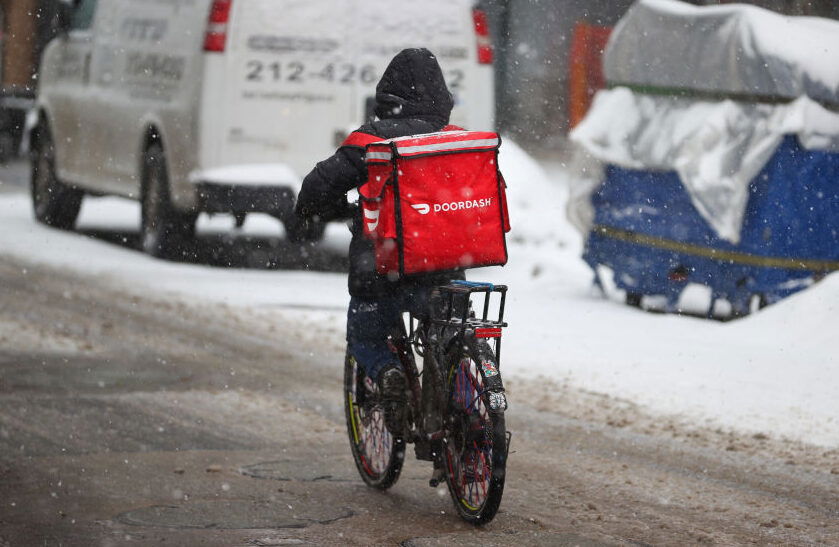
Near-Death Delivery: DoorDash Driver’s Close Call Caught On Doorbell Camera
DoorDash drivers are facing increasing danger.
A shocking video from a doorbell camera shows a DoorDash delivery driver narrowly avoiding gunfire during a recent delivery.
In the footage, the unnamed worker is seen placing an order at a customer’s doorstep. Moments later, the sound of gunshots is heard, prompting the driver to quickly retreat from the camera’s view.
The video then cuts to show a bullet lodged in the exact spot where the delivery driver had been standing. The driver was reportedly wearing a shirt that read, “God Got Me,” a detail some have called chilling in light of how close he came to being struck.
Unfortunately, this is not an isolated incident, as delivery drivers face increasing danger on the job.
Aaron Giles, a 38-year-old delivery driver, was tragically shot and killed while making a delivery in Tallahassee, Florida, in March 2025.The incident occurred during his routine delivery route, leaving his family in shock and mourning.
Giles was known for his dedication to his work and his family.Following his untimely death, his widow, Alisha Giles, spoke to the Tallahassee Democrat about the effects of the tragedy on her family.
“We both just wanted better for our family and to build up a foundation,” said Alisha, a team lead for Amazon in Tallahassee. “I’m just trying to adjust from wanting something with someone for so long, to now it’s being changed, and it’s not by choice.”
Alisha initiated a GoFundMe campaign to cover funeral expenses and support their children.The campaign has garnered attention and support from community members who remember Giles as a hardworking individual committed to providing for his loved ones.
“This horrible tragedy not only affected an entire family forever, but also became another example of the dangers of gun violence and the destruction it leaves behind,” she wrote on the fundraiser’s website.
Local authorities are investigating the incident, but no arrests have been made as of yet.The community continues to demand justice and enhanced safety measures for delivery drivers in the area.
Judge Glenda Hatchett Champions Fight Against Black Maternal Mortality
Judge Hatchett lost her daughter Kira nine years ago after she delivered a second child through a scheduled cesarean section.
On a morning just days before Black Maternal Health Week, Judge Glenda Hatchett met with BLACK ENTERPRISE at a neighborhood staple: Gocha’s Breakfast Bar, a Black woman-owned breakfast and brunch cafe in the heart of Southwest Atlanta, not far from the Collier Heights community Hatchett was raised in. She is poised, spry, and owns a sense of urgency. She is every bit the fabulous and fierce judge you might be familiar with from Court TV.
Gavel aside, Hatchett pulls no punches when it comes to Black maternal health. Hatchett is not only on a mission to bring awareness to the epidemic that impacts Black women and birthing people at disparate rates, she is relentless in the pursuit to hold medical institutions and practitioners accountable for slights in obstetric care provided to the Black maternal demographic. Hatchett took up this initiative when her family was directly affected.
She lost her daughter Kira nine years ago after she delivered a second child through a scheduled cesarean section. The 39-year-old mother, who was healthy with no underlying illnesses or conditions that might complicate pregnancy, was “butchered” during the standard procedure—and became the victim of giving birth while Black.
“The autopsy showed that she was butchered,” Hatchett tells BE. “He butchered her and in the process just lacerated her insides, and if they had done the CT scan at 6 o’clock when it was ordered. She would be alive if they had kept monitoring her and seeing that she was bleeding.”
Hatchett continues, “All the medical experts who reviewed her medical records don’t understand how she lived as long as she lived…I think it was her sheer determination. They did not get her back into the OR until midnight, and at that time, they found liters of blood in her abdomen. She had bled out. She coded, and they brought her back. The second time, she was gone. This was totally preventable.”
Hatchett had not always been privy to the statistics around Black maternal mortality or the negligence women encounter during labor and delivery. On its face, cases like Kira’s might fall under medical malpractice, but there’s far more to consider: Kira was one of six women in lawsuits; the physician who performed the fatal C-section did not lose his license; Kira was a Black woman. These things mattered—and as a practicing attorney, Hatchett decided she needed to address Black maternal mortality with a more nuanced legal approach.
“I am taking on these cases now all over the country,” Hatchett tells BE. “We can never bring all of these mothers back. These children will never hug their mothers.”
“Three to four times more likely than Black and Brown women to die than white women,” she adds. “Well, none of them should be dying if it were preventable, right? Black women are catching the brunt of this. There is a disparity in the treatment of Black women in these hospitals. That is not only a malpractice practice issue—it is a civil rights issue, and that is exactly how we got to look at this.”
While there’s been an overall decline in maternal mortality rates across the U.S. to the tune of slightly over 10 percent according to statistics released by the CDC in 2023, pregnancy-related deaths are proportionately higher for Black women compared to white women and other ethnic groups of women. Findings from the National Vital Statistics System study revealed that for every 100,000 live births, Black women succumb to maternal death 50.3 times. The numbers are stark in comparison, dropping significantly for white women at 14.5, Latin women at 12.4, and Asian women at 11.
The Trump administration’s freeze on Title 10 funding in 20 states will further impact Black maternal health. Title 10 funds cover reproductive health care, including everything from sexually transmitted infections to abortion services. Hatchett says it will be “more difficult for women to make choices” about abortion, while others might be forced to give birth, albeit putting their own lives at risk.
“Right here in the state of Georgia, a young woman who died because she could not get the services because there was a question about whether it was medically needed or legal … and in the process of all of that past, she died,” Hatchett says.
Despite the improvement in the number of women dying in childbirth, Hatchett expects things will worsen, particularly when the loss of Medicaid enters the equation.
“If we’re talking about changes to Medicaid … that’s going to affect predominantly low-income communities and Black ones.”
Hatchett is no stranger to litigating on behalf of vulnerable communities. Unbeknownst to many, it was Hatchett who represented Philando Castile, who was killed by a Minnesota police officer in front of his girlfriend and daughter in July 2016 after a traffic stop. She currently represents clients involved in catastrophic accidents and events.
Judge Glenda Hatchett shows no signs of slowing down in the pursuit to protect the people. There’s more on the horizon.
Judge Joe Brown Drops Nugget Regarding Karmelo Anthony’s Bail Reduction
Judge Joe Brown analyzes Karmelo Anthony case thus far and gives his expert opinion.
Judge Joe Brown is weighing in on the case of Karmelo Anthony, a 17-year-old who was arrested for murder.
The former television judge sat down with YouTube creator TheRealDana to discuss the circumstances surrounding Anthony’s arrest and the legal implications of the case.
According to Brown, if Anthony were assaulted in the commission of a robbery, then he would be considered a victim.
“He’s not a perpetrator,” Brown said in the interview. “He’s a victim of a robbery. You can’t hold him accountable for the conduct of somebody else.”
Judge Brown also criticized the bond set for Anthony, arguing it was unjust. He explained that bail is not intended to reflect public opinion or punishment, but rather exists solely to ensure a defendant’s return to court.
“If a defendant has no prior record, and there’s no flight risk, then the law says there should be a reasonable bond set,” Brown said. “That young man should be awaiting trial outside of jail.”
Anthony was initially given a $1 million bond. Supporters have since rallied to help his family raise funds. His next court date has not been announced yet.
On April 2, 2025, 17-year-old Karmelo Anthony was arrested and charged with first-degree murder after allegedly fatally stabbing fellow student Austin Metcalf during a high school track meet at Kuykendall Stadium in Frisco, Texas. According to witness accounts and police reports, the altercation began when Metcalf asked Anthony to move from an area designated for Metcalf’s team. The situation escalated, and Anthony allegedly stabbed Metcalf once in the chest. Metcalf died at the scene, reportedly in the arms of his twin brother.
Anthony claimed he acted in self-defense, stating that Metcalf had grabbed him during the dispute. He was initially held on a $1 million bond, which was later reduced to $250,000. Following the bond reduction, Anthony was released on house arrest, subject to conditions that included wearing an ankle monitor and obtaining judicial permission before leaving home.
The case has garnered significant public attention, and fundraisers have been established for both families. Supporters of Anthony have raised over $431,000 for his legal defense, while a separate fundraiser in memory of Metcalf has collected over $500,000.
As the investigation continues, the case will be presented to a grand jury for consideration. Due to Anthony’s age, he is not eligible for the death penalty or life without parole, in accordance with a 2005 Supreme Court ruling.
Video Of Alleged Dallas School Shooter Emerges; 17-Year-Old Claims, ‘I Had To Do It’
The suspect turned himself in and is currently in custody
A video has emerged on social media of suspected high school shooter Tracy Haynes before Dallas police officers arrested the 17-year-old for his alleged role in the shooting at Wilmer-Hutchins High School on April 15.
The video clip, posted on Instagram by beezytvmedia, shows the suspect seemingly admitting to what he had just done as he is seen driving. Haynes was charged with aggravated assault and mass shooting. He is currently being held in custody as his bail is set at $600,000. He is accused of shooting three students inside the school.
In the video, he is seen explaining why the action took place at Wilmer-Hutchins, saying he was threatened and that he was told that he was going to be killed, and he wasn’t going to allow that to happen.
“N**ga told me he was gonna kill me, all these n**gas told me they was gonna kill me, look what happened.”
He then says he loved various family members and the person “behind the camera” who was filming.
“I want everybody to know I love them.”
Haynes reportedly expressed that he knows what he did was wrong, and he didn’t want to do it, but he “had to do it” and he’d be “damned if one of us get buried again. I’m tired of us getting buried and nobody doing s**t about it.”
The teen was emotional, explaining that his mother and grandmother were gone, and that he’d rather everyone see him in jail than “dead in the ground.”
The video ends with him saying, “I love y’all!”
“17 year old #TracyHaynes speaks out after the viral mass shooting that took place yesterday at #WilmerHutchins high school in #Dallas ; he turned himself in last night.
“I won’t let yall k*ll me, I’m sick of my people getting buried!” 🙏💔”
The three students who were shot all survived and ranged in age from 15 to 18. There was another student who wasn’t shot but suffered a “musculoskeletal injury to the lower body.”
Republican Congressman Claims Budget Cuts To Medicaid Will Keep Young Men From ’ Playing Video Games All Day’
Some members of Congress aim to cut $880 billion from federal Medicaid spending.
House Speaker Mike Johnson justified proposed budget cuts to Medicaid, arguing that the taxpayer-funded healthcare system causes young men to play video games instead of working.
In a press conference last week, the Republican leader discussed the proposed budget cuts, asserting that young men are taking resources from the more vulnerable citizens.
“No one has talked about cutting one benefit in Medicaid to anyone who’s due—what we’ve talked about is returning work requirements, so, for example, you don’t have able-bodied young men on a program that’s designed for single mothers and the elderly and disabled. They’re draining resources from people,” the congressman said.
“So if you clean that up and shore it up, you save a lot of money, and you return the dignity of work to young men who need to be out working instead of playing videogames all day.”
Mike Johnson Says Men Need to Stop ‘Playing Video Games All Day’ and Get to Work: ‘They’re Draining Resources’ https://t.co/Vg0iAcNPv1
Medicaid is a healthcare system that provides access to healthcare for low-income Americans. According to the healthcare research firm KFF, 64% of Medicaid recipients work full-time or part-time jobs. The firm also noted that most unemployed Medicaid recipients have an illness, disability, or are students. If implemented, Johnson’s proposedreturn-to-work requirement wouldeliminate healthcareaccess forAmericans who are temporarily unemployed after beinglaid off.
Some Republican leaders proposed cuts to the Medicaid budget to support the Trump administration’s plan for reducing federal spending. The GOP aims to cut the Medicaid budget by $880 billion, which could eliminate healthcare coverage for millions of low-income Americans.
The plan received criticism from both sides of the aisle. A letter signed by 12 Republican leaders warns that these budget cuts could lead to catastrophic consequences.
“Cuts to Medicaid also threaten the viability of hospitals, nursing homes, and safety-net providers nationwide. Many hospitals—particularly in rural and underserved areas—rely heavily on Medicaid funding, with some receiving over half their revenue from the program alone.”
On average, healthcare insurance for an individual costs $539 a month or $6,468 annually. The United States is still the only developed country without a universal healthcare system.
Pre-Easter Blackout Affects Millions, Restoration Underway In Puerto Rico
Puerto Rico Governor Jenniffer González-Colón called the transmission issue "unacceptable."
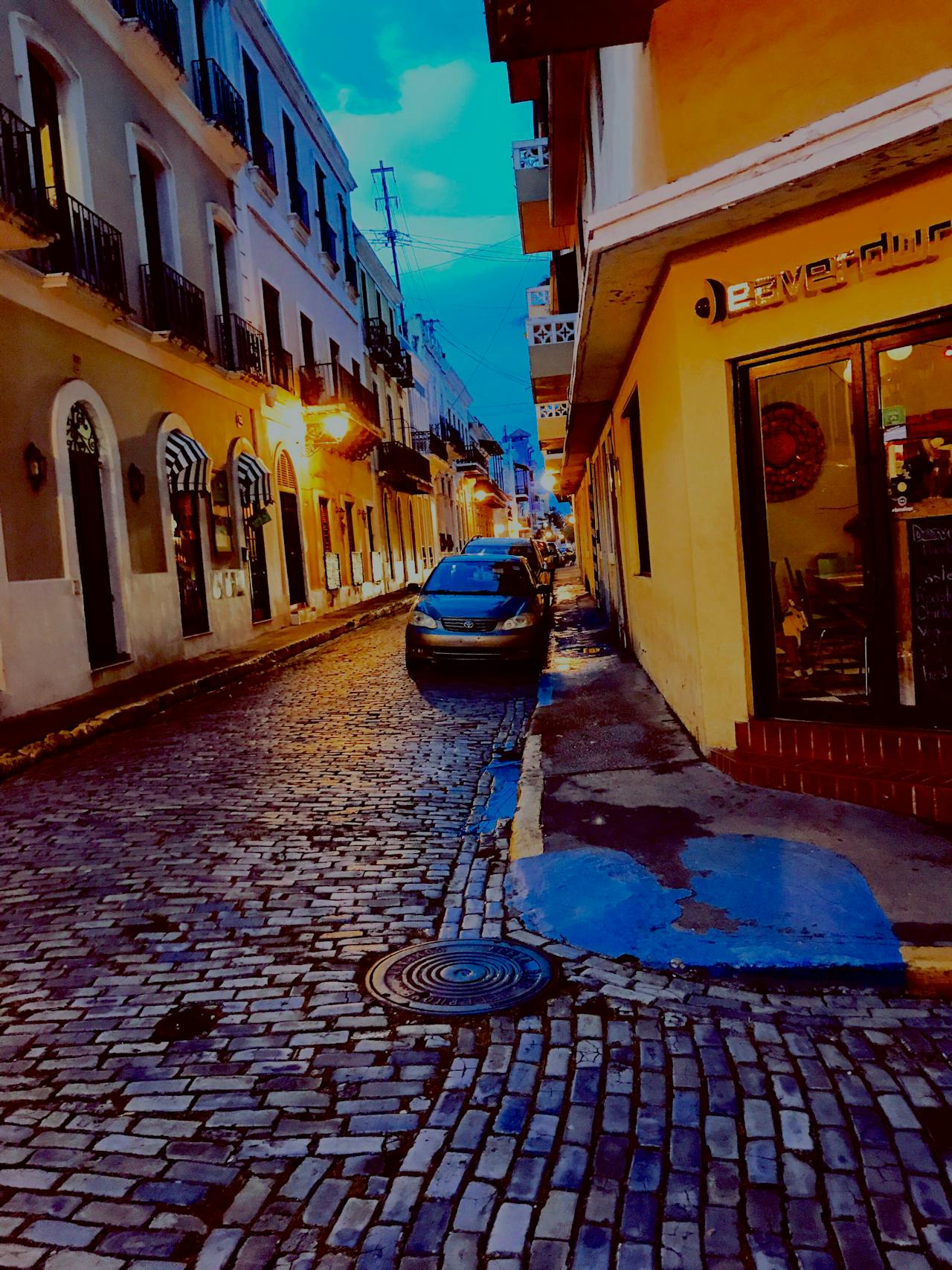
Crews are working to restore power to Puerto Rico after an island-wide blackout left 1.4 million customers in the dark. As of Thursday morning, approximately 41% of customers, or about 609,700, had their power restored, according to Luma Energy.
The blackout began around 12:40 p.m. on April 16, when a transmission system failure caused all of Puerto Rico’s power plants to shut down. This is the second island-wide blackout in less than four months, following a similar event on New Year’s Eve. The repeated nature of these outages has amplified concerns about the stability of the island’s power grid and the effectiveness of ongoing recovery efforts.
Puerto Rico Governor Jenniffer González-Colón called the transmission issue “unacceptable.”
She cut short her vacation and returned to Puerto Rico on Wednesday evening, underscoring the severity of the situation.
“This is a shame for the people of Puerto Rico that we have a problem of this magnitude,” she said, as reported by CBS News. Her swift return and strong words reflect the growing frustration and urgency surrounding the persistent power problems.
Luma Energy, the private company responsible for power transmission and distribution, estimated that it could take 48 to 72 hours to restore power to about 90% of customers. This timeline highlights the extensive damage and the complexities involved in restoring a power grid that has been plagued by years of neglect and natural disasters. The company’s efforts are being closely watched by residents and officials alike, as the speed and efficiency of the restoration process are crucial for the well-being of the island.
Genera PR, the company that generates power on the island, said the outage was caused by the sudden shutdown of all generating plants, including their own and private generators. Daniel Hernández, vice president of operations for Genera PR, stated at a news conference on Wednesday that plants may come back online more quickly than in previous years because the company has invested in quicker restart systems. This suggests that while the initial outage was catastrophic, there have been some improvements in the system’s ability to recover. However, the fact that all plants shut down simultaneously raises questions about the grid’s resilience and its susceptibility to cascading failures.
The blackout occurred as Puerto Rico residents were preparing to celebrate the Easter holiday weekend. The predominantly Catholic island observes the holiday throughout the week. The outage disrupted daily life, forcing some in San Juan to dine by candlelight and others to rush to stores for ice to preserve food. The timing of the blackout, coinciding with a major religious holiday, added to the hardship and frustration experienced by residents. Many had planned to spend the week with family and friends, but the lack of power cast a shadow over these celebrations.
Josué Colón, the island’s energy czar, said in a news conference on Wednesday afternoon, “This process is not going to end today.” He added that a preliminary review suggested the cause was a problem near a transmission line in southern Puerto Rico that began at 12:38 p.m. The early findings of the investigation point to a specific technical issue, but the full extent of the damage and the underlying causes are still being investigated. The focus remains on restoring power as quickly as possible, but understanding the root cause is essential for preventing future outages.
The blackout caused widespread disruptions. Traffic was gridlocked as transit officers directed cars at intersections with non-functioning traffic lights. Residents flocked to gas stations for fuel to power generators. Passengers on an urban train in San Juan were forced to evacuate and walk along an overpass. Plaza Las Américas, the island’s largest mall, largely shut down. These disruptions illustrate the far-reaching impact of the power outage on daily life, affecting transportation, commerce, and public services. The lack of electricity not only caused inconvenience but also raised safety concerns, particularly regarding traffic management and the operation of essential services.
Puerto Rico has struggled with power grid problems since Hurricane Maria devastated the island in 2017. The island has experienced frequent blackouts, frustrating residents and businesses and causing damage to appliances and electronics due to power surges. Recovery from major power disruptions has often been slow, with past island-wide outages taking several days to resolve. This includes an island-wide outage on New Year’s Eve. The legacy of Hurricane Maria continues to haunt Puerto Rico, as the power grid has never fully recovered from the damage inflicted by the storm. The subsequent blackouts have become a recurring problem, eroding public trust and hindering economic development.
Gary Soto, director of the energy management and transmission operation center for Luma Energy, said at the news conference that full restoration could take up to 72 hours. Luma Energy stated, “Our crews will continue working throughout the day today with the goal of restoring service to 90% of our customers within 48 hours, conditions permitting.” The company’s acknowledgment of the potential challenges in restoring power underscores the complexity of the situation. While they are committed to working tirelessly, unforeseen circumstances could prolong the process.
The ongoing outages have sparked outrage among Puerto Ricans, with many calling for the government to cancel contracts with Luma Energy and Genera PR. Governor González acknowledged these concerns. “That is not under doubt or question,” she said, but added that it’s not a quick process. González also stated that a major outage like the one on Wednesday leads to an estimated $230 million revenue loss daily. The economic impact of the blackouts is substantial, affecting businesses of all sizes and disrupting the island’s fragile economy. The calls for contract cancellations reflect a deep-seated frustration with the current energy providers and a demand for accountability.
Ramón C. Barquín III, president of the United Retail Center, warned that the repeated outages could deter potential investors. “We cannot continue to repeat this cycle of blackouts without taking concrete measures to strengthen our energy infrastructure,” he said. The business community is particularly concerned about the long-term consequences of the power outages. The lack of reliable electricity not only disrupts daily operations but also creates uncertainty, making it difficult to attract investment and foster economic growth.
Concerns also exist for Puerto Rico’s elderly population. The mayor of Canóvanas deployed brigades to visit bedridden individuals and those reliant on electronic medical equipment. The vulnerability of the elderly and other dependent populations during power outages is a significant concern. The lack of electricity can have serious health consequences for those who rely on life-support systems or require refrigerated medications. Local governments and community organizations are stepping up to provide assistance, but the need for a more resilient power grid is evident.
Luma Energy had previously announced near-complete power restoration after the New Year’s Eve blackout, stating that 98% of customers had power, including hospitals, sewage facilities, and water plants. Juan Saca, President of Luma Energy, had stated, “Given the fragile nature of the grid, we will need to manage available generation to customer demand, which will likely require rotating temporary outages.” This statement highlights the underlying problem: even when power is restored, the grid remains fragile and susceptible to further disruptions. The need for a comprehensive overhaul of the energy infrastructure is becoming increasingly apparent.
The situation in Puerto Rico is more than just a series of unfortunate events; it’s a symptom of a deeper crisis involving an aging and poorly maintained infrastructure, a complex web of public and private interests, and the ongoing challenges of recovering from natural disasters. The island’s power grid, much of which dates back decades, has suffered from years of neglect and underinvestment. This neglect, combined with the devastating impact of Hurricane Maria in 2017, has created a system that is highly vulnerable to failures.
The privatization of Puerto Rico’s power transmission and distribution system, with Luma Energy taking over operations, was intended to improve efficiency and reliability. However, the recent blackouts have raised serious questions about the effectiveness of this transition. Critics argue that Luma Energy has not made sufficient investments in upgrading the infrastructure and that the focus on short-term profits has come at the expense of long-term stability.
Genera PR, responsible for power generation, faces its own set of challenges. The company is tasked with maintaining aging power plants and ensuring a stable supply of electricity. However, the frequent outages suggest that these efforts have been insufficient. The company’s reliance on fossil fuels also raises concerns about environmental impact and the need for a transition to renewable energy sources.
The role of the Puerto Rican government in this crisis is also under scrutiny. While Governor González-Colón has expressed outrage at the repeated outages, many are demanding more concrete action. The calls to cancel contracts with Luma Energy and Genera PR reflect a growing dissatisfaction with the government’s oversight of the energy sector. Residents are demanding accountability and a clear plan for addressing the systemic problems that plague the power grid.
The economic consequences of the power outages are significant. Businesses, both large and small, suffer losses due to disruptions in operations, spoiled inventory, and the inability to serve customers. The tourism sector, a vital part of the island’s economy, is also affected, as blackouts can deter visitors and damage the island’s reputation. The long-term impact on investment and economic growth is a major concern.
The social impact of the blackouts is equally profound. The lack of reliable electricity affects people’s daily lives in numerous ways, from the inability to cook and refrigerate food to the disruption of work and school. The emotional toll of living with constant uncertainty and the fear of the next blackout is also significant. The situation is particularly challenging for vulnerable populations, such as the elderly, the sick, and low-income families.
In the aftermath of each blackout, there are renewed calls for change. Some advocate for a complete overhaul of the power grid, with a focus on renewable energy and decentralized generation. Others argue for greater government intervention and stricter regulation of private energy companies. There is a growing consensus that the current system is unsustainable and that a fundamental shift is needed to ensure a reliable and affordable supply of electricity for all Puerto Ricans.