Former Michigan Coach Sherrone Moore Pushes To Have Criminal Charges Dropped
Moore’s attorneys argue arrest warrant was flawed and claim allegations stem from a bid for financial gain tied to the university.
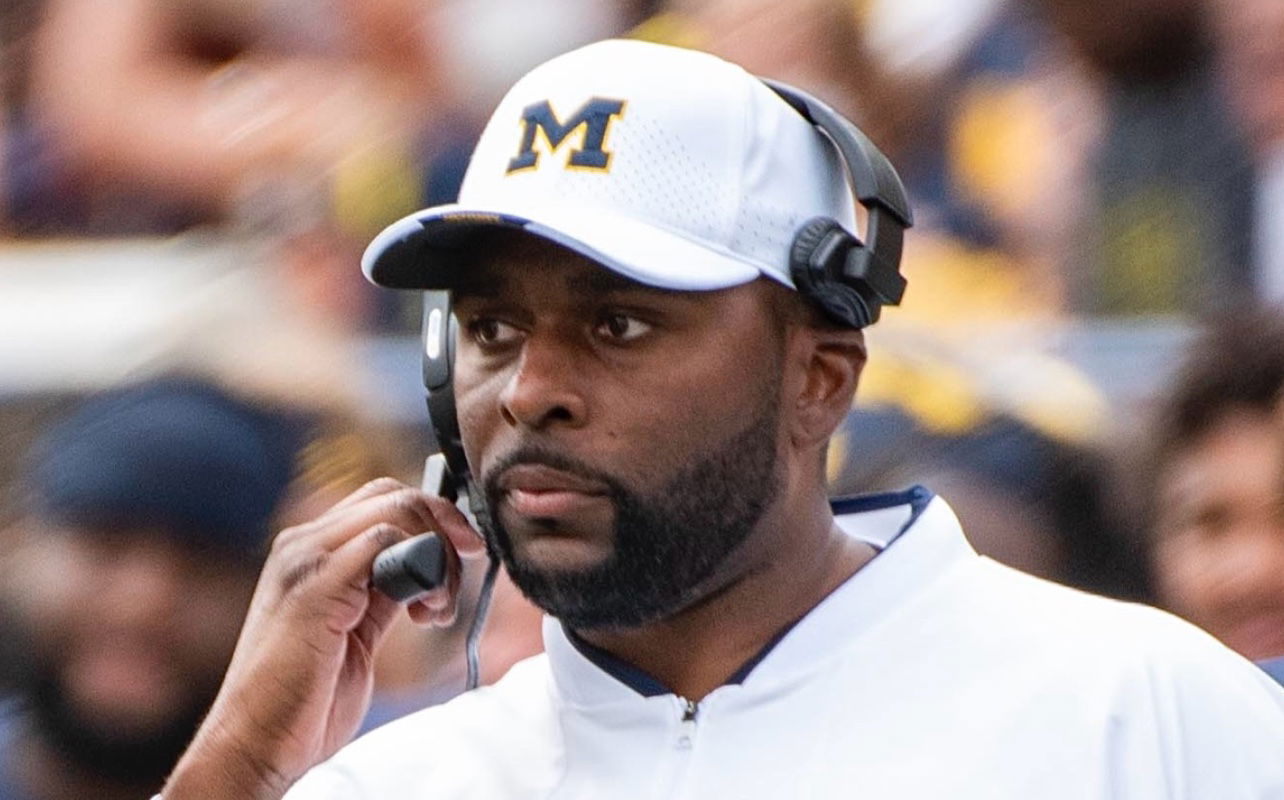
Former University of Michigan head football coach Sherrone Moore appeared in court Jan. 22 as his legal team moved to challenge the criminal case that followed his abrupt dismissal from the program last month.
Moore, 39, is facing felony charges of home invasion and stalking stemming from an incident that allegedly occurred just hours after he was fired in December. His defense attorneys are now seeking to have the arrest warrant thrown out entirely, arguing the case should never have been brought in the first place.
“This Court is not confronted with a close call or a technical defect,” defense attorney Ellen Michaels wrote in a court filing, as reported by MLIVE. “It is confronted with a prosecution that never should have begun.”
Moore was fired on Dec. 10 amid a scandal that sent shockwaves through college football. According to police, later that same day, he went unannounced to the home of a Michigan staff member after sending what authorities described as unsettling text messages. He was subsequently arrested and charged with felony home invasion and stalking.
Michaels contends the warrant issued for Moore’s arrest was based on misleading information provided to the magistrate. She argued that police inaccurately portrayed Moore as having stalked the staffer over an extended period of time, when that claim, she said, was unsupported.
“A magistrate must be given a fair and accurate picture,” Michaels wrote. “When the picture is distorted, the warrant cannot stand.” The defense further alleged that the staffer’s attorney supplied information to law enforcement with the intent of portraying Moore as a criminal to increase the likelihood of a substantial financial settlement from what Michaels described as the “deep pockets” of the University of Michigan.
Outside the courtroom, Moore attended the hearing alongside his wife, Kelli, with whom he shares three children. Michaels reiterated her client’s position to reporters.
“Sherrone Moore is innocent of these charges,” she said. “Today, on behalf of Mr. Moore, we filed a motion to quash the arrest warrant and dismiss the complaint.”
Sherrone Moore’s attorney: “Mr. Moore is innocent of these charges. … we filed a motion to quash the arrest warrant and dismiss the complaint.
“This warrant was issued based on false and misleading statements presented as fact. We’re confident the truth will come out in court.” pic.twitter.com/ol5OiBqM16
— Tony Garcia | Detroit Free Press (@RealTonyGarcia) January 22, 2026
The case did not advance substantively on Jan 23. A probable cause conference has been postponed until March 19, as Michaels seeks access to phone records connected to a separate Title IX investigation involving the university. Prosecutors have until Feb. 2 to respond to the request. An additional hearing focused on Moore’s arrest record is scheduled for Feb. 17.
For now, the former coach remains free as the court weighs whether to proceed with the charges against him.
Ask Your Fairygodmentor®: Do You Need Big 2026 Goals If You’re Still Recovering From Last Year?
How to move forward without burning out before January even ends.
Dear Fairygodmentor®,
Everyone around me is setting massive 2026 goals — new jobs, new gym memberships, new businesses, new everything. Meanwhile…I’m exhausted. Last year took me out. I want to start fresh, but I’m still recovering from everything that happened in 2025. How do I move forward without burning out before January even ends? — Starting Slow
Dear Starting Slow,
I want to break it down and keep it real and tell you something that the internet, your group chat, and that shiny new planner won’t:
You have permission to enter a new year as you are, not as people expect you to be.
We live in a culture that treats January like the starting line of a race we never agreed to run. It’s as if everyone has Patti LaBelle’s “New Attitude” playing on repeat. The pressure to “get it together” on day one is real — especially for high-achievers who are used to hitting the ground sprinting.
But here’s the truth: You don’t have to sprint into 2026 to be successful in it.
Sometimes, the most powerful thing you can do at the start of a new year is exhale.
You’re not behind — you’re healing. And healing has its own timeline.
Here’s how to set yourself up for a strong year unapologetically…without sacrificing your sanity:
1. Start With Capacity, Not Goals
Before you commit to anything, I want you to ask yourself: What do I actually have to give right now?
Not what you wish you had. Not what you had last year. What can your mind, body, and spirit sustainably offer today?
We often don’t take a pause for the cause and think about what we have the bandwidth to handle in the moment.
Your capacity is a compass. Honor it and yourself daily.
2. Choose a “Season Word” Instead of a Resolution
If traditional resolutions and goals feel heavy right now, choose a single word to guide your year.
Some examples of season words could be:
• Restore
• Steady
• Recenter
• Ease
• Grounded
I like to select a season word each year that keeps me inspired and energized. My season word for 2026 is “Aligned.” A season word creates direction without demanding perfection. It gives you permission to grow at a human pace. And your season word can change from quarter to quarter, just like our seasons of weather.
3. Pick One Realistic Win for the First Quarter
Yes, I’m not talking about the whole year—just the first 90 days.
We tend to get overwhelmed and worn out focusing on the big wins. Choosing a small, meaningful win builds confidence. And I believe that confidence builds momentum.
Rest is not laziness. You don’t need to earn your rest. Slowing down is not failure. Pacing protects your peace. Taking your time does not make you less ambitious. Don’t fall for the folks making their lack of planning your priority.
Remember: Burnout happens when your output outpaces your oxygen. Replenish your oxygen. Do it daily without the guilt.
5. Surround Yourself With Support and Structure
Healing doesn’t happen in isolation. I call this type of emotion “cavey” because I want to hide my pain from friends and family, but isolation only intensifies when you’re feeling this way.
You’ll need to lean into:
• an accountability partner
• a therapist
• a mentor
• a grounding routine
• a weekly self-check-in
I have several accountability buddies who check in with me daily to see how kind I was to myself for the day. I give a percentage of how kind I was to myself for the day (kindness includes self-talk, self-care, and basic human needs). Some days I’m keeping it 100, and other days I’m at 50. Knowing that there’s someone out there keeping me accountable is key to keeping burnout at bay.
Let others help you refill what the last year drained.
Starting Slow, recovery is not a detour — it’s preparation. If you begin your year tending to your wellbeing, your clarity and energy will return. And when they do, your goals will feel possible again instead of pressured.
You don’t need to chase 2026. You get to let 2026 rise to meet you.
With love and a deep breath, Your Fairygodmentor®
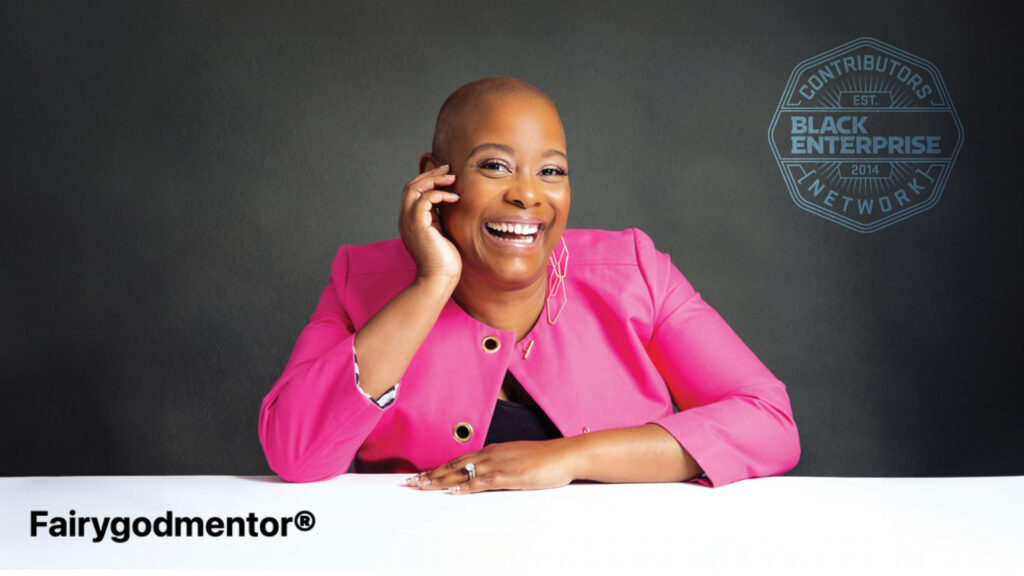
About Joyel Crawford:
(Photo: Kirten White Photography/BE)
Joyel Crawford is an award-winning career and leadership development professional and founder of Crawford Leadership Strategies, a consultancy that empowers results-driven leaders through coaching, training, and facilitation. She’s the best-selling author of “Show Your Ask: Using Your Voice to Advocate for Yourself and Your Career.”
Have a question for Your Fairygodmentor®?
Submit your career and leadership questions, whether it’s about navigating a micromanager, setting boundaries, negotiating for a raise, or handling burnout. Ask Your Fairygodmentor® today!
Naomi Osaka Withdraws From Australian Open With Abdominal Injury After Clash With Sorana Cîrstea
'I've had to make the difficult decision to withdraw to address something my body needs attention for after my last match,' said Osaka.
Former world No. 1 Naomi Osaka has withdrawn from the Australian Open due to an abdominal injury, ending her 2026 run before her scheduled third-round match in Melbourne.
Tournament officials confirmed that Osaka pulled out hours before she was set to face Australian qualifier Maddison Inglis at Rod Laver Arena, ESPN reports. The 28-year-old later indicated that the injury stemmed from her second-round match against Romania’s Sorana Cîrstea, a three-set victory that included a medical timeout late in the contest.
“I’ve had to make the difficult decision to withdraw to address something my body needs attention for after my last match,” wrote Osaka in an Instagram post. “I was so excited to keep going and this one meant the most to me, so having to stop here breaks my heart, but I can’t risk doing any further damage, so I can get back on the court.”
In a video, she explained she had “every intention to play,” but the issues started during hr match with Cîrstea.
Osaka experienced discomfort during that match and briefly left the court before returning to finish the encounter. The issue worsened during warmups ahead of her third-round match, prompting the decision to withdraw rather than risk further injury. The condition was described as a left abdominal issue, similar to injuries she has dealt with earlier in her career.
Naomi Osaka unveiled an all new custom on court look with Nike and Hong Kong designer Robert Wun for her 1st round match at the #AusOpen2026 🎾 pic.twitter.com/AA4CmX94G7
Osaka is a two-time Australian Open champion, having won the title in 2019 and 2021. Osaka returned to full-time competition in 2024 after taking a 15-month break from tennis following the birth of her daughter, Shai, in July 2023.
Her second-round match against Cîrstea also drew attention for a tense post-match exchange. Osaka ultimately prevailed in three sets, Fox News reports.
With Osaka out, Inglis advanced by walkover and moved on to face world No. 2 Iga Świątek in the fourth round.
Former Philadelphia Eagles Defensive Tackle Kevin Johnson Killed In L.A. Homeless Encampment
Johnson died from blunt head trauma and stab wounds.
Former NFL defensive tackle Kevin Johnson was killed in a violent attack at a homeless encampment in Los Angeles County, with authorities ruling his death a homicide. The Los Angeles County Medical Examiner determined on Jan. 23 that Johnson died from blunt head trauma and stab wounds. The case remains under investigation.
Johnson, 55, was found Jan. 21 at the encampment, where authorities believe he had been living, The New York Times reports. His death has drawn national attention due to his professional football career and renewed focus on the challenges faced by some former athletes after leaving the sport.
A Southern California native, Johnson began his football journey at Los Angeles Harbor College before transferring to HBCU Texas Southern University. He played for the Tigers from 1991 to 1992 and was part of a defensive unit that attracted interest from NFL scouts. During his time at Texas Southern, Johnson was a teammate of Michael Strahan, who would later become a Pro Football Hall of Famer, HBCU Game Day reports.
Johnson entered the 1993 NFL Draft and was selected in the fourth round by the New England Patriots. He was released before the regular season began. After offseason stints with the Minnesota Vikings and Oakland Raiders, Philadelphia claimed Johnson off waivers ahead of the 1995–96 season, and he went on to appear in 13 Eagles games, including two postseason contests. The Eagles re-signed Johnson in 1996, and he appeared in 12 games that season, making five starts, before Philadelphia released him in December. The Raiders re-signed him, and he played in 15 games during the 1997-98 season but was released again in March 1998.
Across three NFL seasons, Johnson recorded 54 tackles, seven sacks, and returned a fumble for a 37-yard touchdown. He continued his professional career in the Arena Football League from 1998 to 2001 and was part of the Orlando Predators team that won ArenaBowl XII.
In the days following his death, former teammates and friends have spoken publicly about Johnson’s struggles later in life, including health issues they believed may have been linked to head trauma sustained during his football career,People reports.
Another Minneapolis Resident Shot And Killed By ICE Amid Rising Tensions
This marks the second fatal shooting involving federal agents in the city in less than three weeks.
Another person has reportedly been shot by an Immigration and Customs Enforcement (ICE) agent in Minnesota. Minneapolis police say they have identified the man who was shot, but they are not releasing his name at this time. The man was shot in South Minneapolis earlier today and has died, according to The Guardian. This marks the second fatal shooting involving federal agents in the city in less than three weeks.
Renee Nicole Good, a 37-year-old mother of three, was shot and killed by an ICE agent in Minneapolis on Jan. 7. Hennepin County Medical Examiner officially classified her death as a homicide on Jan. 22. Prior to this, Keith Porter, a 43-year-old Black man, was killed in Los Angeles on New Year’s Eve by an off-duty ICE agent.
The latest incident occurred near West 26th Street and Nicollet Avenue South during what federal authorities described as a targeted operation. Several news outlets have described the man shot as a legal observer.
BREAKING: Video shows ICE shooting an unarmed resident in Minneapolis moments ago. Nine agents are seen brutalizing one individual—and after the resident was pinned to the ground, agents opened fired as they lay motionless.
Videos circulating online this morning appear to show several law enforcement officers wrestling a man to the ground before he is shot multiple times. At least two officers are seen with weapons drawn. There are also reports that ICE agents arrested witnesses.
Federal officials said the shooting occurred around 9:05 a.m. while officers were conducting an operation aimed at a person they said was in the country illegally and wanted for assault. According to the Department of Homeland Security, officers encountered an individual who approached with a firearm, leading to a physical struggle. An agent then fired what officials described as defensive shots. Medical aid was provided at the scene, but the man was pronounced dead.
Minneapolis Police Chief Brian O’Hara said the person killed was believed to be a 37-year-old Minneapolis resident and an American citizen.
When asked about the Department of Homeland Security’s account of the shooting, O’Hara pointed to publicly circulating video footage, saying it clearly shows what occurred, CNN reports.
O’Hara said the man is believed to have been a lawful gun owner with a valid permit to carry. According to police records, the individual’s only prior contact with law enforcement involved traffic-related citations.
Minnesota Gov. Tim Walz said he had spoken with the White House following the incident and expressed strong opposition to the ongoing federal operation in the state. Several Democratic leaders echoed those concerns, calling for federal agents to be withdrawn from Minneapolis.
Women of Power Turns 20: Black Enterprise Summit Returns With Iconic Honorees
The Legacy Awards celebrate 20 years of honoring phenomenal women.
The 2026 BLACK ENTERPRISE Women of Power Summit will return to Las Vegas on March 11. Spanning five days, the event will feature the 20th annual Legacy Awards Gala, which honors trailblazers who have made a lasting impact in the arts, business, and beyond.
And, the awards go to:
Angela Bassett
With over 100 television and film acting credits and countless awards, Basset is a cultural icon, paving the way for Black women and other creatives worldwide. The mother of two has starred in blockbuster films like “What’s Love Got to Do with It,” “Black Panther: Wakanda Forever,” and “Waiting to Exhale.” She has also appeared in multiple seasons of “American Horror Story.” She supports health initiatives by serving as a spokesperson for the “For Your Sweetheart” and “Know Diabetes by Heart” campaigns.
Carla Harris
Harris is the vice chairman of Wealth Management and a senior client advisor at Morgan Stanley. President Barack Obama appointed the Harvard Business School graduate to chair the National Women’s Business Council. She is the author of three books: “Expect to Win” (2009), “Strategize to Win” (2014), and “Lead to Win” (2022). Harris is also an accomplished Gospel singer with four studio albums and six sold-out concerts at Carnegie Hall.
Rosalind G. Brewer
As a multifaceted businesswoman, Brewer has shattered ceilings in both corporate boardrooms and academia. In 2021, she became the first Black woman to serve as CEO of Walgreens Boots Alliance. Brewer has also held roles as CEO of Walmart’s Sam’s Club and COO of Starbucks. Currently, she is the interim president of Spelman College.
Shellye Archambeau
The tech guru is the former CEO of software giant MetricStream. A Wharton Business School graduate, she has held various high-level roles in the tech industry, including a 15-year stint at IBM, where she became the first Black woman at the company to serve on an international assignment. Archambeau authored the book “Unapologetically Ambitious,” which offers insights on navigating professional spaces and maintaining work-life balance. The author was named one of the 46 Most Important African-Americans in Technology byBusiness Insider.
Benaree Pratt Wiley
Wiley is the former CEO of The Partnership, Inc., a Boston-based organization dedicated to developing minority professionals and increasing Black visibility in Boston’s corporate scene. She and her daughter, B.J. Wiley-Williams, were the first mother-daughter pair to earn MBAs from Harvard Business School.
Additionally, the information-packed summit and awards will feature workshops, executive panels, and industry talks designed to empower and inspire attendees. The event will take place March 11-15 at the Bellagio Hotel in Las Vegas. Register now to attend.
52 Walker, Once All-Black–Staffed, Evolves From Independent Art Space To Global Platform Under Ebony L. Haynes
The NYC 52 Walker gallery goes global.
The 52 Walker Gallery (52W), known for elevating Black voices, has quietly entered a new chapter. The space, founded by Ebony L. Haynes, is now officially a David Zwirner Art space.
The Tribeca, New York City, gallery has always operated under the David Zwirner umbrella. It functioned independently, with an all‑Black staff and full curatorial autonomy. Haynes shaped the programming, staffing, and vision, and she had the freedom to run it on her own terms.
The shift marks a move away from the space’s original mission. Zwirner once described that mission as addressing inequalities in the commercial art world, especially in employment. Haynes views the change as an opportunity to broaden her mission.
“Everything needs to evolve, and I want to be able to take on new projects and opportunities,” she told ARTnews. “52 Walker was in one location for four years and will now be more global and nomadic. Hopefully, all of that is a part of its legacy, and it’s still forming.”
Haynes explains that, through her connection to Zwirner, she will now be able to curate across the David Zwirner global network. That network includes galleries in New York, Los Angeles, London, Paris, and Hong Kong.
The curator also notes that the 52 Walker initiative was never intended to serve as a permanent, standalone site. It will now proceed with Haynes-curated exhibitions showcased across Zwirner’s worldwide locations. The all-Black staff, which attracted significant attention in the art world, will continue to play a key role in 52W and future projects.
During its four‑plus years, 52 Walker showcased a complex mix of historical figures and contemporary artists. Its exhibitions stood apart from traditional art shows. The gallery featured artists such as Kandis Williams, Kara Walker, Arthur Jafa, Diamond Stingily, Nora Turato, Tau Lewis, and Lotus L. Kang.
Hayne’s recent projects include a Raymond Saunders exhibition in Los Angeles, a “Let Us All Be Citizens 2” in London, and a Tau Lewis presentation in Los Angeles.
Former BET Exec Michele Ghee Takes The Helm At PlayersTV As President
Ghee officially became president of PlayersTV, which also acquired her company, Expectant Media.
Michele Ghee, former BET SVP and veteran media executive, returns to leadership as the new president of PlayersTV following the network’s acquisition of her tech and content agency, Expectant Media.
On Jan. 22, Ghee officially became president of PlayersTV, which also acquired her company, Expectant Media, in a deal with undisclosed financial terms, according to BET. The deal crowns Ghee’s 30 years in media leadership and two years of board service at PlayersTV.
“Michele has been a trusted member of our board for the past two years. We saw immense value in Michele and what she’s built across media, content, and activation to support our growing flywheel,” said Deron Guidrey, co-CEO and co-founder of PlayersTV. “She is a proven leader in advancing equity across content and distribution, and we look forward to the high-caliber impact she will have on our organization and with our growing stable of premium partners.”
The appointment puts Ghee at the helm of a network of more than 3,000 fan-owners and over 70 athlete investors, including Chris Paul, Travis Kelce, Kyrie Irving, Damian Lillard, Dwyane Wade, Carmelo Anthony, Ken Griffey Jr., and Vernon Davis. As president, she will leverage her years of experience shaping the marketing, experiential branding, and culture of major brands to grow PlayersTV’s media ecosystem, which spans streaming video, news, and feature content.
A respected leader in the business side of entertainment, Ghee has held senior executive roles at Essence Communications and Ebony, overseeing content, strategy, and brand growth, and previously served as senior vice president at BET before founding Expectant Media. Her appointment as president formalizes her role in shaping PlayersTV’s next chapter, with a focus on scaling original programming and distribution, and on enhancing experiential, community-driven engagement between athletes and fans.
The network has announced plans to further emphasize live, interactive moments that connect athletes with audiences more organically, with more announcements on original content, partnerships, and brand collaborations expected in the coming weeks.
‘Minding Our Own Business—’ A Spotlight On Diaspora Enterprise and Culture: Lu Smith
O C H A S: Reclaiming The Divine Crown Through Lu Smith III's Artistic Lens
For photographer Lu Smith III, the camera is less of a recording device and more of a tool for reclamation. Through his ongoing series, O C H A S, which began in 2015, Smith engages in a sophisticated subversion of the Western gaze, stripping away the pejorative, sensationalized labels often slapped onto Afro-Caribbean spiritual traditions like Santería and Lukumí.
In their place, he installs a visual vernacular rooted in regality, social intelligence, and what he calls “Black is-ness”.
“One thing I’m super-proud of is that there are more of us coming back into this tradition,” Smith says of the growing movement of Black Americans reconnecting with ancestral practices. “I’m super-excited about that. So I, like, I’m just lit for this,” the incredibly talented multihyphenate known professionally as “Lu Smith” says. He is primarily defined by the diaspora’s duality.
With an American father and a Trinidadian mother, he moves through the world with the seasoned perspective of a global citizen who remains deeply tethered to the soil of his ancestors. This bicultural fluidity allows him to navigate sacred spaces with a unique sensitivity—one that recognizes the “one foot in, one foot out” reality of the bicultural diasporan.
Smith’s connection to the past is not merely nostalgic; it is a reclamation of the concept of longevity that defies Western actuarial tables. Smith noted that the retention of these traditions in places like Cuba is inextricably linked to the strength of the elders.
This intergenerational understanding and knowledge enable a spiritual continuity that many in the U.S. were historically denied.
“They (Cubans) still could go talk to three generations back on a Sunday,” Smith observes. “You walk across the street and… that old lady is a Yaya, and her family they come from the kabi kabi the Congo… Oh, that’s some Congo sh*t.”
It is this living history that Smith seeks to document, moving beyond the “Catholic veil” that once served as a necessary shroud for survival.
In O C H A S, Smith intentionally obscures faces to center the Orisha rather than the individual, utilizing large-format cameras to reflect the patience mandated by the faith. He is also quick to correct the common misnomer that characterizes these practices solely as “Yoruba religion,” noting the complex blend of Dahomean, Fon, and Edo influences.
“They call it the religion of the Yorubas. It is not a Yoruba religion,” Smith asserts.
Lukumí, historically known by the colonial label Santería, is a sophisticated Afro-Caribbean religious system that crystallized in Cuba as a vital vessel for West African spiritual and cultural retentions. This faith is anchored in the veneration of Orishas—divine entities who serve as intermediaries between the supreme creator and the physical world, each personifying specific forces of nature and facets of human existence. Practitioners maintain a state of spiritual equilibrium by cultivating ashe, the primordial life force of the universe, which is activated through complex rituals involving rhythmic drumming, sacred dance, and divination.
Far from the sensationalized caricatures often found in Western media, the tradition is defined by a rigorous philosophical framework and a legacy of regality that provided a sovereign sanctuary for African identity throughout centuries of colonial suppression.
In his work, Smith also confronts the puritanical modesty that colonization forced upon Black bodies. He discusses the use of nudity in O C H A S as an allegorical return to the old school ways of the cabildo. “They saw me when I was born. They chose me when I was born,” he says of the Orisha. “What they tell us now—‘Oh, you don’t be naked in front of your Orishas’—I came in the world naked. What are you talking about?”
Ultimately, O C H A S is an exercise in high-level curation. Smith is not interested in pulling the curtain all the way back for a voyeuristic audience. Instead, he presents a version of Black life that is sophisticated, mysterious, and undeniably “regal.”
“If you don’t know anything, Black people are sophisticated and regal,” Smith concluded. “For people that have a bit more inquisitiveness… this could very easily be an introduction to everything that you think that you know about ‘Africa sh*t.’ Here is what’s really happening”.
Orisha Manifestations: Oya & Oshun The Tempest: Oya No. 22 In the manifestation of Oya, Smith captures the Orisha of the winds, the marketplace, and the gates of the cemetery with an unyielding, silent dignity. The machete resting across the shoulder is a visceral allegory of the spirit’s sharpness and the warrior’s need for protection. The white headwrap, bound with structural precision, evokes a crown of ancestral authority. In contrast, the dusting of efun (white chalk) across the skin acts as a cooling balm—a ritualistic signature of clarity and “coolness” maintained even in the heat of battle. Her form, partially unveiled, rejects colonial shame, standing instead as a monument to a sacred vulnerability that is at once human and divine.
Photo credit: Lu Smith
The River: Ochun No. 19 In the manifestation of Ochun, the Orisha of the river, sweetness and sensory beauty are rendered through a lens of honeyed rebellion. The cascade of cowrie shells draped across the back signifies not just wealth, but the very voice of the divine through divination. The presence of lace and fine textures mirrors the regality Smith seeks to restore to the Afro-diasporic narrative.
Here, the efun settles into the pores like stardust, cooling the “feisty head” to ensure that even a spirit as passionate as Ochun moves with a calculated, royal calm. It is an image that embodies the inward gaze presented outwardly, demanding respect through its sheer sophistication.
Photo Credit: Lu Smith
Smith’s entry into the Lukumí tradition wasn’t through an academic text, but through the visceral pull of the drum. A jazz musician in a previous life, he found himself captivated by the distinct energy of Cuban percussion. “The music is what got me,” he explains. “Playing Latin jazz… seeing this like, yo, why is it that when I see Cubans playing, it’s a different kind of, like, ‘oh’ to it?”
This curiosity led him to his godfather, an accomplished Matanzero musician, and eventually to Cuba’s sacred ceremonies for drummers. It was there that the “good luck” rituals of his childhood home gained their proper name.
“Ironically, I’m seeing these cats doing the same sh*t my grandmother and great-grandmother were doing,” Smith recalls. “Now I have context. Mom knows what I’m into, and she’s just like, ‘Have you ever had a broken bone? Have you ever been in the hospital?’ Exactly. Them old folks knew something that you know”.
Smith stands as a sentinel at the intersection of ancestral provenance and contemporary visual prose. His work is not merely a collection of images, but a rigorous intervention against the historical erasure and pejorative labeling of Afro-diasporic faith. By centering an ethos of regality and “Black is-ness,” Smith serves as a bridge for those seeking a way back to a tradition that was once hidden behind veils of survival.
He remains fiercely protective of the “sauce,” rejecting the voyeuristic academic gaze that seeks to study Black power only to dilute it. As he navigates his own spiritual and artistic journey, Smith is less interested in providing a roadmap for the uninitiated and more committed to creating a sanctuary for the sovereign.
“If you are interested, then my work is to cause you to start asking questions,” Smith concludes, remaining “lit” for a future where the crown of the diaspora is seen, honored, and finally understood on its own terms.
Minding Our Own Business A Spotlight On Diaspora Enterprise and Culture.
Keka Araújo is our Senior Editor and the sharp-witted voice behind Minding Our Own Business: A Spotlight On Diaspora Enterprise and Culture.She explores the connective tissue of the African diaspora through the lenses of entertainment, education, and economic equity.
With nearly a decade of industry influence, she chronicles the culture—from business to social justice to culture—through a relentless focus on Black collective power. Bicultural and unapologetic, she’s perpetually rooting for everybody Black, from the Motor City to the continent.
‘Lighthearted’ Lemon Pepper Wing Bill Is On The Agenda At The Georgia House Of Representatives
House Bill 1013 referenced local restaurants, personalities, and the way lemon pepper flavors have been embraced statewide.
A Georgia lawmaker has introduced legislation that would make lemon pepper the official state chicken wing flavor.
State Representative Eric Bell took a moment from proposing expansions to the HOPE scholarship and denouncing ICE presence in the state to introduce what he called a “lighthearted” bill that “carries real meaning.” The choice in flavor spotlights a popular Georgia staple, specifically in Atlanta.
Lemon pepper wings, by definition, are unbreaded chicken wings coated in lemon pepper seasoning. The delicious and popular dish was invented in Atlanta, Georgia, and is considered to be emblematic of the cuisine of Atlanta.
House Bill 1013 was filed this session by State Rep. Bell, Rep. Dexter Sharper, Rep. Kasey Carpenter, Rep. David Huddleston, and Rep. Mekyah McQueen.
In an Instagram post, Bell said that the wings have become a cultural unifier “across race, culture, class, and community.” He referenced local restaurants, personalities, and the way lemon pepper flavors have been embraced statewide.
“From ‘Lemon Pepper Lou’ at Magic City to lyrics in Billboard hits from Gucci Mane, Ziggy2Playa, and Rick Ross, lemon pepper wings have been central to many of the moments and individuals who have shaped this city and state. Just like the peach represents our agricultural roots, lemon pepper wings represent Georgia’s cultural flavor and global influence.”
According to HB 1013’s language, lemon pepper has become “distinctly tied to Georgia,” evolving over time through local traditions such as “lemon pepper wet” and others that mix citrus, spice, and heat. The legislation cites the dish’s popularity in Atlanta restaurants and communities as the basis for recognizing it officially.
The proposal must clear committee review and a vote in both chambers of the Georgia General Assembly before becoming official state law.