These Black personal trainers are transforming active aging
People are living longer—and growing older. In fact, between 2010 and 2020, the nation experienced a growth spurt in the older population, the fastest since 1880-1890. According to the U.S. Census Bureau, one in six people is age 65 or above. Many growing geriatric communities remain focused on wellness, creating an unprecedented need for fitness professionals specializing in older adult fitness.
Check out five rockstars with knowledge and expertise in elder-focused fitness training.
DaShaun “The Guru of Abs” Johnson
The “Guru of Abs” DaShaun Johnson created Senior Body Sculpting to support adults over 55 in enhancing their strength, balance, mobility, and wellness through low-impact exercise. Johnson believes that fitness transforms after people retire. The Guru of Abs leads in-person and virtual classes that focus on functional strength and daily movement for older adults. Johnson’s Atlanta, Georgia- based program conducts weekly sessions at community hubs and streams them online.
Quincy France Sr.
Quincy France Sr. brings 15 years of experience to his work with older adults, including LGBTQIA+ seniors, by integrating mobility training with yoga and mindful movement. Through chair yoga, mobility exercises, and support-based movement, France helps seniors maintain their mobility, build confidence, and stay connected. France operates from New York City to deliver inclusive fitness programs for older and marginalized seniors through his work in community centers and wellness programs for aging adults.
Javeno McLean
Javeno McLean, who founded J7 Health Centre in the U.K., demonstrates how customized training programs enhance the well-being of elderly adults. The personalized training programs delivered by McLean enable people with mobility restrictions to restore their strength and independence. For more than 20 years, McLean has empowered disabled and elderly community members by creating fitness opportunities for individuals excluded from conventional gym environments.
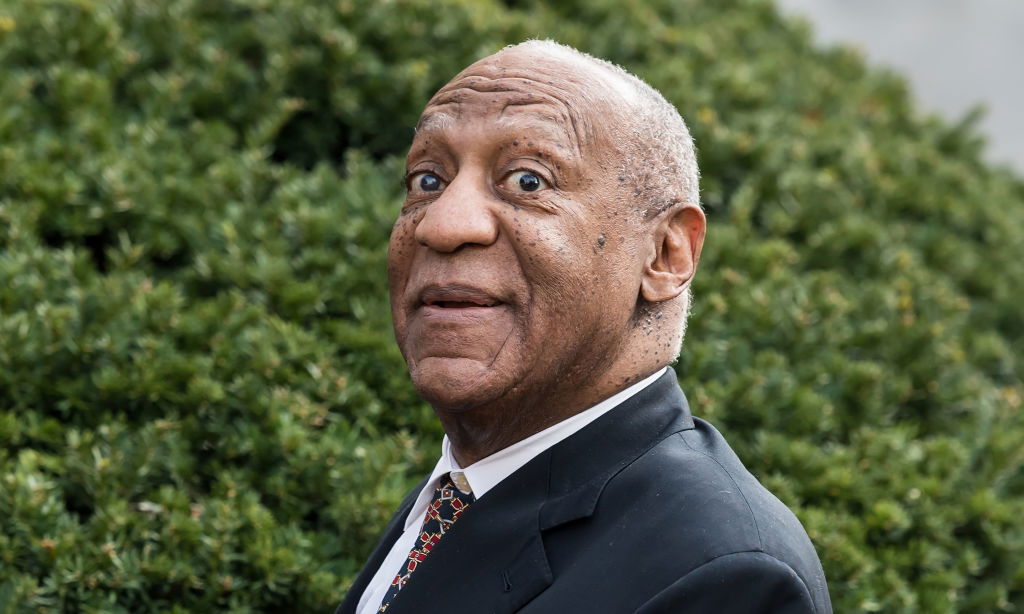
In Deposition, Bill Cosby Confirms Using Quaaludes To Drug Women
A newly unveiled deposition reveals Bill Cosby's shocking admission to using Quaaludes to drug women.
A newly disclosed deposition exposes Bill Cosby’s bombshell admission that he used quaaludes to drug women with the intent to have sex with them.
The disgraced comedian made the admission under oath during a deposition in a lawsuit filed by rape accuser Donna Motsinger, TMZ reported. Cosby testified that he repeatedly refilled a quaaludes prescription he obtained from a gynecologist at a poker game, saying he intended to give the pills to women in hopes of having sex with them.
The Cosby Show star testified that he refilled the prescription at least seven times and never used the drug himself. Cosby identified obstetrician-gynecologist Dr. Leroy Amar as the physician who prescribed him quaaludes during a poker game at his Los Angeles home prior to 1972. Amar later had his medical license revoked in California in 1979.
The disclosure emerged during a deposition Cosby was forced to give in a lawsuit filed by Donna Motsinger, who accuses him of drugging and raping her in 1972 while she was working as a server at the famed Trident restaurant in Sausalito, California. According to the suit, Motsinger says Cosby gave her a pill she believed was aspirin; after taking it, she began drifting in and out of consciousness and later awoke in her home wearing only her underwear.
The lawsuit describes Cosby’s quaaludes as round, white pills. While Cosby is attempting to have Motsinger’s case dismissed, she is pushing back and continuing to fight the claims in court.
Cosby’s admission in Motsinger’s lawsuit comes after decades of accusations that he drugged and sexually assaulted women, with claims dating back to the 1950s and ’60s. The most prominent case involved Andrea Constand, a former Temple University employee, whose 2004 assault led to Cosby’s conviction and nearly three years in prison.
Although dozens of women made similar allegations, it was the only criminal case to go to trial. Cosby’s conviction was later overturned on a legal technicality tied to a prior non-prosecution agreement, not a finding on the facts.
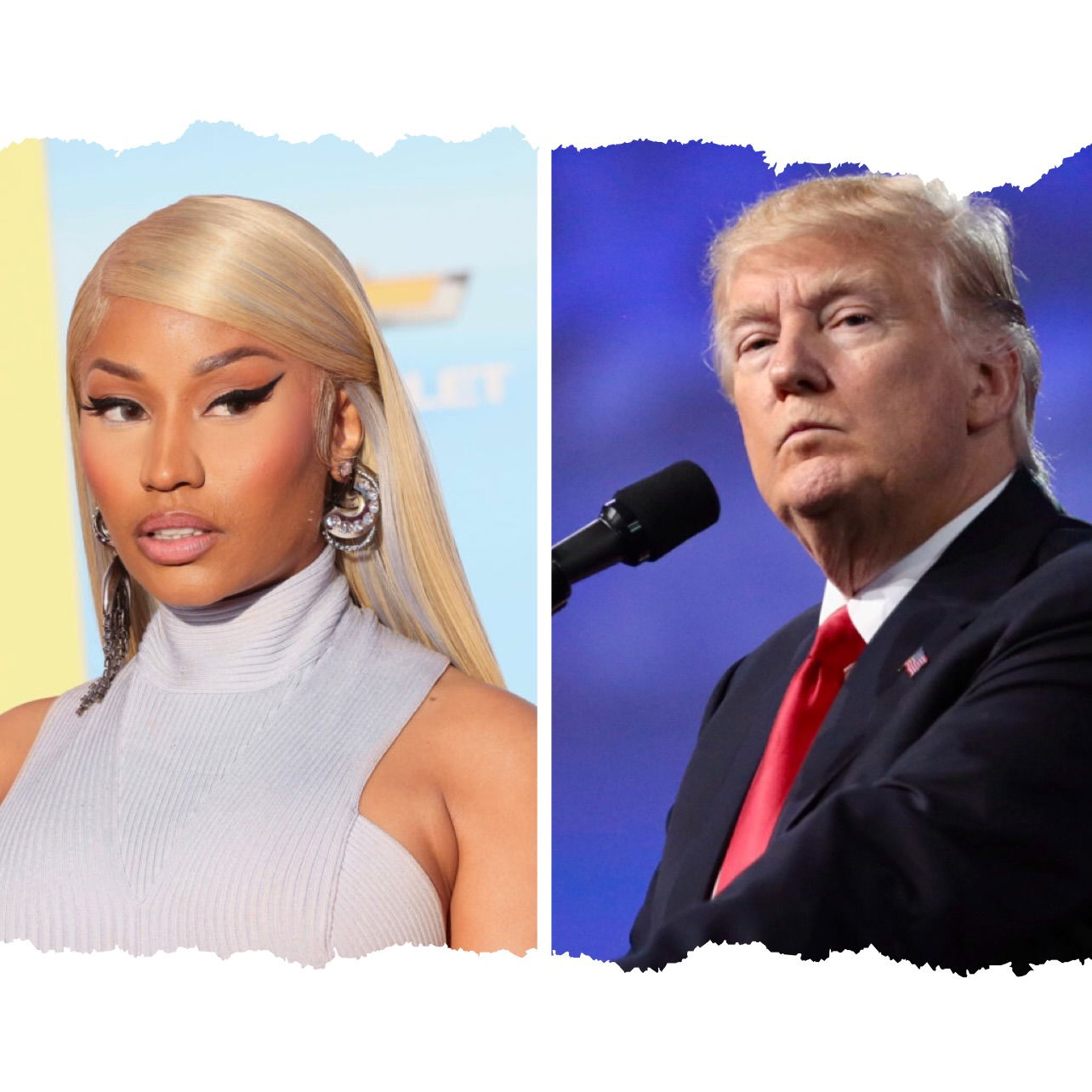
Nicki Minaj Posts Pic Of ‘Trump Gold Card’ As President Helps Her Expedite U.S. Residency
Minaj has been vocal about not being a legal U.S. resident.
Nicki Minaj is fully riding the MAGA wave and now has a certain gold card to prove it.
After pledging her unwavering support to President Donald Trump, Minaj was granted a “Trump Gold Card” to help her remain in the United States. The “Beez In The Trap” rapper showed off her new ticket to legal status on social media, highlighting that her Trump loyalty comes with apparent perks.
According toNewsweek, the “Trump Gold Card” offers an expedited path to U.S. residency. The coveted card is typically tied to those who make significant financial contributions in their quest for citizenship. Also, in true President fashion, it is etched with his face.
Minaj has publicly confirmed her iffy legal status in America, stating that she is not a U.S. citizen despite spending most of her life there. While born in Trinidad, she moved to Queens, New York, at age 5 to live with her parents, both of whom had permanent residency.
The 43-year-old femcee also confirmed the card’s intent in a subsequent post on X. She added a meme of the Chucky doll giving the middle finger to further emphasize her lack of care about the hate.
Residency? Residency? The cope is coping. 😅 Finalizing that citizenship paperwork as we speak as per MY wonderful, gracious, charming President. Thanks to the petition. 📋 I wouldn’t have done it without you. Oh CitizenNIKA you are thee moment
“Residency? Residency? The cope is coping,” wrote the rapper. “Finalizing that citizenship paperwork as we speak, as per MY wonderful, gracious, charming President. Thanks to the petition. I wouldn’t have done it without you. Oh CitizenNIKA you are thee moment… Gold Trump card free of charge.”
As detailed on its government website, the Trump Gold Card requires a $1 million contribution to the U.S. Treasury, a $15,000 U.S. processing fee, and a background check. Those who receive the card will gain automatic lawful permanent resident status as an EB-1 or EB-2 visa holder.
However, it remains unclear if Minaj paid the lofty fees. A Platinum card option is also in the works, allowing wealthy visitors to stay in the U.S. long-term without paying taxes or obtaining a travel visa.
She received the immigration golden ticket after speaking at the Trump Accounts Summit in Washington, D.C., Jan. 28, cementing her MAGA status. There, she officially met the man she claims as her “favorite president.” She also let him, and the world, know that she is his “No. 1 fan.”
As for her fans shocked or disappointed by her recent political moves, Minaj remains unbothered. In fact, she says the backlash fuels her to go harder on behalf of Trump.
“The hate or what people have to say, it does not affect me at all,” Minaj told the audience. “It actually motivates me to support him more.”
Knicks Guard Jalen Brunson Refuses To Have His Own Signature Sneaker
Brunson has been a fan of the late Lakers legend since he was given a pair of sneakers by him when he was 14
With New York Knicks player Jalen Brunson being a solid NBA star, leading his team to the Eastern Conference Championship for the first time since the 1999-2000 season, he has earned the chance and the right to have his own signature sneaker. Yet, according to an industry insider, the guard has “refused” to have one, instead opting to continue wearing Kobe Bryant Nike signature sneakers.
According to Sports Illustrated, in a social media post, Ric Mestre, who uses the moniker Unstructed Vision on X, revealed that tidbit during a podcast episode of “The Grindhouse Inc.” He said that when Nike executives approached him about designing his own signature shoes, he politely declined, saying he does not “want a signature” shoe.
“The discussions recently have been if Jalen would have his own signature shoe with Nike,” Mestre says on the show. “And internally, the discussions have gone on, and it’s gotten to a point now where Jalen’s pretty much said, ‘I refuse. I don’t want a signature. Just let me wear Kobe’s for the rest of my career, and I’ll be good.'”
Jalen Brunson prefers wearing Kobes for the rest of his career over a signature shoe with Nike 😳
The media outlet cites Brunson meeting Kobe when he was 14 years old on Christmas in 2014, and being given a pair of the Los Angeles Lakers legend’s Nike Kobe 9 Elite “Christmas” sneakers, making the Knicks player loyal to the deceased NBA Hall of Famer. Brunson, who is the son of former NBA player Rick Brunson, who also played for the Knicks (as well as seven other NBA teams) during his nine-year career, has been wearing Kobe’s ever since he signed with Nike.
On Kobe’s birthday last year, Aug. 23, Nike released the Kobe 3 Protro Halo, and Brunson appeared in an ad for the sneakers alongside Kobe’s daughter, Natalia Bryant.
Several days ago, he was seen wearing a newly debuted Nike Kobe 3 Low in a Knicks-inspired colorway.
As Amazon’s Marketplace Grows, Sellers Face New Compliance Challenges
Amazon has become a central sales channel rather than a supplemental revenue stream.
Amazon accounts for 40% of U.S. e-commerce revenue. While the online retail giant’s dominance has continued to grow for more than two decades, the way Amazon operates its marketplace has changed significantly.
In 2010, third-party sellers (independent merchants selling products on Amazon) were responsible for roughly one-third of all units sold on the platform, according to Marketplace Pulse data. Today, 62%, or nearly two-thirds, are attributed to third-party sellers. For many e-commerce brands, Amazon has become a central sales channel rather than a supplemental revenue stream.
As the leading e-commerce marketplace, Amazon faces the ongoing challenge of policing counterfeit products and fraudulent sellers. Amazon has reported investing more than $1 billion in 2024 in AI innovation to protect customers and sellers from counterfeits and fraud. Amazon claims that these controls block more than 99% of suspected cases without requiring action from affected brands.
Amazon uses AI systems to detect counterfeit products and enforce seller policies, protecting customers and compliant sellers. However, automated enforcement and tightened requirements affect all sellers on the platform. Listings or accounts can be suspended unexpectedly, even for sellers following the rules. Some sellers unknowingly violate guidelines, while automated systems incorrectly flag others. With third-party seller revenue exceeding $150 billion annually, occasional false positives are an inherent part of operations.
Rosenbaum & Segall, P.C., a law firm focused on compliance issues affecting Amazon sellers, examines how enforcement changes are affecting third-party merchants.
How Enforcement Affects Sellers
Third-party sellers have always been susceptible to Amazon’s enforcement actions, but the growth of automated compliance systems requires sellers to be more alert than ever. Since Amazon does not release public data on account suspensions, it’s difficult to assess how widespread enforcement actions are, but independent surveys offer partial insight, though results vary by methodology and sample size. Entresource reports that its survey of more than 300 sellers found that 22% have had their accounts suspended at least once. And a separate SmartScout survey of 325 sellers revealed that 35% of sellers have experienced an account suspension.
Another challenge for sellers is that the range of possible noncompliance issues has expanded. Where enforcement actions were once mostly intellectual property disputes from brand owners, sellers now face increased scrutiny over product safety documentation, regulatory certificates, and listing language that Amazon’s automated systems flag as potentially violating Food and Drug Administration (FDA) or consumer safety rules.
When Listing Language Triggers Enforcement
Amazon’s automated reviews scan listings for terms associated with regulated products. In some cases, sellers unintentionally use a descriptive word that causes the listing to be flagged.
“Terms like ‘anti-microbial’ or ‘anti-bacterial’ are often used when describing apparel, for example,” said David Holmes, founder of Red View Ventures, a firm that manages Amazon seller accounts, “but they can trigger a pesticide review very quickly.”
As Amazon relies more heavily on automated systems to evaluate millions of product listings, enforcement decisions are increasingly driven by keyword interpretation and classification rules that may not be obvious to sellers operating across diverse product categories.
Counterfeit Claims and Temporary Listing Removals
In addition to automated compliance reviews, sellers also face challenges related to counterfeit claims. Brand owners and rights holders can submit complaints alleging counterfeit or inauthentic products from other sellers. In many cases, listings are temporarily removed until the accused seller can prove the product’s legitimacy.
While the reporting and investigation of counterfeit products is essential for protecting customers, brands, rights holders, and legitimate sellers, these reporting tools can be misused by sellers to harm competitors. Amazon prohibits false counterfeit reports, but listings may be temporarily unavailable, regardless of whether the claim is ultimately upheld.
The Cost of Downtime for Marketplace Businesses
Amazon’s enforcement actions can be temporary (until the issue is resolved) or permanent. Even temporary actions have a significant impact and create financial strain on sellers. For businesses that rely on Amazon as a primary sales channel, a suspended listing or account can decrease revenue and complicate relationships with suppliers and logistics partners.
Enforcement reviews often require sellers to wait for a response from Amazon before listings are restored. “It will take Amazon at least 24-48 hours just to respond to your request,” said Holmes. “So if you get hit with a compliance request and submit information immediately, you still might be down for at least two to three days.”
What Sellers Can Do if They Are Suspended
Lower-level actions typically focus on specific products or compliance issues that can be resolved if the seller provides additional information or documentation.
More serious cases fall under Amazon’s Business Solutions Agreement, including suspensions commonly referred to as Section 3 actions. Section 3 of the agreement allows Amazon to suspend or terminate a seller’s privileges when it determines an account may be associated with deceptive, illegal, or high-risk activity. These actions are often triggered by factors, such as suspected account linkage, repeated policy concerns, disputed counterfeit complaints, or signals that Amazon’s automated systems associate with fraud or misrepresentation.
The process for reinstating suspended accounts has grown increasingly complicated, according to many Amazon sellers and law firms. Section 3 suspensions can take weeks or months to resolve and often require legal assistance to overturn Amazon’s initial ruling. Sellers may receive a limited explanation and, in some cases, funds are withheld pending the review.
Scott Needham, founder and CEO of SmartScout, a tool for Amazon market research, said, “My biggest gripe is how often Amazon doesn’t bring their best minds and resources on their end of resolution. There’s an A team at Amazon, but they’re not always the ones responding to your cases.”
Increased Oversight in Supplements and Consumer Goods
Sellers of dietary supplements, personal care products, and children’s goods are more likely to face compliance reviews for documentation, testing requirements, and product claims. These categories are subject to oversight from the FDA and the Federal Trade Commission, which results in Amazon watching sellers and product listings more closely.
In December 2023, the FDA issued a warning letter to Amazon regarding the inaccurate labeling of supplements. In the letter, the FDA cited products sold through Amazon that were labeled as supplements or foods but contained undeclared prescription drug ingredients.
As a result of issues like these, Amazon’s enforcement scrutiny related to consumer health and safety has intensified in recent years. In 2024, Amazon updated its policy, requiring all dietary supplement products to be verified through a third-party testing, inspection, and certification (TIC) organization. Amazon’s automated systems identify listings that may require additional review, and sellers must be able to provide all documentation required.
While Amazon’s enforcement systems are designed to protect consumers and legitimate sellers, the heightened scrutiny adds complexity for businesses operating in regulated product categories. Sellers must stay up to date on rules and guidelines that can be complicated or change quickly.
Amazon operates separate marketplaces across dozens of countries, each subject to unique consumer protection laws, product regulations, and reporting requirements. According to Jungle Scout, 46% of Amazon’s U.S. sellers also sell in at least one international marketplace.
While all Amazon sellers encounter compliance challenges, international sellers and those operating in multiple countries face the biggest hurdles.
Because Amazon’s systems link related accounts and business entities, an issue originating in one marketplace may impact seller operations elsewhere, even when the underlying rules differ by jurisdiction.
“It’s very easy to run things in one country that get completely shut down in another,” said Needham. “Understanding the nuances internationally is nearly impossible, if we’re being honest. Amazon is always changing, and so are the government agencies overseeing consumer products.”
What Amazon’s Enforcement Model Signals Going Forward
While Amazon’s automated compliance systems catch most of the issues they’re designed to prevent, they also introduce complexity and sometimes confusion for sellers. Sellers should audit their product listings for compliance language, maintain certificates of analysis and third-party testing reports, and ensure all documentation is current and readily accessible before enforcement actions occur.
Compliance standards continue to change, and enforcement decisions are often made through systems designed to prioritize speed and efficiency over individual nuance. As a result, even experienced sellers may encounter issues. When these issues arise, sellers must be familiar enough with the rules and regulations to communicate with Amazon or seek professional assistance.
The cost of living has risen sharply in recent years, and so have financial stress levels.
The cost of living has risen sharply in recent years, and so have financial stress levels. Recent data shows that three of four Americans today are anxious about their financial situations, and among those concerned, debt is a big factor.
68% worry they won’t have enough money to retire
58% feel their finances control their lives
56% say they can’t keep up with the cost of living
45% struggle to manage debt on a weekly basis
With this data in hand, financial experts at Beyond Finance — who regularly speak with consumers in debt — unpack eight common signs that debt has become a problem.
Insights on when debt becomes a problem
Debt becomes unmanageable for the people they help when:
They’re only making minimum payments because they can’t afford more
Credit is being used to cover everyday necessities
New debt is taken on to deal with existing balances
Debt stress is so high that they ignore or avoid the problem
Debt begins affecting mental health or everyday needs
These observations often signal that debt is no longer manageable without support, and it may be time to take action and explore options.
The 8 Signs You May Have a Debt Problem
If you have debt and relate to three or more of the following, you might have a problem.
1. Overdrafting feels normal
When checking accounts regularly dip below zero before payday, it’s a sign that expenses are exceeding income. That’s a moment to look closer at how much of your cash flow is being taken up by debt—and whether overdrafts are forcing you to rely on new credit to cover the gap.
2. You’re only making minimum payments
Minimum payments keep accounts current, but they reduce debt very slowly. Because most of the payment goes toward interest, balances often barely move — and when that’s all you can afford, it’s a common sign there’s little room in your budget to make real progress.
3. You borrow from family or friends
Turning to friends or family for financial help (especially more than once) is a sign that debt has eliminated your financial breathing room. When existing debt leaves you without other options, relying on loved ones can strain relationships and add emotional stress to an already difficult situation.
4. You avoid looking at your finances
Avoidance is rarely neutral. If you know your finances are in bad shape but avoid looking at how bad, it’s often a sign that debt has become emotionally overwhelming — not just financially stressful.
5. You don’t have a clear plan
Paying attention to debt isn’t the same as having a plan. Without a clear repayment strategy and timeline, debt can feel endless—and progress can be just as limited as if you weren’t looking at it at all.
6. Spending is impulsive or emotional
Emotional spending may feel relieving, but when it’s supported by credit, it often turns a coping mechanism into a growing debt problem — one that can increase stress and reinforce the cycle.
7. You keep moving debt around
Balance transfers can help temporarily, but if debt keeps shifting instead of shrinking, the underlying issue isn’t being resolved.
8. You’re using credit for basic necessities
Using credit for basic necessities is a sign that income isn’t covering everyday needs. When debt payments crowd out essential expenses, relying on more debt to get by can cause the problem to keep growing.
When Debt Becomes a Problem
Many people live with some level of debt stress and assume that’s normal. Bills are hard to pay on time, balances linger or grow, but nothing feels urgent enough to make a real change.
The threshold is crossed when debt limits your choices, drives your decisions, or affects your well-being. If you’re relying on credit to cover basics, avoiding your finances to manage anxiety, or unable to see a realistic path forward, debt is no longer just part of life — it’s something that needs to be addressed.
If you recognize three or more of the signs outlined in this article, that’s often a strong indication that it’s time to explore your options. For many people, that next step includes talking with financial professionals, reviewing repayment strategies, or learning whether debt consolidation or other relief approaches may be appropriate for their situation.
These signs often appear well before a financial crisis. Acting earlier can preserve more options, reduce stress, and make solutions easier to pursue.
Rethinking Fresh Starts: A Gentler Way To Begin The Year
Blueprint examines how a gentler beginning might be the best way to start 2026.
Picture this: Pristine planners spread across desks, meticulously crafted goal lists, and conversations filled with ambitious resolutions. It’s January, and the air buzzes with the possibility of fresh starts. The new year invites transformation and reinvention.
Fresh starts have a real pull. They offer hope, sharpen our intentions, and spark motivation when we need it most. And there is science behind that emotional lift. Researchers call it the “fresh start effect,” a well-documented boost in motivation that often shows up around meaningful time markers like the beginning of a new week, month, or year.
But here’s something worth considering as the confetti settles: What if beginning the year does not require starting over?
What if there’s another way to approach the beginning of the year, one that respects where you are right now?
Blueprint examines how a gentler beginning might be just as meaningful, and often more sustainable, than the dramatic reinvention we tend to demand of ourselves.
The “Fresh Start” Story We’ve Been Sold
New Year’s resolutions are practically a cultural tradition. Every January comes with an invisible message: This is the moment you become a better version of yourself. Not just slightly improved, but completely transformed.
It shows up in the phrases we repeat like mantras:
“New year, new me.”
“This is my year.”
“Starting fresh.”
These slogans sound empowering, but they also contain an unspoken assumption: Who you were last year is not good enough for this year. That framing changes how we approach self-improvement. We make complicated plans. We overhaul routines overnight. We try to “fix” our perceived flaws all at once. And when that all-or-nothing approach inevitably gets hard, it can quietly turn into disappointment, self-blame, and the familiar feeling of falling behind. This is not a personal failure. It’s often a design problem.
As a 2023 Forbes Health/One Poll survey shows, many people struggle to keep their New Year’s resolutions, and it’s common for motivation to fade as the year goes on, with the average resolution lasting 3.74 months.
Why the New Year Feels So Powerful Even When Life Feels Messy
There is something uniquely magnetic about the start of a new year. It is not just the calendar turning over. It is the symbolism.
A new year creates a sense of separation between “before” and “after.” And psychologically, that can be incredibly motivating. That is exactly what the “fresh start effect” describes: the way time markers help people mentally distance themselves from past mistakes and re-engage with aspirational goals.
January also comes with a built-in storyline:
Everyone else is setting goals, so it feels like you should, too.
The holidays disrupted routines, so structure suddenly feels appealing again.
Starting on Jan. 1 feels “clean” in a way that starting on a random Tuesday in March does not.
The countdown, rituals, and cultural momentum make it feel emotionally significant.
In other words, January is not just a month. It is a symbol.
When Reinvention Starts to Feel Heavy
Even the most inspiring fresh start can turn into pressure because the expectations are rarely small. We are not simply encouraged to make a few thoughtful changes. We are encouraged to remake ourselves, quickly, and with visible results.
That pressure tends to show up in predictable ways:
Anxiety, like racing thoughts about getting it “right” or worrying you will fall behind.
Avoidance, like procrastinating on goals because the standard feels impossible.
Shame, like replaying last year’s disappointments and turning them into character flaws.
And to be clear: Goals are not the enemy.
Setting intentions and pursuing growth can be healthy and life-giving. The issue is when urgency overrides realism, and self-improvement becomes self-correction.
The Case for Continuation Instead of Transformation
Here is the alternative no one sells as loudly: continuation.
Continuation means building on what is already working instead of tearing everything down and rebuilding from scratch. It is less flashy than reinvention. There is no dramatic “before and after.” No big announcement. No perfect identity overhaul. But it is often the approach that actually holds.
Continuation looks like:
Keeping supportive habits instead of replacing your whole lifestyle.
Strengthening what works instead of focusing only on what does not.
Adjusting gently instead of demanding instant perfection.
This matters because consistency has a way of quietly changing who you become. And the truth is, your current routines are not nothing. They are evidence of survival, adaptation, and effort. Stability is not laziness. In many cases, it is the foundation.
What a Gentler Beginning Actually Looks Like
A gentle beginning does not mean you give up on goals. It means you stop treating your life like an emergency renovation project.
1. Smaller goals that are easier to repeat
Instead of: “Transform my entire diet.”
Try: “Add one vegetable to lunch.”
Instead of: “Work out every day.”
Try: “Move my body for 10 minutes, three times a week.”
2. Longer timelines that match real life
We tend to underestimate how long change takes, then blame ourselves when it is not instant.
But habit formation is not overnight. Research out of University College London found that habit automaticity can take time, with an average of 66 days in their 2009 study.
That does not mean you are behind in week two. It means you are human.
3. Reflection before “fixing”
Instead of starting with punishment, start with curiosity:
What already supports me in my daily life?
What feels unsustainable right now?
Where do I have genuine energy for growth?
What would “enough” look like this month?
Sometimes the most honest answer is: “I can handle one small change, not five.” That is not a weakness. That is wisdom.
Letting Go of the Myth That Change Must Be Immediate
Our culture has a strange timeline for New Year’s resolutions: results by February, full transformation by spring. But real change rarely works that way.
Progress is often slow, uneven, and quiet. It includes restarts, off-days, and seasons where the goal is simply to get through. And if you are starting later than Jan. 1, you did not miss your chance. You are just moving through change the way most humans actually do: in imperfect attempts, not perfect streaks.
Even in high-stakes behavior change, “starting over” is often part of the process. A study published last year in BMJ Open found that when people try to quit smoking, unsuccessful attempts are common and are frequently linked to emotions like guilt and frustration, reinforcing that setbacks are not unusual; they are part of what many people experience while trying to change.
A new beginning can happen in March. In September. On a random Tuesday. You are allowed to start when you are ready.
Begin the Year With Self-Trust, Not Self-Correction
One of the most powerful shifts you can make this year is this: Stop treating yourself like a problem to solve.
Start treating yourself like someone worthy of support. Self-trust grows when you keep small promises to yourself, not when you set huge goals and punish yourself for struggling. Try:
Keeping one grounding routine that already helps you.
Framing goals as experiments rather than contracts.
Checking in monthly instead of judging yourself daily.
Building momentum through microcommitments.
And when you mess up, practice self-compassion instead of self-attack. Self-compassion is not the same thing as letting yourself off the hook. It is a healthier way to stay in the game.
Researcher Dr. Kristin Neff’s work on self-compassion has consistently linked it to psychological well-being and resilience, especially during difficult moments.
Rethinking What It Means to Begin
January arrives like a doorway, but it does not have to be a demand.
Beginnings often happen quietly:
The morning you choose a kinder thought instead of criticism.
The moment you pause before reacting to stress.
The evening you rest because you’re tired, not because you “earned it.”
These are not small things. They are the building blocks of real change. This year, consider trading reinvention for continuation. Trade urgency for honesty. Trade self-correction for self-trust. Because sometimes the most meaningful fresh start is not a dramatic new identity.
Fintech Entrepreneur Angel Rich Gets 10 Years For Manslaughter
Rich built a brand off promoting financial literacy within the Black community.
Prominent fintech entrepreneur Angel Rich has been punished for her role in a fatal car crash in Prince George’s County, Maryland.
In July 2025, a jury found Rich guilty of one count of negligent manslaughter by vehicle charge, stemming from the 2023 event. The Prince George’s County Circuit judge ordered a 10-year sentence for the conviction on January 20.
The Credit Rich banking app founder initially rose to fame on social media, advocating for financial literacy in the Black community.
Rich, however, will only serve three years in prison with the rest of her time suspended. She will undergo supervised probation upon her release, as reported byComplex.
In April 2023, Rich collided with driver Quinton Francis Jr., on the MD-450 highway. The 64-year-old later died from injuries sustained in the crash.
Further investigation found that Rich was speeding on the state highway; toxicology reports also confirmed she had alcohol in her system. However, she was not found guilty of charges related to manslaughter and impaired driving.
“This case should serve as a painful reminder that impaired driving has irreversible consequences,” said State Attorney Tara Jackson. “Driving under the influence is never worth the risk, and my office remains committed to holding drunk drivers accountable and keeping our roads safe.”
Following her initial conviction, the 39-year-old was placed on house arrest. However, her violation of this monitoring led to her arrest in Virginia by U.S. Marshals that September.
Before her legal troubles, Rich grew a platform for financial knowledge and success, also expanding her name and brand across the fintech industry.
The History of the Black Dollar author focused on helping her listeners scale wealth and build credit. Her other passions included bridging technology and finance. According to her Instagram, she is the first Black woman to partner with Experian, using her Credit Rich app to help diverse users learn money management strategies.
Luther Campbell Resigns As High School Football Coach, Contemplates Running For Congress in Florida
He had been coaching football at Miami Edison Senior High School since 2018.
2 Live Crew founder and one-time member Luther “Uncle Luke” Campbell took to social media on Jan. 26 to announce that he was resigning as head coach at Miami Edison Senior High School.
In Luke’s post on X, he stated that a run for a congressional seat in Florida is possible. He will announce his intention on Feb. 15.
“Good morning,” Campbell wrote. “I am officially stepping down as Head Football Coach at Miami Edison Senior High School. I would like to thank the principal, athletic director, alumni president, board members, my coaching staff, and—most importantly—the players for giving me the opportunity to lead and serve at Miami Edison. Coaching at this historic school has been an honor.”
According to VIBE, the “Banned in the U.S.A.” recording artist has been coaching at the Miami high school since 2018, after starting his post-hip-hop career as a linebackers coach at Miami Central Senior High School in 2009.
Campbell said he is leaving the school in better condition, noting that Miami Edison has a partnership with Adidas and that the football program has brand-new locker rooms and upgraded football facilities.
In addition to a possible congressional run, Campbell explained he wants to be “present” for his son, a student-athlete entering his senior year next semester. He also announced that he will continue to help young students and their parents through his company, Luke Sports, where he will play a role in decisions regarding NIL (name, image, and likeness) opportunities, brand marketing, and long-term development.
FOR IMMEDIATE RELEASE
Luther Campbell Steps Down as Head Football Coach at Miami Edison Senior High School
Miami, FL — Good morning. I am officially stepping down as Head Football Coach at Miami Edison Senior High School.
Later that day, Uncle Luke returned to social media and reiterated that his political aspirations would depend on conversations with community members to learn their thoughts on the current political landscape.
Nicki Minaj Calls Herself Trump’s ‘No. 1 Fan’, Says Backlash ‘Motivates Me To Support Him More’
Nicki Minaj further affirms her support for President Donald Trump, dubbing herself the president’s "No. 1 fan."
Nicki Minaj is fully backing President Donald Trump, dubbing herself the President’s “No. 1 fan” and dismissing critics of her political stance.
The platinum-selling rapper took center stage at Trump’s Accounts Summit on Jan. 28, joining Trump, Treasury Secretary Scott Bessent, and others to promote the program’s tax-deferred retirement accounts for children, the NY Post reports. While there, Minaj spoke alongside Trump, reaffirming her support for the president and his administration despite facing backlash.
“I am probably the president’s number one fan. That’s not going to change,” Minaj said in a clip shared online. “And the hate or what people have to say does not affect me at all. It actually motivates me to support him more. We won’t let them get away with bullying him. God is protecting him.”
Nicki Minaj: I am probably the president's number one fan. That's not going to change. And the hate or what people have to say does not affect me at all. It actually motivates me to support him more. We won't let them get away with bullying him. God is protecting him. pic.twitter.com/872R9Lzo0C
Minaj has faced criticism in recent months for becoming increasingly vocal about her political views, moving from criticizing Trump’s immigration policies to praising his leadership. In November, the ‘Super Bass’ rapper made a surprise appearance at the United Nations, backing the Trump administration’s call to end faith-based persecution in Nigeria—a claim the Nigerian government disputes. The following month, she discussed faith and politics with Erika Kirk at Turning Point USA’s AmericaFest.
In her latest effort supporting Trump, Minaj is reportedly pledging hundreds of thousands of dollars to fund $1,000 tax-advantaged investment accounts for her fans’ newborns, part of a program the administration plans to launch this year. Her contributions could total between $150,000 and $300,000, sources say. She is expected to make the announcement alongside Trump adviser Alex Bruesewitz, who has cultivated a close relationship with Minaj as the administration’s “celebrity whisperer.”
“I absolutely love my Barbz,” Minaj said in a statement, referencing her fanbase. “I want to see them bring healthy and successful children into the world. Becoming a mother was the greatest thing that’s ever happened to me, and I want others to experience the same joy my son has brought into my life.”
“I know raising a child can be expensive and challenging at times, so I’m committed to doing whatever I can to support them,” she added.
The new program provides $1,000 from the Treasury Department to children born between Jan. 1, 2025, and Dec. 31, 2028, to start their own accounts. Parents and employers can contribute up to $5,000 and $2,500 per year, respectively, until the child turns 18, with funds not accessible until then. Minaj hopes her contributions will help boost the next generation’s financial literacy.
“This program will benefit everyone, decreasing the gap for future prosperity between children who traditionally aren’t born with a full bank account & children who are,” Minaj said. “I believe it will have the most profound impact on urban communities, which often face greater financial challenges. It’s an excellent way to educate kids on the value of investing, saving, and managing money responsibly.”