RISECon Heads To ATL, Bringing Tamika Mallory, Jamira Burley, and Rep. Justin Pearson
The organization aims to strengthen young voices in politics.
RISE, a youth-led nonprofit that aims to build students’ political power and make higher education more accessible and affordable, will bring together over 100 youth organizations and partners for The RISE Action Convening. Also known as RISECon, the conference aims to amplify the voices of young people in politics ahead of the 2026 election. The three-day event will take place from Oct. 10 to Oct. 12, 2025, in Atlanta.
“This isn’t another conference. This is a gathering of active digital organizers, storytellers, and change-makers who refuse to sit on the sidelines.”
“Participants will leave connected with pros who shape narratives online and off — gaining real insight they can take back to their own communities and put into action.”
Confirmed speakers include community activists Tamika Mallory, Jamira Burley, and Tennessee state Rep. Justin Pearson.
Conference attendees will learn and test cross-platform strategies to boost interest in youth politics while developing tactics aimed at uniting youth voters and addressing voter suppression.
Leading the effort is Mary-Pat Hector, founder and CEO of RISE. At 19 years old, she is the youngestwoman and person of color to run for public office in Georgia. The Spelman graduate founded the organization in 2017 and built a team of 400 youth organizers to spearhead voter engagement in Georgia. She outlined the organization’s goals in a 2023 interview with Ashley Hopkins for What’s Working.
“We train and activate and teach students about how they can organize and be their own advocates on campus, and we also build youth and student political power because we know we can advocate and make noise around issues every single day.“ Hector told the outlet.
Additionally, Hector helped shape President Biden’s student debt relief initiative by organizing a group of HBCU students to meet with White House officials from the National Economic Council and the Domestic Policy Council. Hector was among the youth community leaders to advise President Barack Obama on criminal justice reform.
Hector also serves as a member of Black Youth Vote Georgia, an organization dedicated to promoting voter registration and political participation through music and culture.
In his newly released memoir, Truly, Richie gets candid about his friendship with Jackson and the King of Pop’s “eccentric” lifestyle. Having grown up in the spotlight under the guidance of his parents, Joe and Katherine Jackson, Richie believes Jackson may have missed out on learning some basic lessons in personal care.
“Michael was very close with his siblings and his mom, but once he went solo, making these monster albums, movies and videos, he was in charge of his own ship,” Richie wrote in the book, according to People. “His day-to-day life was what you could call eccentric. Like an absent-minded professor but still a kid.”
As a result, the Thriller singer was given the nickname “Smelly” by producer Quincy Jones, the mastermind behind the iconic album.
“Michael would laugh too, realizing that he was oblivious to the fact that he hadn’t changed or washed his clothes for a couple of days or so,” wrote Richie. “We all have our quirks.”
Richie explained that the King of Pop’s shortcomings in personal hygiene made sense given his hectic yet low-maintenance lifestyle when he wasn’t on stage or in the spotlight.
“He was on tour performing in the elaborate costumes made for him by his stylists, or he was in his pajama bottoms and slippers in the studio or he was in his going-out attire,” Richie wrote. “Or he was at home in something loose and comfortable so he could practice his dance moves and play with his menagerie of pets.”
But even the “Hello” singer couldn’t deny that Jackson was often “smelly” whenever they were together.
“Whenever Michael came to visit me, he was wearing whatever—jeans and a t-shirt. And the jeans were either falling off him or too short to even be jeans and, well, smelly,” Richie wrote.
Richie believes life on the road kept Jackson from washing his clothes, and items sent to the dry cleaner often disappeared as “souvenirs.” As a result, Jackson “just got into the habit of wearing the same pants until they were unwearable,” Richie recalled.
“I drove him home, on his back streets, and he was sweet and thankful. As soon as I walked back into my house, I passed by the living room and noticed that there on the carpet was the pair of Michael Jackson’s underwear and his old ratty jeans. Just lying there like roadkill,” Richie recalled. “What do I do but laugh? MJ was here.”
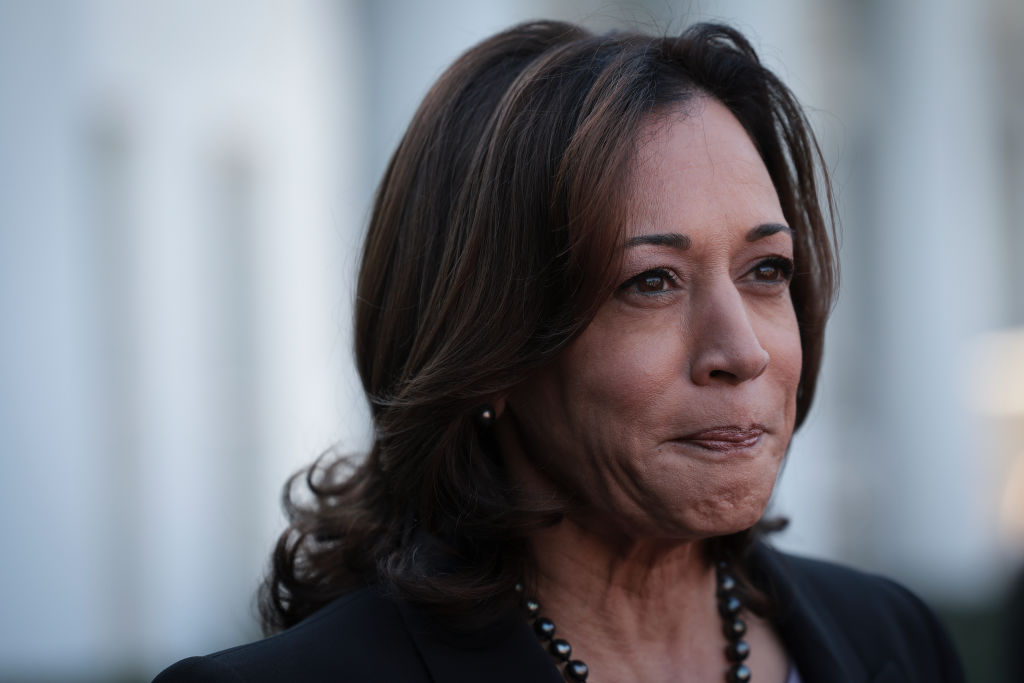
Kamala Harris’ Controversial Anti-Truancy Law Canned By Gov. Gavin Newsom, Highlighting School Attendance Policies
Chronic absenteeism in California is decreasing
California Gov. Gavin Newsom has played his hand by ending the controversial policy that punished parents for their children’s chronic truancy, once sponsored by former Vice President Kamala Harris, Politico reports
Newsom signed the repeal bill AB 461 to end the 2011 policy supported by Harris when she held the title of state attorney general, which presented misdemeanor charges for parents if their children missed school on a repeated basis. With a “chronic truant” being defined as a child absent from class for 10% or more school days a year, Harris once argued that the measure was necessary to prevent youth from becoming “a menace to society hanging out on the corner.”
The controversy behind the policy followed her throughout her political career, including Harris’ tenure as a state senator. Critics highlighted how the measure criminalized parents, with media coverage showing mothers being put in handcuffs. Following local outrage, Harris dialed back her position in 2019, expressing her regret. “I regret that that has happened,” she once said.
“And the thought that anything I did could have led to that, because that certainly was not the intention.”
However, several critics of the policy admitted that the bill’s demise had “nothing to do with our former VP.” Bay Area Democrat Patrick Ahrens, who wrote the bill, said his own childhood experiences drove his motivation.
In other states, chronic truancy is a continuous problem. Since the start of the COVID-19 pandemic, the rate of chronic truancy for students in grades kindergarten through 12th grade in Louisiana has increased, according to Louisiana Illuminator. Data from the Public Affairs Research Council of Louisiana reveals the truancy rate across the state sat at an average of 36% but rose over 40% since the 2020-21 school year.
Some of the blame is on the difference in how truancy is defined at the state and federal levels. In Louisiana, truancy is described as having unexcused absences for five or more school days each semester. However, the U.S. Department of Education defines chronic absenteeism as students who miss 10% or more of their school days due to unexcused absences.
Back in the Golden State, truancy has decreased somewhat, but it is still considered a problem. Data from the Los Angeles Times highlights that chronic absenteeism decreased from its 2021-22 peak in 2021-2022, but it continues to be 50% higher than before the pandemic. With an estimated 48 million public school students between kindergarten and 12th grade, nearly one in four — 11 million students — miss out on school without an excuse.
Founded by mother-daughter duo Dana Roberts and Dr. Monica Williams, Scarlet by RedDrop focuses on making its education-first period products more affordable and accessible.
The company’s line of pads and liners is now available in 350 Ulta Beauty stores nationwide. The news was announced via Scarlet by RedDrop’s official Instagram.
“Scarlet by RedDrop has now arrived @ultabeauty. From our signature period kits to individual pads, tampons, and menstrual cups, everything is now available both online and in-store,” the post read.
Scarlet by RedDrop’s received a boost when the company won the $1 million Black Ambition award.
Black Ambition, a nonprofit launched by Pharrell Williams in 2020, is focused on closing wealth gaps through entrepreneurship.
Each year, it awards millions in funding to innovators in consumer products, healthcare, tech and other industries. Scarlet by RedDrop’s success story represents one of the largest individual investments the initiative has made.
For Scarlet by RedDrop, the funding has accelerated its ability to expand its reach. Ulta Beauty, one of the nation’s largest specialty retailers, confirmed its partnership with the brand this year. The retailer said the move reflects consumer demand as well as the company’s commitment to carrying more products from underrepresented entrepreneurs.
Scarlet by RedDrop’s founders say they are committed to continuing to build a brand that not only sells products but educates girls about menstrual health. Next steps include expanding its product line and distribution channels. Thanks to a national retail partnership and backing from a high-profile initiative, Scarlet by RedDrop is certainly positioned to succeed in business and make a significant social impact.
Ever Wonder What The World’s Wealthiest People Spend $290 Billion On?
Ultra-wealthy buyers spent $290 billion on luxury goods in 2024.
The globe’s wealthiest individuals are pouring record amounts into luxury living, with a new analysis showing they spent $290 billion on high-end goods last year.
The report, released by wealth intelligence firm Altrata and informed by Bain & Company’s research, highlights how the ultra-wealthy—defined as those worth more than $30 million—are reshaping the luxury market. Though they represent just .006% of the global population, this group controls nearly $60 trillion, or about one-third of the wealth held by all millionaires.
That concentration of resources is evident in their spending patterns. In 2024, this tiny fraction of society accounted for 21% of luxury purchases worldwide. Leading the way were business titans such as Elon Musk and Oracle’s Larry Ellison, whose fortunes exceed 12 figures.
Transportation dominated their expenditures. According to Altrata, the ultra-wealthy funneled $129.5 billion into cars, yachts, and private jets, with $100.9 billion spent on automobiles alone. Private aviation and luxury vessels added another $28.6 billion to the total. Bain reported earlier this year that yacht and jet sales — categories almost entirely funded by this demographic—rose 13% in 2024.
Smaller luxury segments also commanded major outlays. Jewelry, watches, designer fashion, wine, and furniture added up to $115.6 billion, while fine art contributed another $19.6 billion.
As middle-market shoppers have pulled back, many luxury labels have doubled down on courting the ultra wealthy. Heritage houses such as Hermès have thrived, while brands like Gucci, which broadened its reach through more affordable collaborations, have stumbled.
“There’s been a kind of a refocusing, probably an over-correction of the strategy, to focus on the top of the pyramid that was more resilient in a moment of turbulence,” Claudia D’Arpizio, Bain’s global head of fashion and luxury, told Business Insider last year.
The appetite for experiences is also expanding. Spending on luxury hospitality hit $25.3 billion in 2024, with wellness tourism, spa retreats, and high-end adventure travel like safaris seeing strong demand, Bain noted in its 2025 Luxury Goods Worldwide Market Study.
Still, not all outlays go toward indulgence. While Altrata did not provide figures for philanthropy in 2024, the firm noted that in 2023 the ultrawealthy donated $207 billion—nearly matching what they spent on yachts and watches combined.
Black Employee Loses Discrimination Case Filed Against Amazon After Being Placed On Performance Improvement Plan
The case came about as one of the first cases adhering to the Supreme Court ruling that employees aren’t required to show sustainable damage such as pay cuts, demotions or terminations to pursue federal employment discrimination claims.
A judge ruled in favor of Amazon in a discrimination lawsuit against a former Black employee who accused the company of diminishing her duties and placing her on a performance improvement plan, Reuters reports.
In his ruling, U.S. District Judge Arun Subramanian of New York claimed the plaintiff, former Amazon Music event producer Keesha Anderson, failed to prove the online retailer issued her a poor performance rating as an act of discrimination, in addition to waiting for a woman of Black or Hispanic descent to become her superior before questioning her work. Amazon, however, provided “legitimate, nondiscriminatory reasons” as to why Anderson wasn’t promoted, highlighting the need for a strategist with skills she lacked.
The case arose as one of the first to adhere to the Supreme Court ruling that employees aren’t required to demonstrate sustainable damage, such as pay cuts, demotions, or terminations, to pursue federal employment discrimination claims. But then, in May 2024, the case took a turn when Anderson admitted to deleting conversations with coworkers and managers that had been secretly recorded.
Following, a “whistleblower” who came forward turned out to be the Hispanic manager who was quoted in Anderson’s original complaint, saying things that were never said. Amazon thought it would seal the deal in the case. However, while Judge Subramanian rejected a request to sanction Anderson and her lawyer, he mentioned the conduct “toes the line on what constitutes sanctionable conduct.” “Putting the now-discredited allegations concerning the ‘whistleblower’ to the side, the case paints a picture of a run-of-the-mill workplace, maybe even one with more positivity than usual,” the judge wrote in his decision.
While disappointed in the court’s ruling, Anderson’s lawyer, Jessie Djata, released a statement saying the case is more about equal opportunity from one of the world’s largest companies. “We continue to believe that our client was subjected to discrimination (and) raised important concerns about fairness and equal opportunity at one of the world’s largest companies,” Djata said.
Anderson left Amazon in February 2022 after two and a half years, but before leaving, she claimed the ordeal resulted in her being excluded from meetings and events, having her ideas dumped, and being limited to administrative tasks, before being put on a performance improvement plan based on what was labeled as “trumped up” allegations.
Amazon isn’t new to accusations of discrimination and lawsuits. Disabled employees working for the company at the corporate level have accused the retail conglomerate of engaging in “systemic discrimination” while arguing their requests for accommodations have been denied in “automated” ways, according to The Guardian.
Employees also allege that messages have been repeatedly removed, as well as a petition posted on an employee Slack channel.
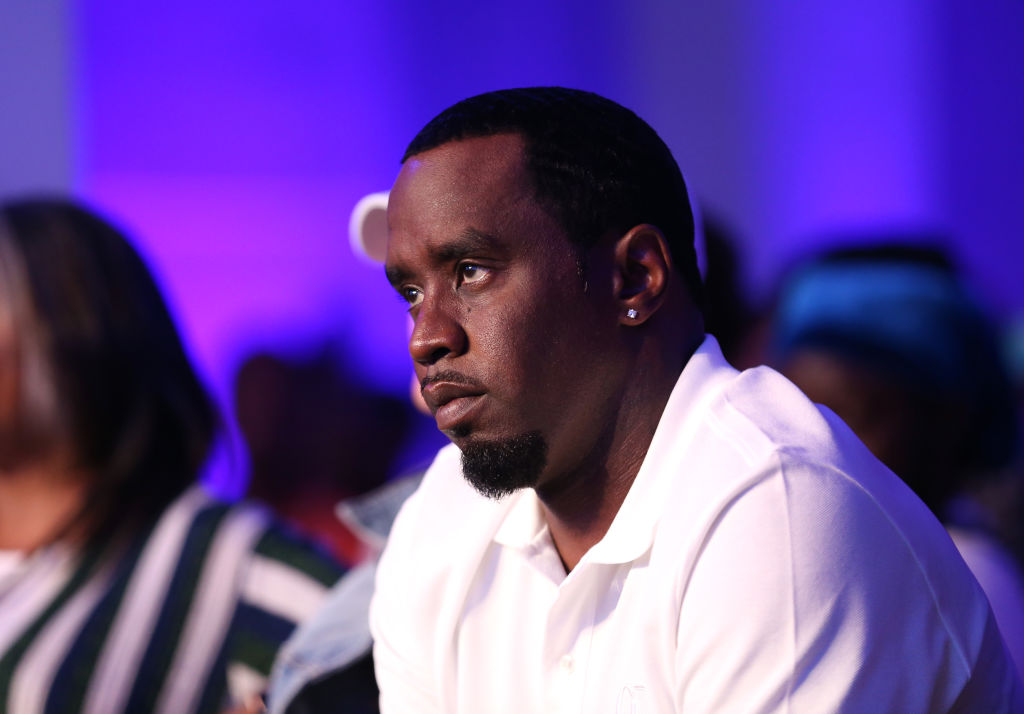
When Sean “Diddy” Combs’ is sentenced Oct. 3 on two counts of transportation to engage in prostitution, his attorney says the music mogul intends to speak before Judge Arun Subramanian issues his ruling, The Independent reports.
Diddy’s attorneys notified the judge of their client’s request when they asked for the case to be dismissed and/or for a new trial to be ordered.
“The sentencing proceeding holds significant importance for Mr. Combs. He wishes to appear before the Court, address Your Honor, and allocute in the most dignified and respectful fashion possible,” Teny Geragos, an attorney for Diddy, wrote in the filing submitted Sept. 26.
Along with that request, the attorney said the music producer wants to be allowed to wear “non-prison” clothing when he appears before the court.
Federal prosecutors had requested that the entertainment mogul receive a sentence of “at least 135 months’ imprisonment,” along with a fine of $500,000. The maximum sentence for each charge is 10 years. Diddy faces a total of 20 years for the two charges he was found guilty on.
Subramanian denied the defense’s request for a new trial or an acquittal but said Diddy “is permitted to have one button-down shirt, one pair of pants, one sweater, and one pair of shoes without laces to wear to court,” when he replied to the defense’s request on Sept. 30.
Diddy, 55, has been in Brooklyn’s Metropolitan Detention Center since his September 2024 arrest.
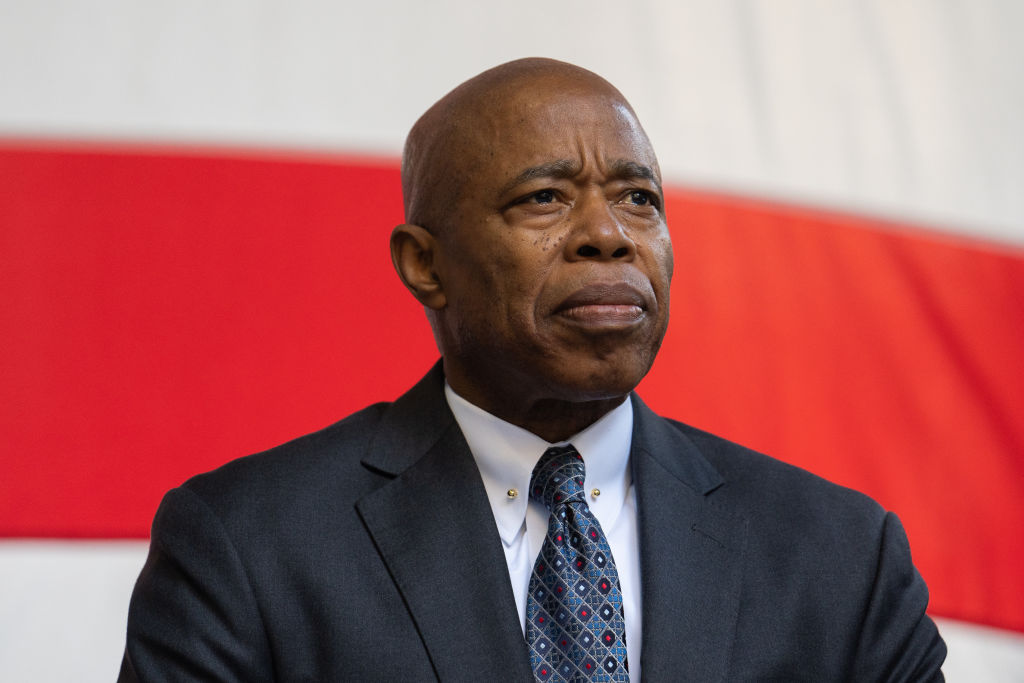
Jasmine Ray To Publish Memoir Claiming Past Romance With Mayor Eric Adams
The memoir is described as an unveiling of hidden truths
Jasmine Ray, a former member of New York City Mayor Eric Adams’s administration, is preparing to release a self-published memoir that she says will expose a personal relationship she once shared with the mayor.
The book, Political Humanity: A Memoir of Love, Legacy & New York City Politics, is scheduled to be released in October. Ray previously worked as the city’s director of the Mayor’s Office of Sports, Wellness, and Recreation, a position often referred to as “sports czar.” She stepped down in late September, just before Adams confirmed he would end his pursuit of another term, as reported by WBLS.
On her website, Ray describes the memoir as an unveiling of hidden truths. “From the shadows of City Hall to the silence of closed-door meetings, Jasmine Ray reveals her untold role in the life of New York City’s mayor, Eric Adams,” the book description reads. The summary points to themes of “intimacy, sacrifice, and betrayal.
To promote the book, Ray also posted an AI-generated trailer on Instagram. The video depicts digital renderings of herself and Adams in both professional and romantic contexts, paired with voiceovers alluding to legal investigations surrounding the mayor.
Ray has said their relationship occurred about 10 years ago, though City Hall officials have drawn a clearer boundary. Kayla Mamelak, a spokesperson for the mayor, acknowledged the pair once “dated” but insisted there was no overlap between their personal history and their government work. “The relationship was professional while working together,” Mamelak said.
Adams himself has not denied that he and Ray were involved in the past but has dismissed the book’s framing of their connection. His office maintains that any personal relationship took place before she entered city service.
The memoir emerges at a turbulent time for Adams, who ended his re-election campaign last month amid difficulties with fundraising, sagging poll numbers, and unrelenting media attention. Some political observers suggest the timing of Ray’s book could intensify public scrutiny. “If Ms. Ray’s account is credible, it could change public perception,” one commentator noted.
Ray’s publicist has not yet answered questions about the release, and the mayor’s office has declined to expand on earlier statements.
Bridging Legacies Through Pittsburgh’s Vibrant Black History, Culture, And Thriving Businesses
Pittsburgh’s vibrant Black history and culture continue to drive the city’s flourishing Black business community.
When people think of Pittsburgh, Pennsylvania, its steel legacy and passionate sports culture usually spring to mind first. But with over 440 bridges linking its many communities, the “Steel City” also carries a unique energy shaped by its rich Black history and thriving business scene.
The Pittsburgh International Jazz Festival, alongside the National Coalition of Black Meeting Professionals (NCBMP), offered the perfect opportunity to explore the city’s rich Black business and cultural scene. NCBMP’s visit was part of its mission to tour potential host cities with members, exploring destinations that can best amplify and celebrate the Black experience.
“NCBMP’s motto is simple: we do business with our friends,” NCBMP President Jason Dunn told BLACK ENTERPRISE. “Our members are committed to supporting destinations that mirror the core values of our organization. Places that are empowering, welcoming, and unapologetically dedicated to celebrating the richness of the Black experience, all while offering world-class accommodations.”
Dunn continued. “Visit Pittsburgh has exemplified this commitment, demonstrating a genuine interest in expanding its reach within our $145 billion economic impact, and aligning with our vision for a more inclusive and prosperous future.”
Pittsburgh’s Homewood neighborhood is home to Everyday Cafe, a “Café with a Cause” launched by the Bible Center Church to unite neighbors in a warm, welcoming space over fresh, handcrafted food and drinks. The walls are lined with black-and-white photos celebrating Black life and history, alongside reminders of the cafe’s deep roots in the Black church and community. From hosting a weekly farmers market to serving up lattes that encourage locals to vote, the cafe blends culture, community, and purpose into every detail.
“Our dream is to provide a beautiful and peaceful space in our community to celebrate art and culture, create jobs, and encourage the growth of the Homewood Avenue business district,” the company website states.
Everyday Cafe operates as a social enterprise of The Oasis Project, the community outreach and economic development arm of Bible Center Church. Its placement in Pittsburgh’s Homewood neighborhood is intentional, given the area’s long history of economic challenges. In 2015, child poverty in parts of Homewood exceeded 70%, more than twice the rate of children living in poverty across the city of Pittsburgh and Allegheny County. With its location, Everyday Cafe looks to mobilize locals and build a stronger, more connected community, one meal at a time.
Anyone visiting Pittsburgh won’t be disappointed when strolling along Butler Street in Pittsburgh’s trendy Lawrenceville neighborhood, where you can see why Walter’s Southern Kitchen has become a local favorite. Co-founded by friends Joel Bolden and Chris Morgan, who brought together 20 years of culinary expertise from New York and Texas, Walter’s has built a reputation for serving some of the city’s best BBQ and Southern comfort food. The menu speaks volumes: tender brisket, smoky chicken wings, pulled pork, and cornbread so soft it feels like slicing into cake, paired perfectly with whipped butter.
The vibe is just as inviting as the food. At the entrance, games welcome guests to grab and play at their tables, while picnic-style seating on the patio makes it easy for families and friends to gather. Inside, TVs line the bar, creating a lively sports-bar feel, while the space also nods to the owners’ roots in NYC and Texas. A longtime waitress shared how much she loves the movie nights and watch parties Walter’s hosts, creating a space where locals come together for food, fun, and community. One visit is all it takes to see why Pittsburgh has embraced Walter’s with so much love.
Health-conscious tourists looking for a boost of energy can stop by 1:11 Juice Bar for a refreshing, freshly squeezed juice. Founded by Bruce “Eric” Thornton and his wife Emily in April 2022, the juice bar has quickly become a neighborhood favorite. Bruce first got the idea after visiting a juice bar in Boston and was inspired to create a similar space in Pittsburgh that offered delicious smoothies, snacks, and cold-pressed juices crafted with mind, body, taste, and accessibility in mind.
Rooted in community, 1:11 Juice Bar goes beyond serving drinks. The business actively supports local youth programs like the Center of Life and the Spartan Community Center, giving young people access to fresh produce and a welcoming place to start their day. It’s more than just a juice stop; it’s a hub for nourishment and connection.
“I think what I’ve seen is that people really admire what we’re doing here in the sense of offering a healthy product in a neighborhood like Hazelwood, which is just building up, trying to rebuild the neighborhood,” Bruce told BLACK ENTERPRISE. So we’re a part of that. And it’s really an honor.”
“We’ve been embraced by the community. And the kids come up to get free fruit and juice and things like that before school starts,” he added. “So it’s been good for us. It’s been great just being in communion with them.”
Named after both the Genesis 1:11 scripture and the spiritual significance of the 1:11 angel number, Bruce infused his juice bar with a sense of mindfulness and purpose. Born in Texas but raised in Pittsburgh, he understands the city’s challenges and how often locals feel they must leave to find opportunity elsewhere. For Bruce, choosing to stay and build in Pittsburgh isn’t just a business decision—it’s an act of resilience and a commitment to creating change that uplifts his community.
“I think that the Black community itself in Pittsburgh, with the outcomes that we have here, is pretty resilient,” Bruce said. “A lot of people leave, but the ones that stay know that they’re staying and having a battle. If you stay here, you’re making a commitment to try to make it better. So I think that’s what I see about our community. I see a lot of people who may have opportunities in other places, but still stay because they want to see something change and grow here.”
Another standout Black-owned business in Lawrenceville is the holistic skincare shop, Plants for Skin, which handcrafts products designed to nurture every skin type. Those who enter the boutique shop are welcomed by the calming aroma of natural herbs and oils the team uses to craft their products right in the back. The shelves were lined with soaps, body oils, balms, and creams made for everyday use.
The brand was founded by Monae Findley, a Jamaican native who grew up watching her grandmother create holistic skincare remedies and noticed the lack of those offerings in the market. With just a $100 investment from her mother, Findley launched an online store in 2020, followed by the opening of her brick-and-mortar in 2023. Since then, Plants for Skin has grown into a global brand while staying rooted in community. Locally, it has collaborated with neighbors like 1:11 Juice Bar, which crafted a custom drink inspired by the brand’s golden face mask for their “drink your skincare” campaign, a beautiful example of two Black-owned, holistic businesses lifting each other up.
Explore Pittsburgh’s sports legacy at the Clemente Museum, a curated collection honoring the legendary Roberto Clemente—the Puerto Rican Hall of Famer and Pittsburgh Pirates right fielder who tragically died at 31 in a New Year’s Eve plane crash while delivering aid to earthquake victims in Nicaragua. Housed in the former Engine House No. 25 in Lawrenceville, the museum is home to the world’s largest collection of Clemente artifacts and memorabilia.
Inside, you’ll find everything from professional sports photography and family snapshots to uniforms, gloves, bats, balls, and even seats from Forbes Field. Founded in 2007 by photographer Duane Rieder, who first connected with the Clemente family in 1994, the museum not only preserves Clemente’s legacy but also carries it forward through charitable donations and initiatives that reflect his lifelong commitment to giving back, on and off the field.
The celebration of Pittsburgh’s Black history and excellence comes alive at the annual Pittsburgh International Jazz Festival, hosted at the August Wilson African American Cultural Center in Downtown Pittsburgh. This year’s festival kicked off inside the Cultural Center, buzzing with energy as live jazz filled the air, the aroma of local food vendors wafted through the crowd, and attendees laughed, danced, and soaked in the vibrant atmosphere. Surrounded by a striking collection of Black art, the setting provided the perfect backdrop for a weekend honoring music, culture, and soul.
The Center not only showcases contemporary and historic works of Black artistry but also honors August Wilson himself, Pittsburgh’s own literary giant. Visitors can walk through immersive exhibits of Wilson’s upbringing in the Hill District and explore his legacy as “theater’s poet of Black America.” His acclaimed 10-play series, The Pittsburgh Cycle, including Fences, Ma Rainey’s Black Bottom, and The Piano Lesson, captures the depth and beauty of African American life in the 20th century. Two decades after his passing, Wilson’s influence still looms large in his hometown, making the Center both a cultural hub and a living tribute to his storytelling genius.
Each year, the Pittsburgh International Jazz Festival unfolds just outside the Center, carrying forward the city’s creative spirit while honoring Wilson’s legacy of building spaces where Black culture thrives. A tour of the Historic Hill District brought us to Wilson’s childhood home, where engravings in the ground allow you to walk Wilson’s path to his old front door. A lush green space sits outside with seating space that lets anyone who passes know they are welcome.
A giant monument greets Hill District visitors upon entry. With a Martin Luther King Jr. quote and the names of local civil and human rights activists engraved into the ground, the monument serves as a nod to the Hill District’s roots as a hub for Pittsburgh’s liberation movement. Its location near Downtown made it a target for developers as the city grew. However, it was the heart of locals that ensured that the Hill District wasn’t gentrified and remained true to its foundation of serving the locals who have always called it home. The Hill District monument sits on Freedom Corner, where every civil rights march in Pittsburgh started.
During the tour, NCBMP further explored the organization’s legacy and its advocacy for Black professionals in the tourism industry and other sectors often affected by microaggressions, pay disparities, and bias; challenges that have grown amid recent pushback against diversity, equity, and inclusion in the workplace.
“The legacy of our foundation is rooted in holding the industry accountable,” Dunn said. “For decades, NCBMP has been a driving force speaking truth through data-driven dialogue and equipping our members with the tools to succeed.”
Dunn continued. “Now more than ever, our mission is critical: to empower our members with actionable insights that position them to compete at the highest levels, and to serve as the conscience of an industry that must reflect the diversity and excellence of the communities it serves.”
The weekend in Pittsburgh reached its peak at the Pittsburgh International Jazz Festival. Performances by Kandace Springs, Keith David, Jazzmeia Horn, Eric Benet, and Bilal outside the August Wilson African American Cultural Center on Liberty Ave had attendees dancing, singing, and connecting over live music that honored the diaspora. A few days in Pittsburgh made it clear that its Black culture and history run so deep, they can’t be ignored.
Breast Cancer Mortality Rates Decrease For Black Women But Inequity In Care Persists
Breast cancer remains deadlier for Black women in the United States than for white women, even as overall survival has improved.
The American Cancer Societyreleased new statistics showing a marginal decrease in the mortality rate. Although Black women have about 5 percent lower incidence of breast cancer, their mortality rate is roughly 38 percent higher.
An analysis spanning 2013-2024 across 10 major metropolitan areas, including Atlanta, Dallas, Philadelphia and Memphis, found that death rates among Black women declined in most regions. In Virginia Beach, the rate dropped by 21%, and in Philadelphia, by 16% However, in Dallas, it rose by 2.7%. In areas such as St. Louis and Memphis, progress was slight (-1.6 percent and -2.3 percent, respectively). But disparities persist in Virginia Beach; the gap between Black and white women’s mortality grew from 41% in 2014 to 60% in 2023.
Experts say several systemic factors underlie the disparities. Vice President of Community Health at Susan G. Komen, Sonja Hughes, MD, spoke about the consistent disparities.
Access to quality care is uneven. Black women are more likely to be uninsured or underinsured. They often live farther away from hospitals with advanced treatment options. Additionally, Black women are less likely to receive mammograms in facilities without the most current technology. Delays between abnormal screening results and follow-up are also longer among Black women.
Another key issue involves tumor biology. Black women are about 2.7 times more likely than white women to develop triple-negative breast cancer, which is a more aggressive form. Even when diagnosed at the same stage and given similar treatment, Black women often have worse outcomes.
Linda Goler Blount, MPH, president and CEO of Black Women’s Health Imperative, said, “Women of different races who have the same exact diagnosis, treatment, and care will have the same exact outcome.”
Healthcare policy changes are among the proposed solutions in places where Medicaid expansion has been scaled back. Community health coalitions, involving nonprofits, hospitals, and faith organizations, are helping bridge gaps by improving screening, diagnostic follow-up, and treatment access.