The company was founded by alum born and raised in the Tuskegee community.
Three Tuskegee alums have launched a new clothing collection focusing on the HBCU’s timeless campus fashions.
The clothing line, Taliaferro Union Apparel Company, has released an “Archive Revival Collection” that brings a contemporary lens to vintage looks. With an emphasis on “Golden Tiger heritage,” the assortment features sweaters, sweatpants, and cardigans that have an elevated yet classic uniform feel.
The pieces hold special significance to the HBCU alums, drawing inspiration from old photographs of students on campus. Now, they hope to symbolize the Tigers that came before them with this new collection, right in time for homecoming.
“Each piece in the Archive Revival was inspired by photographs of students from different eras of Tuskegee University’s past,” detailed the website’s collection description. “Pieces that spoke to us. Garments that deserved to be resurrected and given the dignity they’re due. We made sure to honor them by diligently poring over every detail.”
The collection includes four designs, including the Archive Cardigan, featuring Tuskegee’s colors of crimson and old gold. The item also boasts the school’s founding year of 1881 and the renowned “T Club.” While dating back to the 1920s and 30s, the school organization included scholars and athletes within the Tuskegee community.
The brand itself remains steeped in Tuskegee Pride. Its namesake even honors the university’s founder and first president, Booker Taliaferro Washington. The founders of the apparel line were also born and raised in this historic Black community. Now, they use this name to symbolize their efforts, providing expert craftsmanship to each item they create.
The website added, “Heritage, hard work, craftsmanship, and the pride of American labor and trade unions of days past, united with the proud heritage of Historically Black Colleges and Universities, are the core values of Taliaferro Union.”
In celebration of the homecoming festivities underway, the brand is also currently hosting a site-wide sale. Taliaferro Union hopes to encourage Tuskegee alumni and supporters alike in reclaiming their fashion-forward past for future generations.
Rev. Jesse L. Douglas, Martin Luther King Jr. Aide, Confirmed Dead Four Years After Passing
Douglas played a pivotal role in planning several civil rights marches, including the infamous Bloody Sunday March in Selma, Alabama.
Rev. Jesse L. Douglas, a close aide to Rev. Dr. Martin Luther King Jr., died in 2021 at age 90, though his death only recently came to light. According to his daughter, Adrienne Douglas Vaulx, he died in a nursing home in Charlotte, North Carolina.
As The New York Times reports, Douglas’ death was not widely known at the time, and the outlet only learned of it during the week of Oct. 10. Douglas played a pivotal role in planning several civil rights marches, including two in Selma, Alabama — one of which became known as the infamous Bloody Sunday March. He worked closely with King as part of the Montgomery Improvement Association, serving as the group’s president from 1963 to 1966.
That group was founded in 1955 to plan the response to the arrest of Rosa Parks for the “crime” of refusing to give up her seat and move to the Black section of a Montgomery city bus. The group helped promote a prolonged citywide bus boycott led by Dr. King, which eventually led to a Supreme Court ruling that ended segregation on public transportation.
Douglas also sat on the national board of the Southern Christian Leadership Conference for over 30 years. The SCLC, a group dedicated to civil rights and founded by King, began in 1957. Douglas was well-respected in leadership circles for his ability to keep a cool head while organizing voting rights marches born in Selma.
There were three marches in Selma, the first, the most well-known of the three, Bloody Sunday, held on March 7, 1965, ended after police officers brutally attacked protesters who attempted to march across the Edmund Pettus Bridge after firing tear gas canisters and ordering the crowd to disperse.
The second, held two days later, was ended early by King. The third, which accomplished the goal of reaching the State Capitol in Montgomery, due in part to the accompaniment of 25,000 protestors by the Alabama National Guard, F.B.I. agents, and federal marshals, lasted four days, from March 21-25.
In observance of Martin Luther King Jr. Day, we share this photo captured at a march in Selma, Alabama in 1965 that features Dr. King alongside colleague and personal friend with albinism, Rev. Jesse L. Douglas. #AlbinismInHistory#MLKDaypic.twitter.com/6UY4CvUNnS
Douglas, who had albinism, was sometimes referred to in newspapers of the day as an “unidentified white man,” an ironic development, because aside from a lack of melanin, Black albino people typically do not share the same facial features as white men.
Furthermore, Douglas enrolled in HBCUs, first attending his hometown university, Dillard University in New Orleans, before eventually transferring to Lane College in Jackson, Tennessee, where he graduated in 1959.
Three years later, Douglas graduated from Atlanta’s Interdenominational Theological Center, but before his graduation, in 1960, he met King in the school’s library, which propelled him to get involved in the civil rights movement. That same year, he joined to desegregate the cafeteria of the Georgia State Capitol.
He played an integral part in the protest, placing a call to the Southern Christian Leadership Council’s legal affairs office, which led to a lawsuit and a ruling in the resulting case, Douglas and Reynolds v. Vandenberg, which desegregated all facilities at the Capitol building in Atlanta.
R.I.P. Jesse L. Douglas, Aide to King in Marches From Selma, Is Dead at 90 A lieutenant to Martin Luther King Jr. and a fellow preacher, he played a vital role in organizing voting-rights protests in 1965 that began with “Bloody Sunday.”https://t.co/5ae90OphJi
In an interview with the New York Times in 2018, he referred to himself as a reverse Oreo cookie, “white on the outside, Black on the inside.”
The late Rep. John Lewis, who is also featured in arguably one of the most famous photographs of the civil rights era alongside King and Douglas, noted in a 2015 interview with The Charlotte Observer that King had great trust in Douglas’s ability to coordinate the movement’s logistics.
“Dr. King had a great deal of faith in him,” Lewis said. “He would say, ‘Jesse was taking care of this’ and ‘Jesse was taking care of that.’ And he could lead a song, creating a real sense of solidarity.”
His singing even earned him high praise. Charles Steele Jr., a longtime president and chief executive of the SCLC, indicated that he sometimes served the same role as Mahalia Jackson, another King confidant who often set the table for his sermons in Black churches.
“He really set the church on fire and got people motivated, pretty much like Mahalia Jackson,” Steele recalled.
He continued, noting, like the late Rep. Lewis, that the role Douglas occupied was a vital one. “He had a beautiful personality, was very outgoing, and everyone knew that if Dr. King or the national office needed something, he would do it. You needed people like that — part of the inner circle, but someone willing to do whatever was needed to support the movement.”
However, as Douglas told the New York Times, sometimes his pale skin was a Catch-22.
“They (white segregationists) always considered me a sympathizer with Black people, but not one of them. You know, that’s how I became ‘unidentified white man.’ They didn’t want to arouse friction from their own kind for killing another white man.”
He continued, “I had Black people make fun of me, call me ‘old white boy,’ ‘old albino.’ I never paid it any attention. I said, ‘If they’re dissatisfied with the way I look, go see God.’”
Douglas was preceded in death by his longtime wife, Blanche Gordon, in 2015. In addition to his daughter, he is also survived by two sons, Winston and Jesse Jr.; a brother, Collins; eight grandchildren; and three great-grandchildren.
‘Family Matters’ Star Darius McCrary Arrested Near Mexican Border
The '90s star was arrested by the U.S. Border Patrol in San Diego for an out-of-state felony warrant.
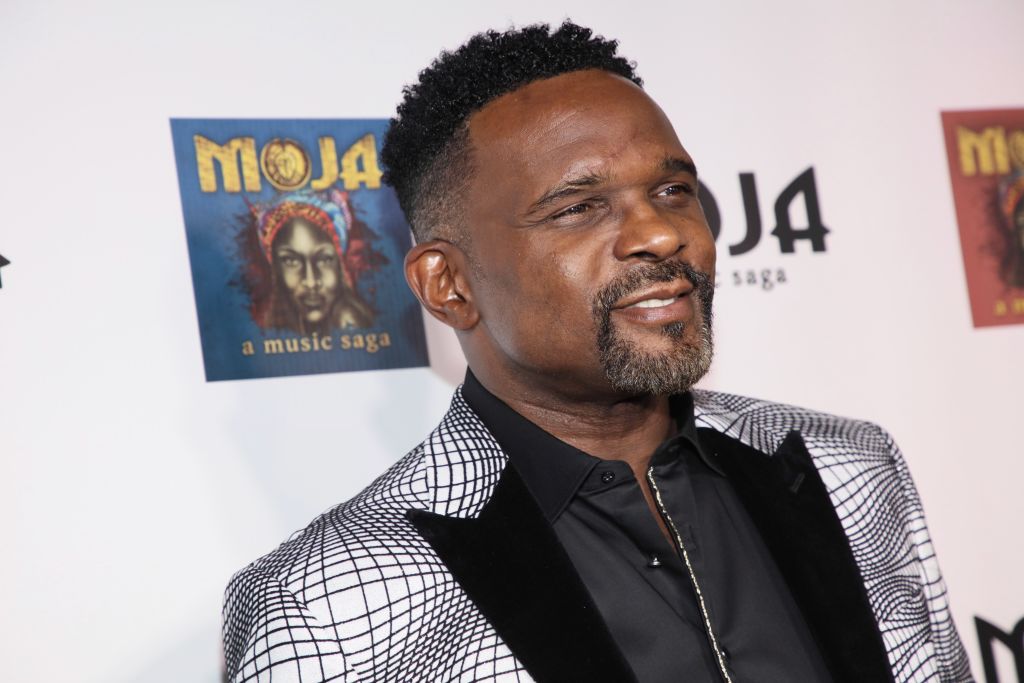
Darius McCrary, the actor known for his role as Eddie Winslow on “Family Matters,” has a new legal matter of his own.
The ’90s star was arrested by the U.S. Border Patrol in San Diego for an out-of-state felony warrant. According to People, McCrary is being held under a fugitive arrest, signaling that McCrary was trying to flee the area to avoid persecution.
Records obtained by the news outlet confirmed the 49-year-old was detained near the U.S.-Mexico border on Oct. 5. He remains held in the San Diego jail without bail.
While the jail records did not specify the exact charge, a rep for McCrary provided additional details. The rep told TMZ that the warrant stemmed from the actor missing a court appearance over failing to pay child support.
However, his legal issues surrounding child support go back to 2015. At the time, McCrary was arrested for back support debt, paying a $5,500 sum to prompt his release from custody. Upon his 2017 divorce from ex-wife Tammy Brawner, with whom he shares one daughter, Zoe, McCrary was ordered to pay $1,366 a month as part of their agreement, finalized two years later. Brawner was granted sole legal and physical custody of the then three-year-old.
In the meantime, McCrary was ordered to attend alcohol/drug abuse and batterers’ intervention classes. He also only had professional monitored visitation with the child. Reports showed that Brawner alleged that her ex-husband “partially dislocated” the young girl’s arm, a claim the father denied as ill-intentioned.
In November 2023, McCrary was arrested a second time for failure to pay child support. He reported owing over $52,000 as of March 2019 and pleaded not guilty to the felony charges.
McCrary starred on the classic ’90s sitcom, which ran for nine seasons from 1989 to 1998. The show centered on the Winslows, a middle-class Black family in Chicago, and their nerdy neighbor, Steve Urkel, who would eventually become the series’ main character.
Now, McCrary must contend with the recurring case against him for unpaid child support. His court appearance remains set for Oct. 15.
Durham Historic Chicken Hut Earns Landmark Status After Decades Of Community Impact
The beloved soul food restaurant, central to Durham’s Civil Rights legacy and Black entrepreneurship, is officially recognized as a local historic landmark.
After decades of serving as a cornerstone of community, history, and resilience, Durham’s famed Chicken Hut has been officially recognized as a local historic landmark. The City Council voted unanimously to grant the designation, honoring the restaurant’s cultural and political legacy within the city’s Black community. The announcement brought owner Tre Tapp to tears as he reflected on his parents’ dream finally becoming reality.
“I’m overwhelmed with emotion,” he said. “It’s my parents’ dream. They worked so hard in the city of Durham, and to do so much for the community — this is definitely an honor.”
Founded in 1958 by Claiborneand Peggy Tapp, the Chicken Hut—originally known as The Chicken Box—became more than just a soul food restaurant. During the Civil Rights Movement, the Tapp family provided meals to activists and served as hosts for NAACP meetings and community organizing efforts. “The Chicken Hut is not just a restaurant to me, it’s a living institution,” said Melvin ‘Skip’ Alston, co-founder of the International Civil Rights Museum. “It’s been a gathering place for generations of Durham families… and a proud example of Black entrepreneurship and excellence.”
The path to historic recognition was years in the making. The Chicken Hut first applied for landmark status five years ago but faced delays due to volunteer turnover at Preservation Durham, the nonprofit that led the research and nomination process. That effort reignited when Preservation Durham’s Julianne Patterson and Julia Lasure unearthed archival materials documenting the Tapp family’s decades-long community service and activism.
Mayor Leonardo Williams, who owns his own Durham restaurant, reflected on the Tapp family’s influence. “When my wife and I said, ‘We’re going to open a restaurant,’ the first thing we did was look at how Black-owned restaurants are doing it in Durham,” Williams said. “I remember her saying, ‘We got to do it like The Chicken Hut.’”
Today, The Chicken Hut remains a hub for community and comfort food, serving hundreds of customers daily from its location on Fayetteville Street. As Tre Tapp carries on his parents’ legacy, the landmark status ensures their story—and the restaurant’s deep roots in Durham’s Civil Rights history—will continue to inspire future generations.
Trump Lays Off More Than 4,000 Federal Workers During Shutdown
Trump has also mused publicly that Democrat workers should be fired.
More than 4,000 federal employees received layoff notices on Oct. 10 following multiple reports indicating that the Trump administration had chosen not to give back pay to furloughed federal workers who had been designated “non-essential” workers after the government shutdown due to the inability of the Democratic and the Republican Parties, who control all the levers of power, to come to a compromise.
According to CNN, the firings represent Donald Trump making good on a threat to fire workers if the Democrats didn’t agree to his strong-arm negotiation tactics and agree to a budget largely dictated by the Republican Party.
To that end, Trump has not only blamed the Democrats for the shutdown, but has also mused publicly that the workers who should be fired are Democrats.
“We figure they started this thing, so they should be Democrat-oriented,” Trump said, regarding the federal workers, whom he noted that he would fire “a lot” of. Like Trump, the White House and Republican leaders have cast the blame for the shutdown on the Democratic Party.
As an OMB spokesperson told CNN on Oct. 10, “We regret that the Democrats have shut down the government and forced workers to be put in this position.”
However, the layoffs are not the fault of the Democratic Party; that decision rests squarely with the party in power—the Republicans.
From Vice Chair @PattyMurray: No one is making Trump and Vought hurt American workers by conducting mass firings—they just want to. pic.twitter.com/MMuT7JPm6S
As Sen. Patty Murray (D-WA), the top Democratic appropriator in the Senate, noted in a post to her Twitter (X) account, “Once again: if President Trump & Russ Vought decide to do more mass firings, they are CHOOSING to inflict more pain on people. ‘Reductions in force’ are not a new power these bozos get in a shutdown. We can’t be intimidated by these crooks.”
Likewise, Senate Minority Leader Chuck Schumer indicated that “nobody’s forcing Trump and Vought to do this. They don’t have to do it; they want to.” According to Schumer, the layoffs are “deliberate chaos.”
The American Federation of Government Employees referred to the actions of the Trump administration as disgraceful in its statement, noting that the move to fire furloughed workers is unprecedented in American history.
“In AFGE’s 93 years of existence under several presidential administrations –- including during Trump’s first term –- no president has ever decided to fire thousands of furloughed workers during a government shutdown,” Everett Kelley, the union’s national president, said.
Although it is unknown how many of the workers the Trump administration has laid off are Black, both government workers and Democrats, if Trump’s threat on that front is even credible, are camps that Black Americans tend to fall into.
Moreover, according to Max Stier, CEO of the Partnership for Public Service, a government shutdown does not give an administration any additional power to declare a reduction in force, the tactic the Republican administration is using to further downsize the federal government.
“There is no extra legal authority on their part to conduct RIFs on the basis of a shutdown,” he told CNN on Oct. 7.
Stier noted in an additional statement on Oct. 10 that the administration is attempting to use the employment status of federal workers as a kind of hostage situation.
The Trump administration, he said, is using “civil servants as hostages in this ongoing breakdown of our public institutions. These unnecessary and misguided reductions in force will further hollow out our federal government, rob it of critical expertise and hobble its capacity to effectively serve the public.”
Sen. Elizabeth Warren (D-MA) echoed the point about utilizing public servants as hostages in a conversation with Vox‘s Sean Rameswaram on a recent episode of the outlet’s “Today Explained” podcast.
As she told him, “He’s saying, ‘We think that Democrats care about the federal workers, care about the people who are doing your food inspection, care about the people who keep planes flying in the air, care about those people. And the threat is, we will fire them.’ Why? Out of spite. I just gotta stop and say on this one, what kind of person does that? What kind of person says that he is president of the United States, and his plan to run government is to take people who are doing the work and punish them for his own political reasons? That’s not someone who’s looking out for America.”
California Black Caucus Holds Gov. Gavin Newsom Accountable On Reparations Promise
The California governor signed the bill five years after forming a task force to examine the impact of racist policies on descendants of enslaved people.
Five years after California Gov. Gavin Newsom created a task force to study the legacy of enslavement in California, a state agency has been created to facilitate restitution for the descendants of those who were enslaved in the state, despite not approving cash payments for the wrongs visited upon their ancestors.
According to Politico, in an episode of Van Lathan and Rachel Lindsay’s “Higher Learning, released on Oct. 10, the same day Gov. Newsom announced the creation of the agency, noting that the office is a necessary step to further action concerning reparations.
“I signed a bill two days ago with the Black Caucus as it relates to creating a new office to address these systemic issues,” he told the hosts.
Previously, in 2024, Newsom signaled that part of the reason he vetoed a bill that would have compensated the victims of the state’s past use of racially-motivated eminent domain was because there was no state agency to disperse funds to Black Californians.
Notably, the renewed push for reparations in the wake of the 2020 killings of George Floyd and Breonna Taylor has been slowed considerably by the anti-DEI sentiment coming from the White House, something reflected by the California Black Caucus referring to their latest bill package as the “Road to Repair” in lieu of outright referring to it as reparations.
As Erin Aubry Kaplan noted in a column for Capital & Main, the tactic of advocating for reparations without explicitly calling them reparations is at once cynical and reflective of lessons learned in 2024, when disagreements between the Caucus and reparations advocates led some Caucus members to withdraw support for their own initiatives.
Kaplan spotlights Assemblymember Isaac Bryan and his bill, Assembly Bill 7, which notably turns the argument from the Supreme Court’s most vocal conservative, Clarence Thomas, that policies (like college admissions but notably not immigration enforcement) should be colorblind, on its head.
As Kaplan noted, “It’s an exquisite irony that a left-leaning Black elected official is using Thomas’ reasoning, even in small part, to argue for reparations, something Thomas decidedly does not support.”
Another notable development is the reintroduction of a bill by Assemblymember Tina McKinnor to restore land or pay homeowners whose land was taken by eminent domain, which seems, in part, inspired by the creation of the new agency.
As McKinnor pointed out in May, “existing programs aimed at promoting homeownership do not specifically address the unique historical injustices faced by the descendants of formerly enslaved people. Without targeted measures, the state cannot adequately address the wealth gap and housing disparities rooted in these injustices and discrimination.”
In addition to these two initiatives, another standout player in the package from California’s Black Caucus is another bill that might look familiar to Newsom, as much of its substance is identical to one he vetoed in 2024.
At the time, Newsom argued that without an agency to disperse funds, he could not create a Bureau for the Descendants of American Slavery —a callback to the Freedmen’s Bureau, which was shuttered after only seven years of existence during the truncated Reconstruction period.
The Freedmen’s Bureau is most notable for its responsibility in coordinating Field Order 15, which was to offer Black Americans parcels of land taken from white Southerners as restitution for the Civil War and their enslavement. However, the election of arguably “America’s worst president,” Andrew Jackson, heralded yet another broken promise America would leave unfulfilled to the people who were responsible for building American wealth with forced labor.
NAACP Slams Trump For Dismantling Protections For Black, Women, And Minority-Owned Businesses
Derrick Johnson, the NAACP's president and CEO, characterized the move by Trump as a significant step backward for Black-owned businesses.
On Sept. 30, the Trump administration’s Department of Transportation (DOT) issued its Interim Final Rule on the Disadvantaged Business Enterprise (DBE) and Airport Concession Disadvantaged Business Enterprise (ACDBE) programs, which has since been interpreted by some, including the NAACP, as an enshrinement of discrimination.
“A determination that an individual is socially and economically disadvantaged must not be based in whole or in part on race or sex,” the rule reads in part. “Being born in a particular country does not, standing alone, mean that a person is necessarily socially and economically disadvantaged.”
DOT guts DBE program ahead of Construction Inclusion Week. A new interim final rule for the 45-year-old initiative requires all current DBEs to be re-evaluated for certification without using race or sex as criteria. https://t.co/gqOH4i0n59
According to the Trump administration’s DOT, their rule on the programs now requires applicants to individually prove “social and economic disadvantage,” regardless of any long-standing barriers to capital, contracts, or opportunity, which Derrick Johnson, the NAACP’s president and CEO, characterized as a significant step backward in an Oct. 10 press release.
“This rule is nothing more than an attempt to erase the reality of racism in contracting,” Johnson said. “The Department of Transportation has turned its back on history and on the very purpose of the DBE program. The economic exclusion of Black Americans and women isn’t theoretical. It’s measurable and ongoing. This change signals that the federal government would rather pretend inequality doesn’t exist than address it. It’s unfortunate but not unexpected.”
According to the American Society of Civil Engineers, the DOT’s DBE program was started in 1980 and codified in 1983, in an effort to remedy the ongoing and continuing effects of past discrimination on federally funded transportation contracts, in effect, opening doors for Black, people of color, and women-owned small businesses to receive more contracts than they had previously.
As reported by Construction Dive, coinciding with the change to the 45-year-old rule is Construction Inclusion Week, which the construction industry developed independently to broaden diversity in an industry dominated by white men and now faces a labor shortage.
According to Danielle Dietrich, an attorney at Washington, D.C.-based Potomac Law Group, “It means that all of the DBE goals are currently paused. All of the contracts and overall goals are basically gone until such time as the states reevaluate every single one of their DBEs on a basis that does not take into consideration sex, race or ethnic origin.”
“It would be a minority business crisis if this program went away. From an African American contracting standpoint, it’s pretty scary to think that these programs won’t be around. And to try to prepare for them is not necessarily all in our hands. …It’s not like the problems with bias and racism won’t exist anymore,” Harris told the outlet.
Kendra Perkins Norwood, a partner and government contractors attorney at ReedSmith, told the outlet at the time that the best course of action for minority and women contractors would be to meticulously document any issues of discrimination to prove their cases once the DOT dismantled the program.
Meanwhile, Oren Sellstrom, litigation director at Lawyers for Civil Rights in Boston, described what led to the creation of the DOT’s rule in the first place.
“There were many businesses that had to close their doors because the entrenched business networks — the old boys’ networks that exist throughout the economy — were allowed to flourish after Proposition 209 went into effect. That is a predictor in some ways of what could happen if a similar situation unfolded at the federal level,” Sellstrom warned.
Man Charged With Sending Racist Death Threats To Oakland Mayor Barbara Lee
Authorities say the suspect sent violent, racist emails targeting Mayor Lee and other officials.
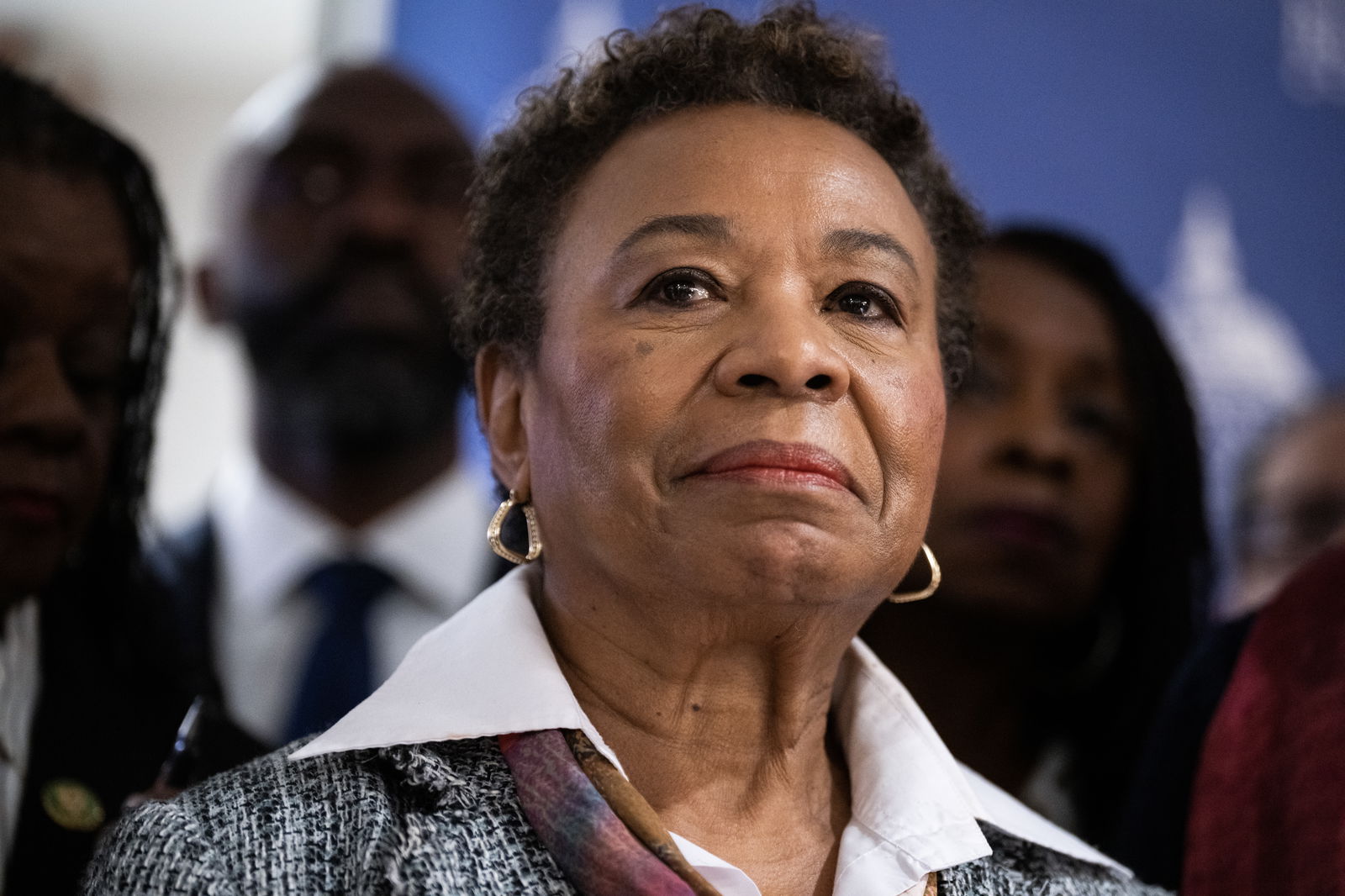
A 45-year-old man from El Cerrito has been charged with multiple hate crimes after allegedly sending a series of racist and violent threats to Oakland Mayor Barbara Lee, according to the Alameda County District Attorney’s Office. The suspect, identified as David Pokorny, was charged with threatening a public official and committing a hate crime. He is currently being held at Santa Rita Jail in Dublin, California, with bail set at $70,000.
Authorities said members of Mayor Lee’s staff contacted law enforcement after discovering several disturbing emails filled with explicit racial slurs and violent threats. The messages were sent from an unfamiliar Google account.
The first email was sent to Lee on Sept. 7, but it wasn’t until Sept. 22 that a staff member noticed the alarming messages while reviewing the mayor’s inbox. The emails included racist language and graphic threats to harm the mayor and others.
One message read in part, “I want all the [N-word] in Oakland killed. They’re an unhealthy pest. If you want to keep the [expletive] alive, then I want you killed, too. I think we should kill all of the government officials in Oakland and all of the police officers and judges in Oakland as well.”
Another email, sent on Sept. 21, escalated the threat to Lee: “You are a psychopath, and I’m going to torture and murder you.”
Mayor Lee and her staff reported the threats immediately, describing them as credible and deeply concerning. An investigation quickly led authorities to Pokorny, who was arrested and formally charged this week.
The case of Mayor Lee comes amid a rise in threats and violence directed toward public officials across the United States. Data collected by Princeton University shows an increase in politically motivated harassment and violence targeting lawmakers, judges, and local leaders.
Earlier this year, a Minnesota lawmaker was killed and another was injured in an attack carried out by a man pretending to be a police officer. Investigators later uncovered writings listing dozens of Democratic politicians the suspect allegedly planned to target.
Pokorny’s arrest underscores growing concerns over the safety of elected leaders, particularly amid heightened political tension and online extremism.
FAMU May Be Forced To Rename A Campus Street For Charlie Kirk
A proposed Florida bill would require state universities to rename certain roadways after the slain white nationalist, or risk losing state funding.
Florida’s Republican State Rep. Kevin Steele, an outspoken supporter of slain white nationalist Charlie Kirk, recently filed legislation in the Florida Legislature, House Bill 113, which would require the state’s university boards to recognize Kirk by renaming roadways after him or risk losing state funding.
As WCTV reports, the bill specifically mentions Florida A&M University as one of four universities in Florida’s Big Bend area that would have to name streets after Kirk or risk losing funding if it is not completed within 90 days of the bill’s passage.
In effect, this proposal follows in the footsteps of Donald Trump’s attempts to control higher education through discretionary funding reductions for universities that run afoul of his directives on diversity, equity, and inclusion, or that do not address an alleged atmosphere of anti-Semitism, to his liking.
According to the bill, it calls for Florida State University to redesignate Chieftan Way as Charlie James Kirk Road, Florida Agricultural and Mechanical University to redesignate West Osceola Street (which no longer officially exists) as Charlie James Kirk Street, and Tallahassee State College to redesignate Progress Drive as Charlie James Kirk Drive.
Although the bill still has several steps to go before it can officially become law, it has already drawn the attention of college students at the University of West Florida, many of whom noted that it flies in the face of the state’s political neutrality policy for its institutions of higher education.
“I feel like it’s silly because the fact that the state of Florida wants to have colleges neutral with their standing in politics and everything,” UWF senior Parker Shreeves told ABC 3. “I feel like it’s silly of how they want to push Charlie Kirk on the university because he was a very politically active person.”
Likewise, UWF senior Mea Brahier noted that “He (Kirk) had a very specific political agenda. And so this is a specific political agenda that they’re trying to put forth by naming roads after him.”
As the right, particularly in Florida, attempts to sanitize Kirk’s sordid legacy that includes numerous instances of anti-Black racism and attacks on the LGBTQ+ community, there are also pockets of resistance.
Earlier in October, in Boynton Beach, Commissioner Thomas Turkin’s idea for a memorial to honor Kirk was met by resounding opposition. The proposal was so unpopular that when Commissioner Woodrow Hay motioned to “drop all conversation now, and in the future, of memorializing Charlie Kirk,” it was met with raucous applause.
According to The Palm Beach Post, the crowd and the local NAACP branch took particular issue with the conflation of Kirk’s legacy with that of the slain civil and human rights activist Martin Luther King Jr.
As Alfred Fields, president of the West Palm Beach NAACP branch, told the outlet, “We wanted to make sure that the legacy of Dr. King was not distorted by this person, whom I had no idea who he was until he was murdered. There’s no room for hatred, racism or bigotry here.”
Indeed, as Dedrick Straughn, the president of the South Palm Beach NAACP branch, noted, “(Kirk) became more famous in death than he did in life. If we didn’t know you while you were alive, why are we erecting any type of memorial for you? Your life’s work did not dictate this happening.”
Hay, for his part, echoed a portion of a now-viral sermon delivered by the pastor of Washington, D.C.’s historic Alfred Street Baptist Church, Howard John-Wesley, that encapsulated how many Black Americans felt in the wake of the campaign led by white evangelicals and right-wing politicians to whitewash Kirk’s legacy after his death.
“What happened to Charlie Kirk was a disgusting act,” Hay said. “However, the way you die does not justify how you lived. Choosing not to create a public statue or memorial is not dishonoring his life. It is protecting the dignity, well-being and unity of all our residents.”
Ex-NFL Star Reshad Jones Wins $9.5M Fraud Settlement Against Merrill Lynch
According to arrest reports, Jones’ former financial adviser, Isaiah Williams, allegedly exploited the athlete’s accounts without proper authorization.
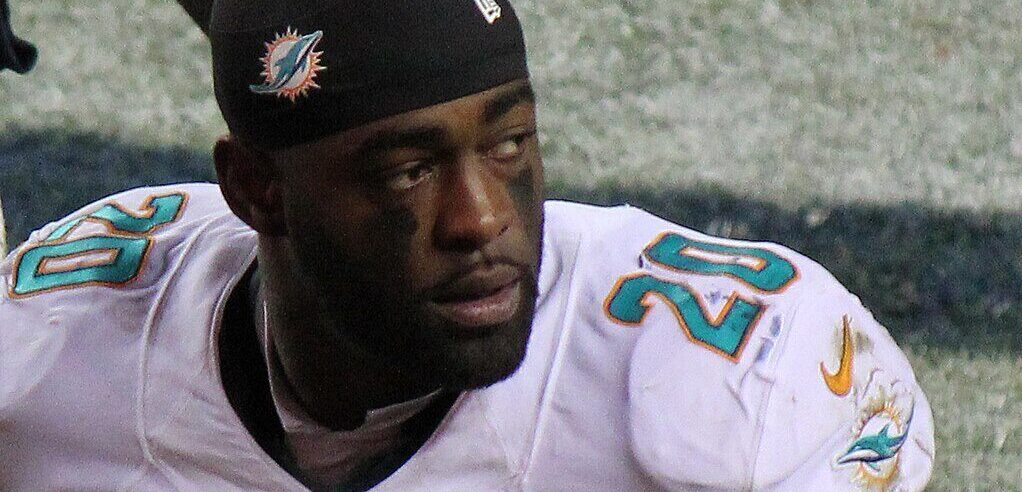
Former Miami Dolphins safety Reshad Jones has reached a $9.5 million settlement with Merrill Lynch after accusing one of the firm’s former financial advisers of stealing millions from him during his NFL career. The settlement, finalized in August, became public this week.
According to a June 25 arrest report, Isaiah Williams, Jones’ former financial adviser, allegedly accessed the athlete’s accounts without authorization and diverted $1.56 million through 133 separate transactions. Investigators also stated that Williams funneled an additional $1.03 million through a Georgia woman named Octavia Monique Graham as part of a money-laundering scheme involving bank and Cash App transfers. Jones told police he had never met Graham.
Court filings allege that Williams used the stolen funds for lavish personal expenses, including flights, luxury hotels, strip clubs, jewelry, vehicles, and duty-free shopping in Mexico. Williams, who once worked for Merrill Lynch, was arrested in Palm Beach County and charged with multiple counts of organized fraud and grand theft, both first-degree felonies that carry potential 30-year prison sentences. He was released on $1 million bond and is awaiting trial, according to court records.
The case underscores a growing concern among financial watchdogs about the vulnerability of professional athletes to financial exploitation. In a joint statement provided to ESPN, Jones’ attorneys, Chase Carlson and Jeff Sonn, described the case as “another troubling example of a professional athlete being exploited.”
Merrill Lynch declined to comment on the settlement.
Records from BrokerCheck, a regulatory database that tracks financial professionals, show that Jones initially sought $16 million in damages in an arbitration claim against Merrill Lynch.
Jones, 36, was selected in the fifth round of the 2010 NFL Draft out of the University of Georgia and spent his entire decade-long career with the Miami Dolphins. Over 128 games, including 113 starts, he earned two Pro Bowl selections and accumulated more than $56 million in career earnings.
The former safety has largely stayed out of the spotlight since retiring from the NFL in 2020, but his case highlights the ongoing risks athletes face when managing multimillion-dollar fortunes — and the critical importance of oversight within the financial advisory industry.