Fashion And The Breezy Bowl: Chris Brown’s Partner John Dean Details Their Collaboration
The two are partners in The Auracles
Ohio native John Dean, who runs a company with R&B singer Chris Brown, discusses how his humble beginnings in Akron led him to partner with the soulful recording artist.
In an interview with the Akron Beacon Journal, the 33-year-old designer tells the media outlet that reaching out to the “Run It” singer’s stylist in 2014 led to the two becoming partners in The Auracles. He most recently created merchandise for the “Breezy Bowl XX” tour, which is celebrating Brown’s 20-year singing career.
“Chris and I have a really close relationship now, I’m in tune with his design aesthetic just naturally because we’ve had so much time together just working on the brand,” Dean said. “I’m glad he trusted me with his vision to be able to create clothing that represented and embodied his work.”
While attending St. Vincent-St. Mary High School, he found inspiration for fashion, and in his senior year, he started his own company, Renowned.
“When I ran my brand Renowned, I reached out to one of Chris’ stylists because I’m just a big fan of his and I wanted to get him some of my Renowned stuff,” Dean recalled. “Basically, Chris ended up wearing the stuff, and he liked it. The stylist came back to me and said ‘Hey, Chris would like more of your stuff, but can we have these colors? Can we do this, that?’ and then I started making custom clothes for Chris.”
That led Dean to create pieces for his first Brown tour, “Between the Sheets Tour,” in 2015. He went on to design merchandise for Brown’s “Under the Influence Tour” in 2023, “11:11 Tour” in 2024, and the most recent, “Breezy Bowl XX Tour.”
“Basically, our brains were on the same wavelength and at the end of the conversation, we were like ‘we should do something together, we should do a little art project,’ and to make a long story short, that art project is our brand, The Auracles,” Dean said.
The Auracles footwear was sold at the “Breezy Bowl XX” tour, and after releasing boots in 2024, the brand is prepping to release a new shoe on Black Friday, as well as a new toy, Dean said.
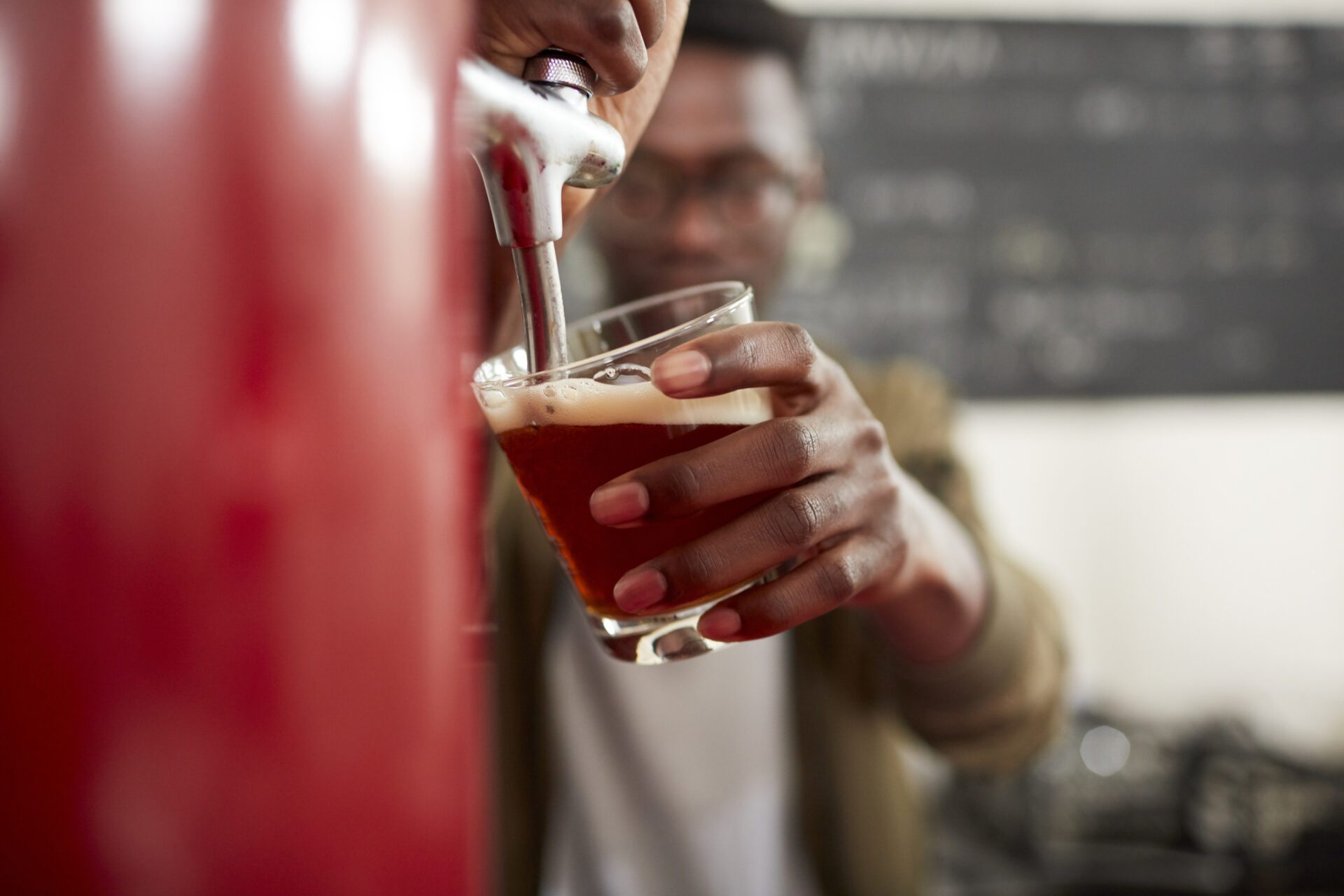
Chug It Up With These Black Brewers On National American Beer Day”
National American Beer Day, observed on Oct. 27, recognizes the tradition of Black beer brewed in the United States. This year, our focus shifts to the unmistakable impact of Black‑led breweries. Although Black‑owned craft breweries make up less than 1% of all U.S. operations, Black brewers are reshaping the conversation, creating standout brews, safeguarding heritage, and championing equity within an industry that rests on community and craftsmanship. BLACK ENTERPRISE celebrates that excellence by delivering a glimpse of the innovators, brands, and movements that are brewing culture and catalyzing change throughout the brewed beer industry and landscape.
Harlem Brewing Company
Harlem Brewing Company opened its doors in November 2000, under the leadership of Celeste Beatty, an entrepreneur and brewer who became the first Black woman to own a brewery in the United States. The brand crafts beers that reverberate with Harlem’s history. Each pour contributes to the neighborhood’s cultural narrative. Though its headquarters are firmly planted in Harlem, the operation has pushed southward, launching Harlem Brew South in North Carolina. At its heart, the company seeks to redress the under‑representation of Black owners in the craft‑beer arena.
Cajun Fire Brewing Company
Cajun Fire Brewing Company (New Orleans) burst onto the scene thanks to brewmaster‑CEO Jon Renthrope, a Black and Native American entrepreneur determined to put the South in the driver’s seat of its craft‑beer destiny. Their Honey Ale, along with a suite of signature concoctions, marries deep‑rooted flavor with the daring inventiveness of modern brewcraft, delivering both a palate‑pleasing sip and a purpose‑filled pour. Though the taproom sits in the heart of New Orleans, the brand’s reach extends beyond the Crescent City, earning Cajun Fire a spot as a pioneer on the national craft‑beer map. In filling a glaring representation void, the company also pumps life back into Eastern NOLA, uplifting the neighborhood’s community spirit and economic pulse.
Hippin’ Hops, the brick‑and‑mortar brewery and taproom that set up shop in Atlanta, serves up hallmark pours, like the assertively hop‑forward “Baby Mama Drama” IPA and the tart, summer‑ready “So Peachy” sour, each alongside a full‑scale restaurant menu that feels more like a dining experience than a bar snack. The space pulses with a neighborhood‑driven vibe, earning its reputation as a cornerstone of Atlanta’s Black craft‑beer scene. Hippin’ Hops crafts a communal, rich gathering place around craft beer. It’s an oasis that’s often absent from the more generic mainstream beer landscape.
Urban Garden Brewing Co., a venture born in 2021 in Washington, D.C., out of a vision of Eamoni, is on a mission to plant a full‑scale, Black‑owned brewery into the capital’s thriving beer scene. For the moment, Urban Garden Brewing Co. is producing small‑batch craft ales under contract, all the while laying the groundwork for its brick‑and‑mortar brewing hub.
Moor’s Brewing Company
Moor’s Brewing Company in Chicago was founded by three friends, Damon Patton, Jamhal Johnson, and Anthony Bell, right on the South Side of Chicago. The brewing company already ships its craft beer to more than 500 locations, and the owners are eyeing a 2025 opening of a Black‑owned taproom in the city. Launched on Juneteenth in 2021, Moor’s stands as a testament to ambition and cultural representation in the U.S.
Brown Girl’s Brew operates out of New York and Chicago and was founded by Christina Thomas, a woman who links craft beer, dessert‑inspired flavors, and Black female entrepreneurship in a space where women of color remain scarce. The brews read like a dessert menu, featuring Carrot Cake Amber Ale, Lemon Pound Cake Lager, and Banana Pudding Hefeweizen. It is already making its way through New York, New Jersey, and beyond.
Rhythm Brewing Co., located in the heart of New Haven, Connecticut, is the brainchild of Alisa Bowens‑Mercado, Connecticut’s brewery proprietor. She blends a music‑driven environment, dubbed “The Rhythm Nation,” with the timeless craft of brewing, turning each glass into a kind of jam session. Since its 2018 launch, Bowens‑Mercado’s story highlights the hurdles of race and gender that still loom over the craft‑beer world. Bowens‑Mercado also underscores how a sharp, niche‑focused brand can serve as a foothold for Black‑owned brewing ventures.
Fresno, California’s Full Circle Brewing Co., proudly holds the title of the Central Valley’s brewery. It functions both as a full‑scale production craft brewery and as a vibrant live‑entertainment venue. The operation has shone a spotlight on brewing entrepreneurship and breaking into emerging markets and craft‑beer regions that aren’t traditionally on the map, while keeping live events and community engagement at the forefront.
Vine Street Brewing Co. is based in Kansas City, Missouri and proudly bears the distinction of being the state’s brewery. Its relaxed, welcoming taproom offers a lineup of beers. Since opening its doors in 2023, Vine Street Brewing Co. has quietly underscored how the craft‑beer equity movement is finally taking hold in the Midwest, reminding its consumers and peers that diverse ownership matters, especially in markets that often slip under the radar.
SAIC Says Goodbye To Toni Townes-Whitley After Serving Two Years As CEO
Under Townes-Whitley’s leadership since 2023, SAIC posted $7.48 billion in 2024 revenue, ranking as the 20th-largest public company based in the Greater Washington, D.C. area.
There is a significant shift within the Fortune 500 as Science Applications International Corp. (SAIC) announced that CEO Toni Townes-Whitley will step down, effective immediately after two years of leadership, Washington Business Journal reports.
In a regulatory filing, SAIC said Townes-Whitley separated from the company “without cause,” making her eligible for unspecified benefits and severance. The former CEO released all claims and has a two-year noncompete. The announcement came after the markets closed Oct. 23. Under Townes-Whitley’s leadership since 2023, SAIC posted $7.48 billion in 2024 revenue, ranking as the 20th-largest public company based in the Greater Washington, D.C. area. The technology company saw revenue growth of 0.47% between 2023 and 2024 and employs roughly 24,000 people, making SAIC the 23rd-largest employer in the area.
As the board has tapped former Leidos CFO Jim Reagan as interim CEO until a permanent leader is named, Townes-Whitley says she has the “utmost confidence” that he will take the company to new heights. “I have collaborated closely with Jim during my time here, and I have the utmost confidence in his and the team’s ability to capitalize on and fully realize the Company’s growth prospects,” she said in a statement.
“With its talented employees, SAIC is in good hands until a permanent CEO is appointed.”
While SAIC board chair Donna Morea released a statement thanking Townes-Whitley for her leadership, her departure is notable, as she is one of two women of color to lose their positions in just one week.
According to Fortune, both Townes-Whitley and Priscilla Almodovar, former CEO of Fannie Mae, have stepped down in October 2025. With both companies being headquartered in the D.C. and northern Virginia area, there are ties to federal agencies. Fannie Mae, a government-sponsored entity (GSE), has been facing hurdles with the Trump administration—first with the President considering an IPO—and then with the Federal Housing Finance Agency removing eight members of its board and installing director Bill Pulte as chair.
SAIC has ties to the executive branch of the government, with $7.5 billion in revenue from serving as a contractor to the Department of Defense and other branches, providing IT and engineering services to the military, NASA, and more.
Townes-Whitley was one of only two Fortune 500 companies with Black women serving as CEOs, alongside TIAA’s Thasunda Brown Duckett. Almodovar was the only Latina to serve at the same level. Both women made the 2025 Most Powerful Women list, with Townes-Whitley listed as 95, but with her departure, the group is left with only 52 female chief executives.
The corporate world has seen the effects of President Donald Trump’s executive order that rolled back diversity, equity, and inclusion (DEI). A Bloomberg report highlighted that white men made up a majority of new directors at 500 companies for the first time since 2017.
Former NFL Defensive Back Derwin Gray Transforms Career To Become Lead Pastor
'I’m a football coach disguised as a pastor,' Gray said. 'My staff are the coaches, and you are the team, and we are equipping you to play.'
Former NFL player Derwin Gray, who once ran on the football field, now runs the scriptures to his congregation as the lead pastor at Transformation Church.
According to Queen City News, the former defensive player left his athletic dreams on the gridiron to preach to the masses after losing his love for football. While playing for the Carolina Panthers in 1998, Gray says a voice spoke to him during a game, and he heard the message and decided to change, not his defensive patterns on the field, but the path that led him to the ministry.
“We were playing the Buffalo Bills in Buffalo, and their running back broke through the line,” Gray said. “I just came up and smashed him. But at the bottom of that pile, I heard a voice say, ‘What are you still doing out here?’”
That voice was the catalyst for the transformation he needed to change careers.
He suffered a knee injury that year, and instead of rehabbing it to get back on the field, he used the time to read the bible.
“The desire to play was leaving. So during injured reserve, I was in the cold tub and all I did was read the bible,” he recalls.
Now, instead of waking up to prepare for football games on Sundays, he is getting up to preach the word to his church members in South Carolina. The Transformation Church has two locations, Indian Land and Lake Wylie. The congregation has more than 12,000 parishioners.
“I’m a football coach disguised as a pastor,” Gray said. “My staff are the coaches, and you are the team, and we are equipping you to play.”
According to the Transformation Church website, Gray and his wife, Vicki, the church’s co-founder, met at Brigham Young University (BYU), where both were athletes; he played football, and she threw the javelin on the track team.
Gray played in the NFL for two teams during his five-year career: the Indianapolis Colts (1993–1997) and the Carolina Panthers (1998).
The football mindset is still in his blood, even if he isn’t on the field making plays.
“Coaches are teachers. Pastors are teachers. Inspiration will only last for a moment. Transformation will last for a lifetime.”
Kenyan Software Engineer Launched Honeycoin To Bridge Blockchain And Finance In Africa
How this Kenyan software engineer is transforming blockchain infrastructure across Africa.
Meet David Makuku Nandwa, founder and CTO of Honeycoin, a fast-growing fintech platform bridging traditional finance and blockchain infrastructure across Africa.
Nandwa founded Honeycoin in 2020 after a frustrating experience as a young Nairobi-based software engineer. When he received a $5,000 payment for freelance work through PayPal, the platform froze his funds for three months, labeling his country a high-risk jurisdiction. The then-19-year-old turned that setback into motivation, channeling his frustration into launching his fintech startup during the height of the pandemic.
“It was a wake-up call,” Nandwa toldBusiness Insider Africa. “Here I was, a developer building global systems, and I couldn’t access my own money. I realised Africans weren’t just excluded from opportunities, we were excluded from access. And I had the skills to do something about it.”
Since its launch, Honeycoin has experienced rapid growth, now handling over $150 million in monthly transactions across 40 markets and redefining how Africans send, receive, and manage money. Backed by partnerships with Tether, Binance, and others, the platform aims to reach $1 billion in monthly transaction volume within the next six months.
“It’s about giving businesses and people financial control,” Nandwa said.
With a strong foundation in software, sparked by a passion for gaming and guidance from his father, an engineer, Nandwa built and exited two startups before founding Honeycoin. One of these ventures, an e-commerce platform in Dar es Salaam, grew to nearly $1 million in annual revenue before being acquired by Zapata. He then spent two years at Flutterwave, the African payments unicorn, where he gained hands-on experience developing integrations and building payment rails across the continent, knowledge that would lay the groundwork for Honeycoin.
“Flutterwave was my classroom,” Nandwa said. “I saw how hard it is to scale financial infrastructure in Africa, how much you depend on third-party systems that can fail at any time.”
During his time at Flutterwave, Nandwa recognized a critical issue: treasury and liquidity systems in emerging markets relied on fragmented and unreliable infrastructure. He realized the solution required a fundamentally different approach, building on blockchain rails designed for speed, resilience, and global accessibility.
Today, Honeycoin functions as the operating system for money in emerging markets, offering a unified platform where businesses can issue stablecoin wallets, access banking infrastructure, send cards, and connect to global blockchain payment rails through easy-to-use APIs.
“Africa’s financial systems have been built on imported infrastructure, SWIFT, Visa, PayPal, often inaccessible or unreliable,” Nandwa said. “Honeycoin’s model flips that. By merging stablecoins, blockchain, and traditional rails, we offer a resilient alternative that works whether banks are online or not.”
13-Year-Old Launches Youth-Focused Skincare Line With Famed Black Chemist Behind ‘Rhode’
Coco Granderson partnered with Ron Robinson, the chemist behind Rhode, to bring Yes Day to teens.
Coco Granderson believes in a good skincare routine, even at 13.
The teenager has self-funded her skincare line, Yes Day, with backing from a well-known industry expert. Coco was able to bring in chemist Ron Robinson into her endeavors.
Robinson is already known as the chemist who helped Hailey Bieber establish her beauty and skincare brand, Rhode. As a cosmetic chemist, Robinson consulted on the development of the formulas for its signature products. After e.l.f. acquired the brand for $1 billion, Robinson has partnered with a Black-owned skincare brand while it finds its own success.
According to AfroTech, Robinson has an equity stake and is listed as a co-owner of Yes Day. Launching at the top of October, Yes Day rolled out its first batch of products, including Float Foam Cleanser, Whip Dream Moisturizer, and Lip Sweetie Lip Mask.
Coco showed off the products herself, befitting young girls and adults who want helpful ingredients and bright packaging.
Coco decided to break into the booming skincare industry after noticing many brands did not cater to her teenage demographic. The 13-year-old wanted to prioritize products that would appeal to girls like her while still caring for their evolving skin.
“I want to launch a brand because I was like, ‘No one’s making skin care for kids, and if they are, it doesn’t tick the box, because either it’s not cute or it doesn’t actually help,” Coco told Glossy.
Her idea finally reached Robinson, who believed in her mission and passion to diversify the skincare game. The brand’s formula includes probiotics, centella asiatica, and antioxidants. However, its priority is to be an engaging way for young people to get into skincare safely.
He shared, “I wanted to help these young consumers build a healthy routine around maintaining their barrier, hydrating, protecting their skin, and giving them that glow.”
Furthermore, as the brand takes off, its Black girl founder is leading the charge for youth-focused skincare. With an emphasis on making skin glow, it includes dream-like names in its products. The skincare line even boasts an affordable price range of $15 to $26. Its “Sleepover Set,” consisting of the four initial products, also goes for $72.
As Coco builds her own lane in the beauty sphere, she wants to help teen girls develop their confidence and community, one face mask at a time.
“Skincare is my self-care,” she wrote on its website. YES DAY is for me, my friends and people like us who want to live their boldest, baddest lives. Full of positivity, free of worries.”
‘We’re Shutting It Down’: Coordinated Economic Blackout Set For Nov. 25 – Dec. 2
Blackout The System launches its Second Wave economic blackout, urging participants to avoid work and shopping from Nov. 25 to Dec. 2.
Blackout The System has called for a nationwide boycott, urging participants to refrain from working or spending money from Nov. 25 to Dec. 2 as a protest against a damaged government and economic system.
In recent days, Blackout The System—a movement advocating unity across race, culture, and class—has been actively promoting the upcoming Second Wave economic blackout. Scheduled around the Thanksgiving holiday and extending through Black Friday and Cyber Monday, the initiative aims to become the most significant economic blackout protest in U.S. history, demonstrating that real power belongs to the people—not corrupt governments, billionaires, or broken systems.
“Day one, no work. No shopping. We vanish from their system,” an Instagram video says. “We are the economy. Without us, nothing moves. We pulled our money. They can’t buy our silence.”
“We don’t grind for them today. We starve the machine,” it adds.
During the blackout, participants are urged to avoid working, shopping, and spending money throughout the week-long protest. The boycott coincides with the current federal government shutdown, which will suspend the Supplemental Nutrition Assistance Program (SNAP) starting Nov. 1, marking the second-longest shutdown in U.S. history, after the record set during Donald Trump’s first term.
“We are shutting down the U.S. economy – strategically and peacefully – by removing our labor, our spending, our financial support, forcing the system to listen,” a statement on the movement’s website says. “This movement launched to reclaim power, restore justice, and unite people across all races, cultures, and classes.”
For those who can’t step away from work for the whole week, Blackout The System has outlined several “working strike” options. Participants can choose to work to rule, performing only the essential duties of their jobs; go slow, easing their pace and avoiding extra effort; or shirk by showing up but refraining from active participation. In all cases, participants are encouraged to avoid shopping or spending money throughout the boycott period.
“See, there’s something that we all can do when we black out the system,” the video announcement says. “If we got to be at work, we’ll work to rule, go slow, or shirk. But we’re definitely not spending money with any of you all. Putting our dollars back in our pockets.”
Blackout The System’s boycott announcement comes alongside The People’s Union USA, a consumer-activist movement that called for an October boycott of six major brands—Amazon, Walmart, Starbucks, Disney, Target, and Ben & Jerry’s. This boycott continues a strategy the group has pursued since February, aimed at promoting corporate accountability, strengthening diversity, equity, and inclusion (DEI) initiatives, and curbing corporate influence over U.S. economic policy.
Former NFL Player Adrian Peterson Arrested, Charged With DWI, Weapon Possession In Texas
The arrest took place in Sugar Land, Oct. 26
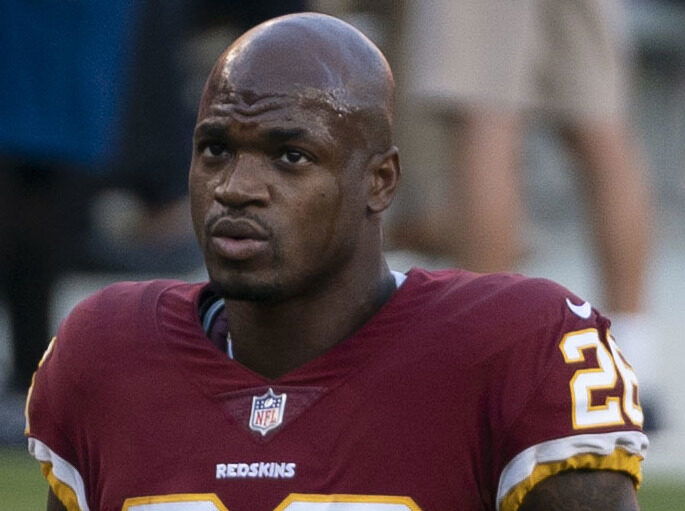
Former NFL player Adrian Peterson was arrested and charged with driving while intoxicated (DWI) and unlawful carrying of a weapon in a Texas town.
According to KHOU, the arrest took place in Sugar Land on the morning of Oct. 26, police officials said. The former Minnesota Vikings running back was taken into custody around 9:30 a.m. on the two charges. Since it is an active investigation, police couldn’t release any additional details.
Peterson is no stranger to being on the wrong side of the law. He was taken into custody earlier this year in Minnesota for a similar charge when he was arrested on suspicion of drunken driving in April after he attended an NFL draft party for Vikings fans. Police said he was driving 83 mph in a 55 mph zone and registered a blood alcohol level of 0.14%.
The retired football player was involved in a fracas at a poker game at a Houston social club on May 27, with Joe “Baby Joe” Castaneda. Two months after the two men fought, TMZ reported that they would meet again, this time in a boxing ring. Both men signed up to face each other in a celebrity boxing contest.
Both men have signed a contract to meet, but no date or venue has been announced as of yet. Celebrity Boxing Founder Damon Feldman confirmed that an agreement had been drawn up.
After being drafted by the Vikings in 2007, Peterson also played for the New Orleans Saints, Arizona Cardinals, Washington Commanders (formerly the Redskins), Detroit Lions, Tennessee Titans, and Seattle Seahawks before retiring in 2021.
During his NFL career, he had 14,918 career rushing yards and holds the record for most rushing yards in a game when he rushed for 296 yards. There is speculation that when he is eligible for the Pro Football Hall of Fame in 2027, he will make it in.
East Tennessee College Unveils New Statue Honoring First Black Students To Integrate School
The statue now replaces an iconic fountain that was destroyed during an arctic blast.
A college in East Tennessee is remembering its students who paved the way for educational equity.
East Tennessee State University has unveiled a new statue that commemorates the first Black students to integrate the school in 1958. The statue includes five life-size bronze sculptures of Eugene Caruthers, Elizabeth Watkins Crawford, Clarence McKinney, George L. Nichols, and Mary Luellen Owens Wagner.
The piece was commissioned following an arctic blast that ruined ETSU’s iconic fountain, which first paid tribute to the students. Detroit artist Austen Brantley also spoke to WJHL about his hopes for the structure’s long-lasting impact.
“I think it’s about legacy,” Brantley said. “What we leave behind. It’s really important to create things that are not just for me, but for my whole community.”
Titled “The Path,” the statue was formally unveiled Oct. 25. University leaders selected Brantley after he submitted his design for the reimagined tribute. He used old photographs and stories about this historic cohort to create the sculptures. Brantley is also using AI to improve picture quality and get more explicit images of the students.
“These students had a journey together, and you will see this in how they are placed,” added Brantley in a news release. “They are banded together in art, just as they are in history, because of what they went through.”
Founded in Johnson City, Tennessee, in 1911, the school was established to serve young scholars within the eastern Appalachian region. Its programs include a unique curriculum in Bluegrass, Old-Time, and Country Music, and the school boasts Appalachian Studies and the only Master’s program in Storytelling. Its medical school, James H. Quillen College of Medicine, is also recognized as a top institution for rural medical study.
According to the East Tennessean, the school was able to integrate relatively peacefully, a feat among the violence against Black students who enrolled in white institutions at the time. As of 2023, it had 824 Black students enrolled at the institution amongst its roughly 13,500 undergraduate and graduate students, per Data USA.
Some of its esteemed honorees even attended the unveiling. One of the trailblazing alums, George Nichols, also shared how the sculpture will stand as a reminder of their courage.
“Their strength and resolve opened doors for countless others and marked a turning point in the pursuit of equality and justice,” shared Nichols. “As we honor this legacy, may this courage continue to inspire future generations to stand firm in their convictions, pursue their aspirations without fear, and build a more inclusive and compassionate future for all.”
The statue also affirms ESTU’s commitment to embracing and recognizing its whole history. The move marks a win for diversity principles amid the movement against DEI in higher education.
DoorDash Launches Emergency Food Response As SNAP Aid Cutoff Looms
The loss of SNAP benefits affects a significant number of Americans, including 21 million children, 16 million working families, and 5 million seniors.
As the federal government shutdown threatens to drag into November, millions of Americans could soon lose access to their Supplemental Nutrition Assistance Program (SNAP) benefits. In response, DoorDash is activating its emergency food relief program to help those affected.
On Oct. 26, the food delivery giant unveiled its Emergency Food Response under the Project DASH initiative, a program designed to support food banks and pantries by delivering meals to those in need. The launch comes as 40 million Americans face the threat of losing SNAP benefits if the government shutdown continues past Nov. 1.
“No one should go hungry in America—period,” said Max Rettig, vice president and global head of public policy at DoorDash. “Millions of families are worried right now about how they’ll put food on the table. Fighting hunger is core to our mission at DoorDash, and we’re stepping up alongside leading grocers and retailers to help bridge the gap. We know this is a stopgap, not a solution. But doing nothing simply isn’t an option.”
The loss of SNAP benefits affects a significant number of Americans, including 21 million children, 16 million working families, and 5 million seniors. As federal funds dry up, families face an escalating threat of hunger, while food banks struggle to keep up with a surge in demand that they can no longer meet on their own.
As part of the initiative, DoorDash will provide 1 million free meal deliveries throughout November, supporting more than 300 Project DASH food bank partners nationwide. The company will also waive delivery and service fees for an estimated 300,000 grocery orders for SNAP recipients shopping at Sprouts, Dollar General, Schnucks, Ahold Delhaize brands, Hy-Vee, Giant Eagle, and Wegmans.
Additionally, DoorDash will donate food from its DashMart stores to local food banks.
“The food security of millions of people who rely on SNAP is at dire risk,” said Eric Mitchell, president of Alliance to End Hunger. “We know that the only viable solution is to ensure SNAP benefits are being delivered in full to those in need of food assistance as soon as possible. We are thankful for the part that companies and organizations across the country, like DoorDash, can play to try to fill the gap, and we will continue to work tirelessly to make sure SNAP is restored and protected quickly and fully.”
The call for emergency food assistance follows a notice from the U.S. Department of Agriculture announcing that SNAP benefits will be suspended starting in November due to the ongoing federal government shutdown, which the agency attributed to Democrats.
“Bottom line, the well has run dry,” the department said in a notice on its website.
DoorDash is urging Congress to take immediate action to restore funding for the SNAP program, which helps prevent millions of Americans from going hungry. The company is also calling on businesses, organizations, and individuals to step up by donating food, money, or time to support those most in need.