CJ Pearson On A Mission To ‘Win Young People Over’ In The Black MAGA Movement
CJ Pearson is rising as the face of the young Black MAGA movement, and aiming to attract more young voters.
CJ Pearson, the Black Gen Z Republican rising star, aims to draw more young voters to the MAGA movement.
With his new podcast, Family Matters, Pearson, 23, is positioning himself as a leading voice for the next generation of Black conservatives. As Democrats criticize Trump’s policies as harmful to Black communities, Pearson and other right-leaning Black creators are courting voters with the viral-style approach popularized by the late conservative activist Charlie Kirk, aiming to shift support from historically Democratic strongholds.
“Right now, my priority is simply doing all I can to win young people over to our side and help us win the culture war because politics is downstream from culture,” Pearson told USA Today.
This includes stirring controversy by highlighting the interracial marriages of Democratic figures such as Supreme Court Justice Ketanji Brown Jackson, Rep. Ilhan Omar, former CNN anchor Don Lemon, and former White House Press Secretary Karine Jean-Pierre.
“Have y’all ever noticed that Black people on the left love to hate white people in the streets but love them in the sheets?” Pearson asked his listeners.
While Pearson has built a massive social media following and other Black Republicans hold influential roles in the Trump administration, conservative Black candidates like NFL star Herschel Walker and former North Carolina Lt. Gov. Mark Robinson have struggled in statewide races. Pearson believes strong fundraising and strategic messaging could bridge the gap.
“Being a Black Republican is not enough to win an election, so you got to actually have a few other things going for you as well,” Pearson said.
Political strategist and fellow MAGA Republican, Janiyah Thomas, 27, agrees with Pearson in that Republicans running for office need to do more grassroots work.
“We definitely need to dive in and try to make a difference electorally, not just on the internet,” she said. “I mean, the internet is great, and I do think you reach a lot of people, but it’s important to be on the ground. There’s work to be done.”
Pearson’s popularity continues to rise. The Georgia native was named to the Time100 Creators list in July and featured in The Washington Post’s Sept. 2 story, “The MAGA kids are not all White,” published a week before Charlie Kirk’s death. He hosts gatherings for his cause, appears on Fox News, and socializes with Black Democratic peers—“the good ones,” he clarifies.
Pearson, a Georgia native, also actively promotes conservative online culture and defends his party’s pro-Trump, anti-DEI stance. At 23, he could address one of his party’s challenges in three years, when he reaches the minimum age to run for Congress.
“This is a country that has always given so much to me,” he said. “I want to give back to it one day as well. What that looks like, whether it’s elected office or something else, I don’t know.”
From Ami Colé’s Closure To SKIMS Beauty: Diarrha N’Diaye’s Journey Reveals Myths On Black Founders And Venture Capital
The founder shares why raising $1M wasn't enough
By Noel Walker
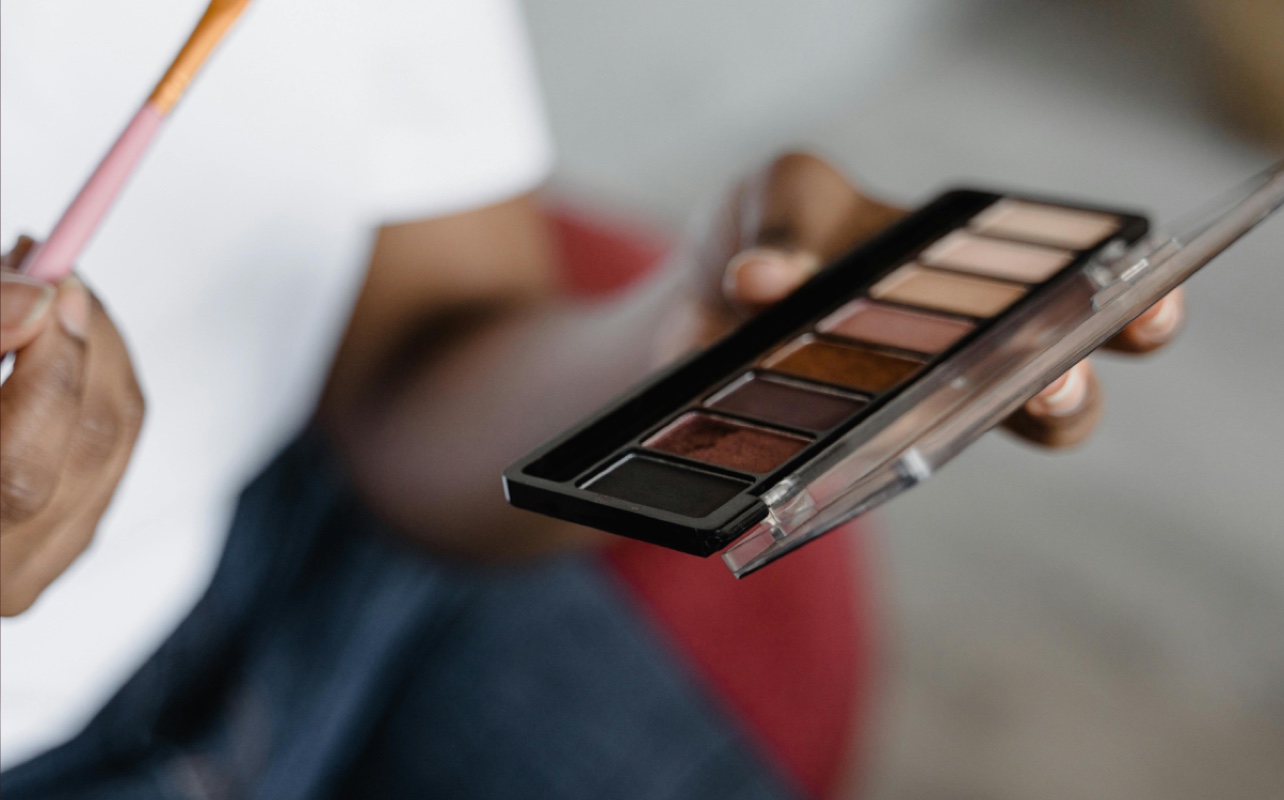
A quick Google search of Ami Colé reveals that with $1 million in financial backing, the brand filled a void, bringing much-needed products to the Black beauty industry. So when news broke on July 17 that founder Diarrha N’Diaye was closing the brand and would be off Sephora shelves in September 2025, the beauty community was gutted. N’Diaye‘s self-authored piece in The Cut asked a question that reverberated across the industry: “My beauty brand offered Black women shades they couldn’t find elsewhere. Why wasn’t that enough?“
Today brings a different headline. SKIMS announced N’Diaye as executive vice president of Beauty & Fragrance, effective Nov. 3, where she’ll lead product development and brand strategy for Kim Kardashian’s beauty venture. But weeks before the press release, N’Diaye sat down with BLACK ENTERPRISE to discuss what really happened with Ami Colé.
The Therapeutic Mindset and the Pattern Recognition Trap
The path to raising that million dollars began somewhere unexpected: therapy. Growing up in a Senegalese family where asking for money was culturally taboo, N’Diaye found herself fighting psychological barriers before she could even think about pitch decks.
“For me, it took literally almost like a therapeutic mindset of, OK, why am I asking for money? I’m not asking for charity, for personal benefit. This is really for the business,” she explains to us in an interview. The breakthrough came from reframing capital entirely—not as a handout but as energy. “The unlock was thinking about capital as energy. So if I’m going to bring something to life, you literally need a battery to make sure that thing is on, continuing to go strong.”
This mental shift transformed how investors perceived her, because in venture capital, insecurity has a price tag. “They’re going to know when you’re feeling insecure about the ask or if you’re asking for too little,” N’Diaye says. “I don’t think deserving is the word, but I do think that they can take advantage. There are different things like valuations and other merits that could easily be reconsidered, or you get the shorter end of the stick.”
As one of only 30 Black women to raise over $1 million during the pandemic, she carried statistical weight into every investor meeting. But being part of that group didn’t mean investors would be lenient. It was quite the opposite. “It was always the elephant in the room. Investors don’t like to talk about that; there were so few solo women of color,” she reveals. She actually had to be quadruple prepared because venture capital operates on pattern recognition, continuing to bet on the same models that already work. Most pitches are “we’re gonna be the Uber of XYZ” or “the Glossier of XYZ” because investors need you to plug into frameworks they already understand. When you’re building something genuinely new, you’re not just pitching a product; you’re reeducating investors on why the unfamiliarity matters.
Despite working at Glossier in research and development and actively trying to distinguish Ami Colé’s DNA, investors defaulted to the easiest comparison anyway. “I really tried to change their mindframe because I knew that we were not going to be on the trajectory of a Glossier, wanting to be a unicorn and all these metrics that probably would not be true to this brand in terms of our intention, our speed, our cadence,” N’Diaye expressed. The comparison stuck regardless.
Without access to friends-and-family funding rounds, a bleak reality for many Black founders whose communities can’t provide that initial capital, the stakes felt impossibly high. “It felt like literally zero to a million. Like, no in between,” she recalls. She built networks through former colleagues, raising capital simultaneously, business panels, and crucially, the Clubhouse app during its pandemic peak. This was the beginning of The Black Beauty Club with Tomi Talabi, where founders like Olamide Olowe of Topicals, Maeva Helene from Bread, and Abena Boamah-Acheampong from Hanahana Beauty would pop in, sharing notes. After 150 rejections, the funding came through. But securing the capital was just the beginning of hard lessons.
What They Don’t Teach You About Retail and Scaling
Landing in 250 Sephora doors sounds like validation. N’Diaye learned that without understanding retail machinery, even dream partnerships become traps. Looking back, she wishes she’d started with 20 doors instead.
“Ask retailers what’s the bare minimum you could do both for dot com and in-store because they’re two different beasts. I promise you, they will give you a recommendation. Most retailers are grateful that you’re asking these questions because it shows a level of intentionality and desire to succeed,” she affirms.
But getting everyone aligned on the same growth strategy proved nearly impossible. Sephora operates with certain assumptions about inventory and sell-through. Investors expect different trajectories. “You can’t have Sephora agreeing on one thing, but your investors agreeing on another plan because the math won’t work, someone’s going to be let down, and you’re probably going to be burned out,” she says. With different investors who valued intentional growth over explosive scaling, the entire trajectory might have shifted. “I would go a different route. I’m a mom of two now. I would not immediately ascribe to that model of high growth, and I would not do so alone. I do think that in future ventures, I would start with a partner.”
Then there’s the data gap no one wants to discuss. When Ami Colé performed inconsistently across markets, N’Diaye started asking questions the beauty industry couldn’t answer. She points out that major corporations deployed task forces to understand Latinx consumers, conducting on-the-ground market research. That same rigor never materialized for Black consumers. “I think there are only about two to three Nielsen studies on Black consumerism, specifically to beauty. Even making my deck, I was scraping the internet, bugging all of my friends who worked at corporate for access to their MPD. The information is not even out there.”
The most fundamental question remained unanswered: where are Black and brown women shopping? Sephora, Ulta, Amazon, TikTok shops, the patterns keep changing. Understanding how shopping behavior shifts as Black women gain economic mobility exists in group chats and word-of-mouth recommendations, but there’s no centralized research. “I don’t think it is the brand’s full responsibility to understand the market because that’s not true for other markets or companies. If we really care, let’s sit down, let’s figure it out. Like, I don’t think anyone’s actually doing the work for that.”
The competitive reality crystallized during a therapy session: “I felt like I was building a rocket ship with papier-mâché right next door to NASA.” On one side, LVMH-backed brands like Fenty with nine-figure marketing budgets and global infrastructure; on the other, Ami Colé with venture capital and community devotion, couldn’t compensate for the resource chasm. “Fenty is amazing, all these LVMH-backed brands give good quality products, but they’re not touching the community and talking to them the way that I am, which was part of our point of differentiation. The problem is scaling that without the machine. You can make the best pancakes in the world, but if you can’t afford rent, there’s no more pancakes for anyone.”
A Different Model for Black Beauty Leadership
N’Diaye’s appointment as EVP of Beauty & Fragrance at SKIMS represents what she’d already identified as necessary: partnership and infrastructure. Kim Kardashian, who acquired Skkn by Kim from Coty Inc. in March and folded it into SKIMS, recruited N’Diaye specifically for her community-building approach. “I want SKIMS Beauty to be a place where everyone feels represented, and there was no better person to help us do that than Diarrha,” Kardashian said in a press release.
N’Diaye’s vision centers on what she learned through Ami Colé. “SKIMS is for everybody, and now we’re trying to create beauty for everybody,” she said in the press release. The role offers resources her independent venture couldn’t access: infrastructure, capital, and the ability to scale inclusivity without doing it alone.
The timing adds weight to what’s been happening across Black beauty. The class of 2020—brands that emerged during the racial reckoning—have faced unprecedented struggles. Former Glossier grantees Ceylon and The Established have shuttered. Hyper Skin is crowdfunding for survival. The tragedy deepened in August when Sharon Chuter, founder of Uoma Beauty, was found dead at her Los Angeles home at age 38. At the time, Chuter was in a legal battle alleging that during her 2023 medical leave, investors used her absence to sideline her and sell Uoma’s assets to MacArthur Beauty without her consent. The case remains unresolved.
When asked whether this pattern represents coincidental market forces or something more deliberate, N’Diaye chose her words carefully.” Listen, we live in America. We know that there’s a lot of dismantling that we’re still trying to do, and the system can only work if it works at the top. We’re watching DEI being literally erased. So you can’t help but to think. I would hope not, given that it’s literally 2025. But I can’t help but be really observant.”
When N’Diaye told The Business of Fashion that “no one had the answer to how to scale a diverse, melanin-rich brand,” she articulated what the industry refuses to face: these aren’t individual failures, they’re systemic ones dressed up as market forces. Her new role at SKIMS may offer a different model for scaling inclusivity in beauty. Rather than independent Black founders navigating impossible odds alone, N’Diaye’s position suggests that partnership with established brands might provide the support structure that venture capital alone couldn’t deliver. For Black founders watching this journey, her transparency reveals why great products and devoted communities still aren’t enough when the system itself hasn’t changed.
Akon ‘Locked Up'(Temporarily) In Atlanta For Missing 2023 Court Appearance
The singer did not appear in court in January 2023, triggering a warrant for his arrest.
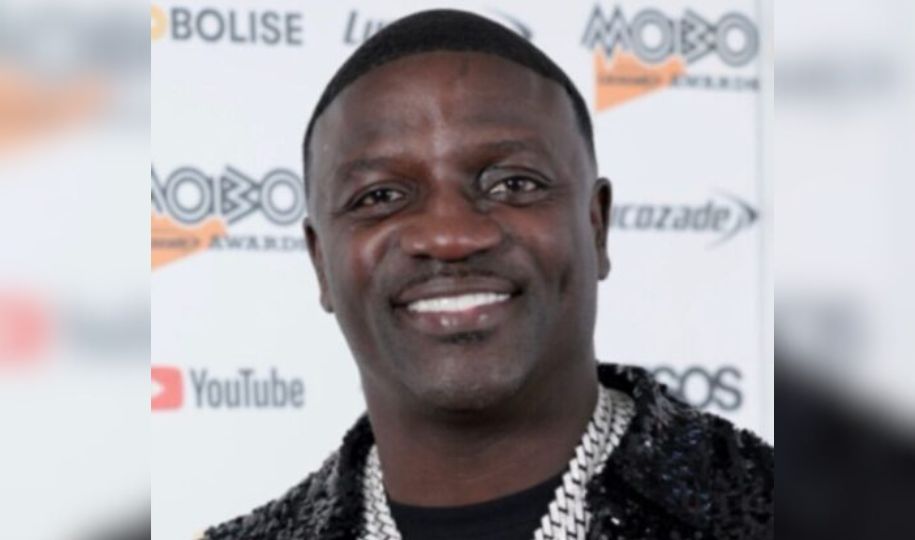
Akon was recently arrested in Georgia for missing a January 2023 court appearance due to a suspended driver’s license.
According to The Associated Press, the singer was placed in custody Friday, Nov. 7, when officers from the Chamblee Police Department Chamblee is located northeast of Atlanta.
After his arrest, the hip-hop singer was taken to the DeKalb County jail and then transferred by Roswell police officers to another jail. He was released after posting bail on the day of the arrest.
Based on police reports from the Roswell Police Department, Akon, who lives in the neighboring city of Alpharetta, was seen in a disabled Tesla Cybertruck Sept. 10. Police called a tow truck for the vehicle. While waiting for the truck, the officer discovered that the “Locked Up” performer did not have any insurance for the Cybertruck and was on a suspended driver’s license.
The license was suspended due to Akon’s failure to appear in court for a hearing in January 2023.
In addition, the truck was impounded, and Akon received a citation for driving without a valid license. Police also seized an “illegal vape” before allowing him to leave the scene, according to the report.
Chamblee police told local news outlets they responded to a business called Tint World when a traffic camera alerted them that the Cybertruck was present and was connected to an outstanding warrant.
Akon, who is currently on tour in India, performed in Delhi two days after his arrest.
It was recently reported that the singer’s “Akon City” project, which has been in the works for seven years, has been scrapped. The Senegalese tourism agency rescinded Akon’s multibillion-dollar plan in July and decided to use that land for a luxury resort model with private investment, Business Insider Africa reported. The singer is reportedly working on a different project now.
Akon City has been scrapped in Senegal, after 7 years of delay for a more realistic project.
As The Government Reopens, New Funding Bill Bans Some THC Products
The bill has led to a ban against intoxicating hemp products, with some lawmakers on both aisle opposing the provision.
As the government officially reopens with the passing of a new funding bill, certain THC products are on the chopping block.
President Donald Trump signed the bill to reopen the government in the late hours of Nov. 12, following a necessary passing vote in the House. However, the legislation included a controversial provision, particularly impacting the growing cannabis industry.
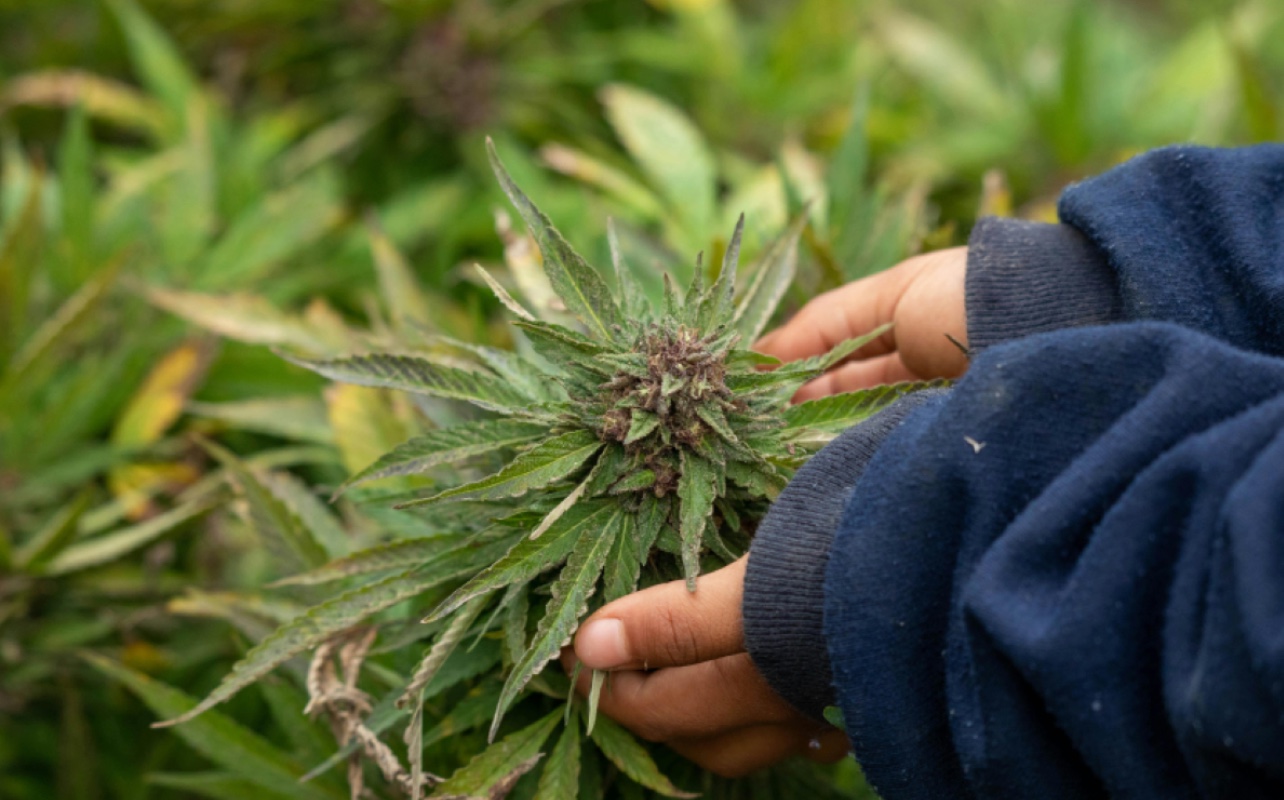
According to Axios, the bill will re-criminalize some products containing THC, a drug found primarily in marijuana plants. While some senators opposed the criminalization, which was previously reversed in a 2018 farm bill, the legislation moved forward to Trump’s desk.
Initially, the farm bill provision detailed that products listed as hemp could contain a THC concentration above .3%, so long as it was not the delta-9 compound. However, conservative lawmakers felt the cannabis producers took advantage of the regulation, creating the “intoxicating” yet legal drug consumption throughout the nation.
“Following the enactment of the 2018 farm bill, the cannabis industry began producing certain cannabis products that contain less than 0.3% delta-9 THC but a total THC concentration that exceeds 0.3%. Some of these products may be intoxicating to the user,” the bill’s summary says.
Now, the loophole once upheld in the farm bill no longer exists. A federal ban is now in place against the selling of “intoxicating” THC products, even when sold in low doses.
Gas stations, convenience stores, and online shops must stop allowing customers to purchase the products. These offerings also range from edible products such as pills, food, and drinks to lotions.
Opposing lawmakers deem the bill a blow to the hemp farmers and business owners within the billion-dollar cannabis sector. The cannabis market was estimated at around $38.50 billion in 2024, with growth expected, as confirmed by Grand View Research.
“The bill, as it now stands, overrides the regulatory frameworks of several states, cancels the collective decisions of hemp consumers and destroys the livelihoods of hemp farmers,” shared Senator Rand Paul on the Senate floor ahead of the Nov. 11 vote.
This news would also stifle the already underrepresented Black cannabis entrepreneurs. A 2017 survey detailed by the Congressional Black Caucus confirmed that only 4.7% of entrepreneurs within the cannabis market identified as Black.
While Congress may continue its fight to amend the bill, hemp products may experience a rapid decline as the ban takes place.
Texas Southern Investigated By Governor After Audit, University Officials Allege Racism
Supporters of the HBCU have called Abbott's crackdown racially motivated.
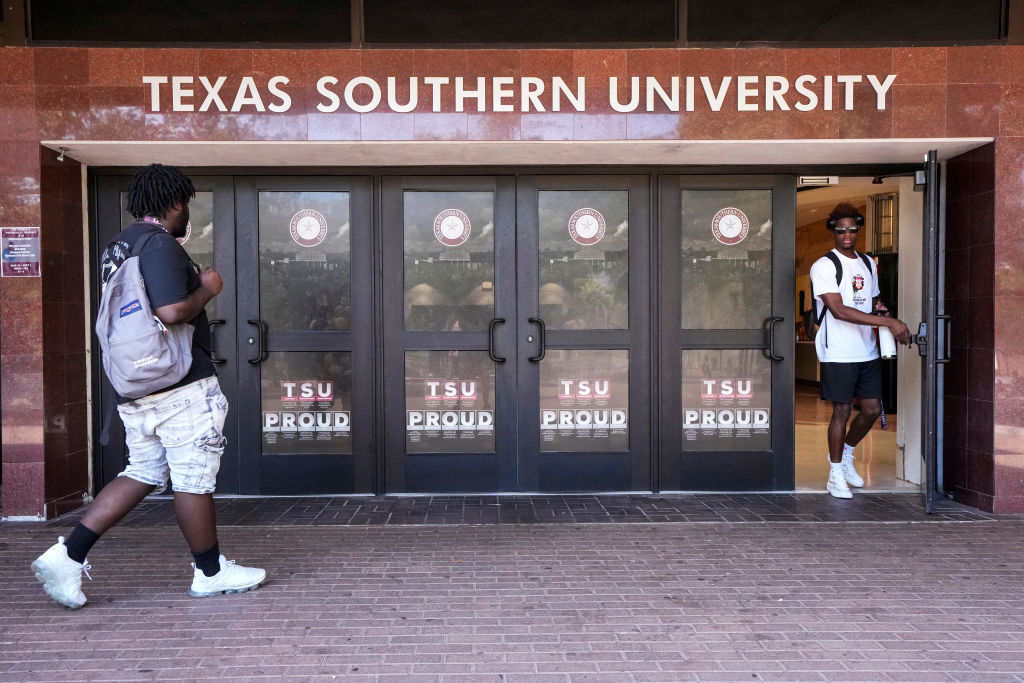
Texas Gov. Greg Abbott has launched an investigation into Texas Southern University, warning the HBCU about its potential financial issues.
Abbott and Lt. Governor Dan Patrick approved an investigation into the Houston-based institution over claims of fraud and financial abuse. Gov. Abbott did not mince words toward school officials after a state auditor noted “deficiencies in oversight, contracting, processes, and reporting,” especially given that TSU does receive state funding.
The allotted dollars that TSU receives from Texas remain undisclosed. However, the governor noted that “hundreds of millions of dollars” were allegedly misallocated. Abbott called upon the Texas Department of Public Safety and the Texas Comptroller’s Office to assist in the state investigation.
“The Texas State Auditor uncovered significant financial and operational issues with Texas Southern University’s accounting procedures, alleging the potential misappropriation of hundreds of millions of dollars,” Abbott said, as reported byAfrotech.
He continued, “Waste, fraud, and abuse will not be tolerated. TSU’s Board of Regents and all university officials must fully cooperate with these investigations to ensure taxpayer dollars are not squandered.”
As for his second-in-command, Patrick shared on X about the “shoddy work” contractors completed for the school. The Lt. Governor also warned that the state could potentially freeze funding if corrections are not made.
Over the last few months, the Texas State Auditor has been auditing Texas Southern University. They have been reviewing TSU’s financial processes, procurement operations, and inventory records.
Over the weekend, I was informed of disturbing information suggesting the misuse of… pic.twitter.com/c93sBTO826
— Office of the Lieutenant Governor Dan Patrick (@LtGovTX) November 10, 2025
“Sadly, TSU has come under scrutiny in the past over how finances and contracts have been handled, as well as shoddy work done by contractors. There has been a revolving door of presidents, board members, and school officials. Graduation rates have not met expectations.”
He added, “The losers are not only Texas taxpayers, but the students of TSU, having no idea that funding meant for their quality education was either fraudulently spent or thrown away by sloppy, unprofessional accounting processes.”
According to the audit shared, 743 invoices totaling $282.2 million were paid directly to vendors with expired contracts. The state auditor also detailed that $158 million in invoices were dated before the purchases gained approval. However, they also noted that the school had delayed reporting of fiscal documents due to staffing issues.
However, some Texas officials believe Abbott’s treatment of the HBCU is racially motivated. The GOP-led state government has followed the federal government’s lead in eliminating diversity, equity, and inclusion initiatives. In light of this, state lawmakers believe that Abbott’s actions seek to demean the historically Black institution.
State Rep. Jolanda Jones argued that Abbott is attempting to erase the school’s diverse history with this crackdown. Jones also noted how the governor appoints members of TSU’s Board of Regents.
“If there’s any malfeasance going on, what does that have to do with the university when you appointed the people who run the university? “You are literally trying to erase Black excellence, you’re trying to erase us,” said the lawmaker.
The school faced and overcame a financial scandal years prior, particularly over law school admissions in 2020. However, state officials’ current threats to freeze funding for one of the largest HBCUs have alarmed many nationwide.
HBCU Donations Are On The Rise As Billionaires Tap In
Black donors have collectively funneled more than $1 billion into HBCUs over the last five years.
Historically Black colleges and universities are receiving an influx of financial donations amid the government’s pulling of formerly established grant funding.
Black donors have collectively funneled more than $1 billion into HBCUs over the last five years. However, billionaire MacKenzie Scott remains the single largest individual donor to HBCUs in modern history. In 2020 and 2022, Scott announced more than $560 million in unrestricted donations to schools, including Tuskegee University, Xavier University of Louisiana, and Prairie View A&M University.
In a public statement, Scott said she has committed to uplifting HBCUs because they are “agents of change” that “support communities that have been chronically underserved.”
Michael Jordan followed with a $100 million pledge through the Jordan Brand to support racial equity initiatives, including multi-year funding for several HBCU athletic and academic programs. Jordan said the goal was to “make a real investment in the next generation.”
Jay-Z added to the groundswell through the Shawn Carter Foundation and Roc Nation. His organizations contributed scholarship funds and pledged support for financial assistance programs at institutions such as Lincoln University and Central State University.
In a statement posted by Roc Nation, Carter emphasized that “education creates pathways for families to build futures.”
While billionaire donors brought unprecedented funds, Black donors in particular helped shape the movement’s direction. AfroTech reported that investor Robert F. Smith and media executive Oprah Winfrey played prominent roles in the more than $1 billion donated to HBCUs.
Smith drew national attention in 2019 when he erased the student debt of the entire Morehouse College graduating class. Winfrey has been supporting historical institutions for decades. She continues her support for HBCUs by expanding scholarship programs and funding leadership centers at Tennessee State University and Morehouse College.
Several HBCU presidents have expressed gratitude. The lack of stipulations attached to the donations allows schools to bolster institutional coffers while investing in research, technology upgrades, and financial aid.
'Lenny Wilkens represented the very best of the NBA – as a Hall of Fame player, Hall of Fame coach, and one of the game’s most respected ambassadors,' acknowledged NBA Commissioner Adam Silver.
Legendary former NBA player and coach Lenny Wilkens is dead at the age of 88.
According to NBA.com, the family of Wilkens announced to the world on Nov. 9 that he had died. Wilkens, who spent part of his playing career and the bulk of his coaching career with the Seattle SuperSonics (the franchise relocated to Oklahoma City in 2008 and is now known as the Thunder), was acknowledged by the NBA in a video posted on social media.
The legend was surrounded by loved ones when he died, and no cause of death has been released. The 88-year-old has the distinction of being enshrined in the Naismith Basketball Hall of Fame three times, as a player, a coach, and as an assistant coach on the 1992 U.S. Olympic basketball squad, better known as “The Dream Team” that featured NBA players for the first time in the Olympics in Barcelona, Spain.
NBA Commissioner Adam Silver released a statement:
“Lenny Wilkens represented the very best of the NBA – as a Hall of Fame player, Hall of Fame coach, and one of the game’s most respected ambassadors. So much so that, four years ago, Lenny received the unique distinction of being named one of the league’s 75 greatest players and 15 greatest coaches of all time.
“But even more impressive than Lenny’s basketball accomplishments, which included two Olympic gold medals and an NBA championship, was his commitment to service – especially in his beloved community of Seattle, where a statue stands in his honor. He influenced the lives of countless young people as well as generations of players and coaches who considered Lenny not only a great teammate or coach but also an extraordinary mentor who led with integrity and true class.”
No one has coached more NBA games than Wilkens, who has the record of doing it for 2,487 games. After winning the 1994 NBA Coach of the Year Award while guiding the Atlanta Hawks, he retired from coaching with 1,332 wins. That was a league record that was later surpassed by Don Nelson (1,335) and Gregg Popovich (1,390).
He coached the SuperSonics for 11 seasons (two separate stints, winning the championship in 1979), the Portland Trail Blazers for two seasons, the Cleveland Cavaliers and the Hawks for seven seasons, the Toronto Raptors for three seasons, before ending his coaching career with the New York Knicks after leading them for parts of two seasons.
As a player, the New York City-born and raised Wilkens played 15 seasons after being drafted by the St. Louis Hawks. He then played for the SuperSonics, the Cleveland Cavaliers, and the Portland Trail Blazers. The nine-time All-Star became the first person to have won 1,000 games as an NBA coach and was the second person inducted into the Basketball Hall of Fame as a player and coach.
Wilkens was recently honored with a statue outside Climate Pledge Arena in June.
He is survived by his wife, Marilyn; their children, Leesha, Randy, and Jamee; and seven grandchildren.
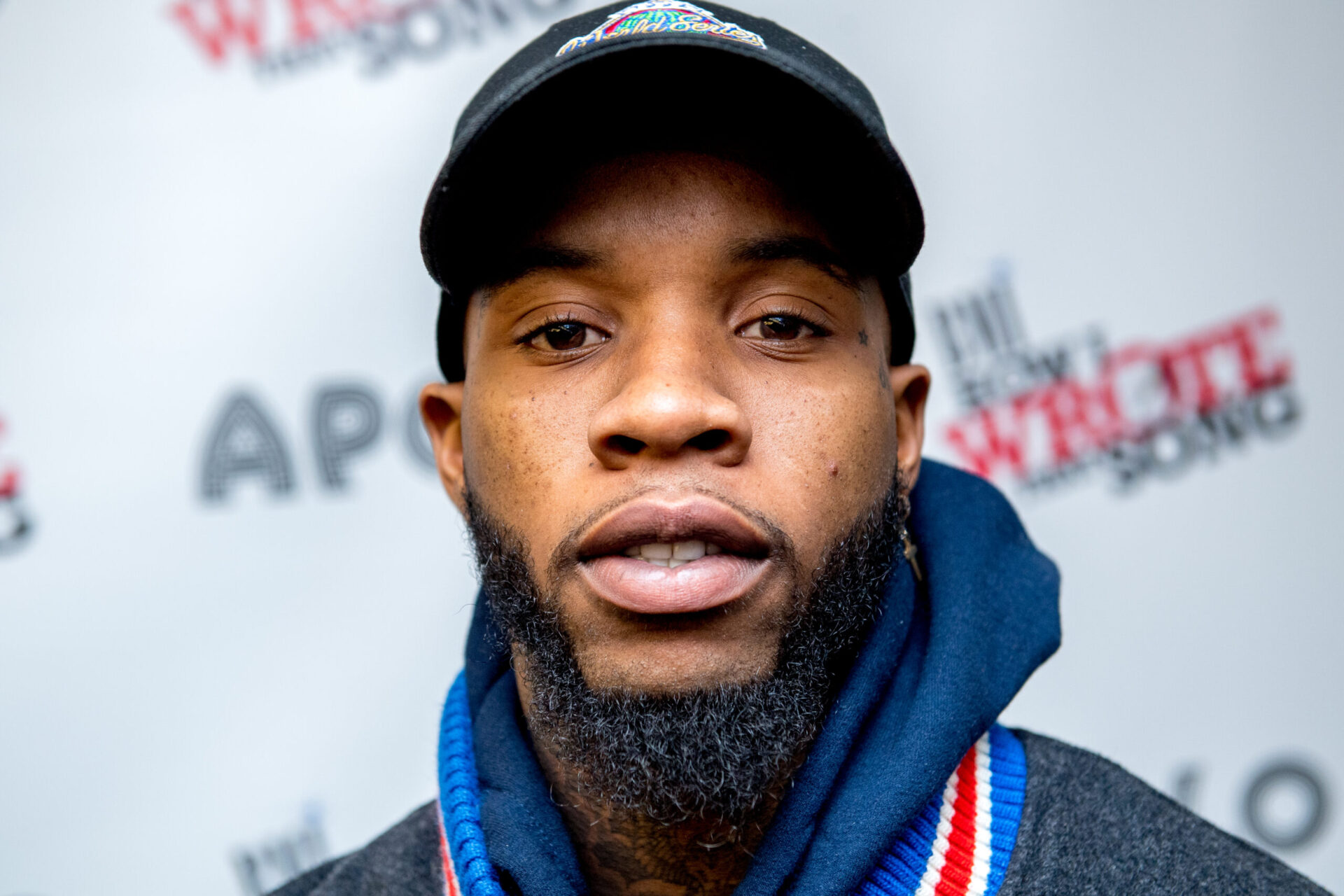
Tory Lanez Remains Jailed After Appellate Court Upholds His Felony Conviction
A three-judge panel of the 2nd District Court of Appeal rejected Lanez’s direct appeal.
A California appellate court has closed the door on rapper Tory Lanez’s most recent appeal efforts.
A three-judge panel of the 2nd District Court of Appeal rejected the case brought by Lanez (real name Daystar Peterson), a direct appeal of three felony counts linked to the shooting of Megan Pete, also known as rapper Megan Thee Stallion. The 46-page decision stated plainly that Lanez’s assertions of prosecutorial misconduct were baseless.
“The record does not support Peterson’s contention that prosecutorial misconduct interfered with his “right to Conflict free counsel,” the decision stated.
Peterson’s legal team questioned the validity of key evidence presented to the jury. Subsequently, the appeal sought to throw out the evidence, triggering a new trial. The court upheld the key trial rulings, including admission of the victim’s testimony, previous taped statements by a witness, and Instagram posts made by Lanez.
The appellate court rejected the need to reexamine evidence stating, “the trial court did not abuse its discretion in admitting evidence.”
Furthermore, the court decision reinforced the prosecutor’s narrative which is often questioned by Lanez’s fans.
“Substantial evidence established, beyond a reasonable doubt, that the injuries Peterson inflicted on Pete were more than moderate harm. . . The orthopedic surgeon who operated on Pete’s feet testified at trial and the jury saw x-rays and a report of the operation.”
The rapper was charged with assault with a semiautomatic firearm, possession of a loaded and unregistered firearm in a vehicle, and discharging a firearm with gross negligence.
At the time of his December 2022 conviction, Lanez was immediately sentenced to 10 years in prison. He was recently transferred to California Men’s Colony after a prison-stabbing incident.
For Lanez, the decision decreases his remaining options to circumvent the ruling. Further attempts require petitioning the California Supreme Court or pursuing habeas relief, neither of which offer an immediate resolution.
For now, Lanez’s 10-year sentence remains. The shooting case appears nearly closed in the courts. Peterson will be up for parole in 2029.
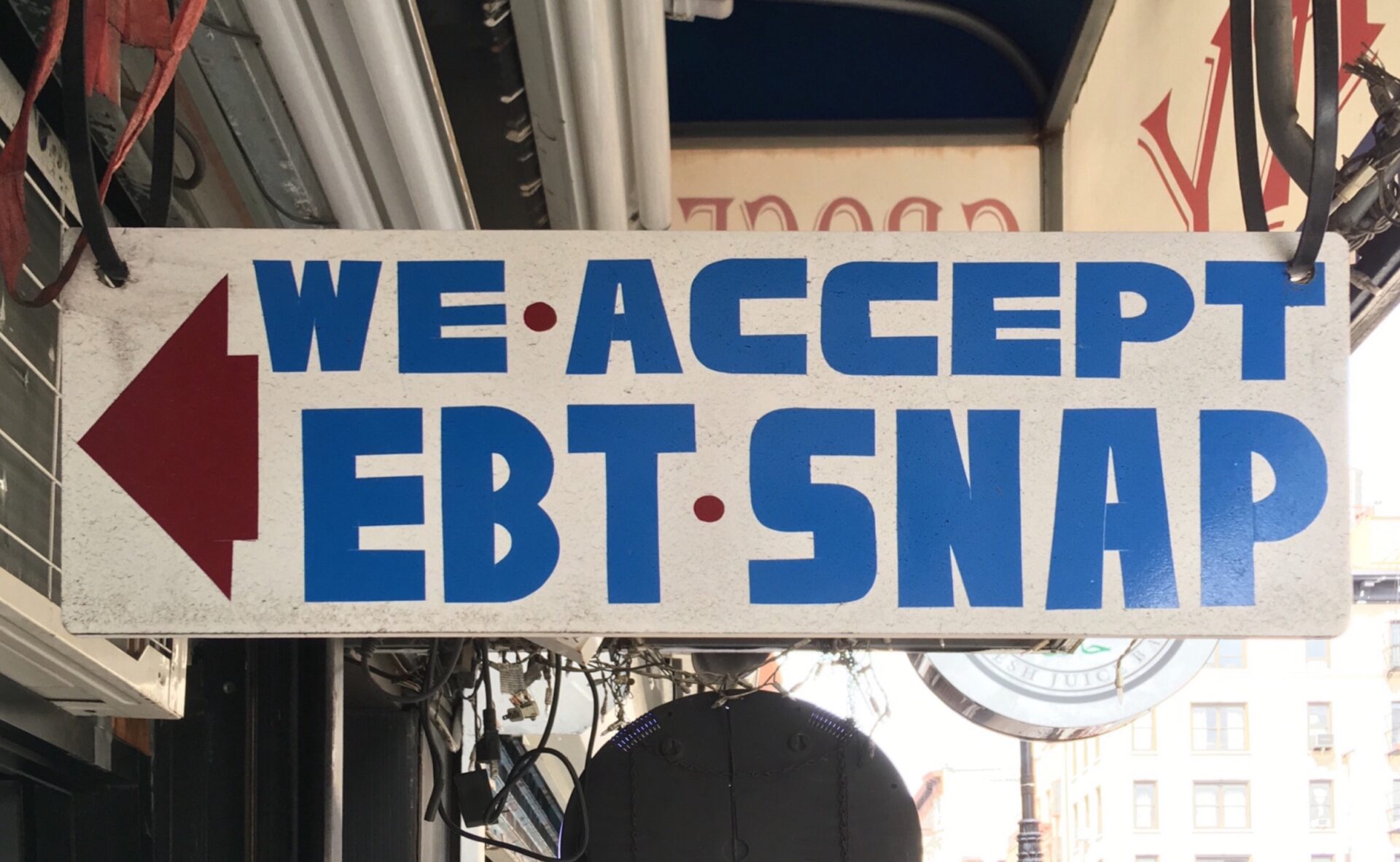
Oh, SNAP! Millions Of Families To Receive Benefits When Government Reopens
On Nov. 11, the plan was outlined in a directive to state agencies, according to The Associated Press.
The Trump administration says Supplemental Nutrition Assistance Program (SNAP) benefits in most states will be administered “within 24 hours” of the federal government reopening.
The Department of Agriculture would “ensure all November SNAP benefits are issued immediately once the lapse in appropriations ends.” The guidance instructs states to prepare distribution files in advance so that a 24-hour window can be met.
Forty-two million Americans receive SNAP food aid benefits.
During the shutdown, many state agencies lacked the authority and financial means to issue new payments. The pause on disbursements created a gap in the typical distribution calendar. A few states managed to continue SNAP benefits by using emergency funds.
“Based on my review of state issuances, approximately 19 states have issued or are in the process of issuing full November benefits, and about 18 states have already issued partial benefits or they are still in the process of calculating them based on USDA guidance issued last week,” Stewart Fried, principal attorney at OFW Law in Washington, D.C., told The Hill.
The National Association of State Directors of Human Services noted that “states can run issuance files as soon as USDA gives the green light.” That will allow payments to reach electronic benefit cards soon after the federal budget is restored. There is already precedence for resuming payment: the issue arose during the 2019 government shutdown.
The Trump administration is framing the restart as a top priority, though during the government shutdown, it made multiple efforts to deny funding, going so far as to present a case to the Supreme Court in an attempt to circumvent the use of SNAP contingency funds.
Food banks and anti-hunger advocates kept a close eye on local needs during the shutdown, noting that the interruption created immediate strain in households across America. Victoria Negus, a senior economic justice advocate at the nonprofit Massachusetts Law Reform Institute, told CBS News that though funding will resume, the harm to American citizens is already done.
“You can’t eat retroactively when your SNAP was delayed.” Negus continued, “Getting your [delayed] benefits is better than never getting them at all, but it doesn’t help the harm that you experienced in the past.”
While the restart can be fast, longer delays in reopening the government risk deeper structural challenges for states that must manage staffing, verification workloads, and high-volume benefit processing.
Susan Lorincz, the Florida woman serving time for fatally shooting her neighbor, Ajike “AJ” Owens, in 2023, has filed court records that include a handwritten four-page letter outlining her intent to countersue Owens’ mother, Pamela Dias, who brought a wrongful death case against her, WCJB reports.
In her filing, Lorincz accuses Owens’ children of lying in their depositions and trespassing on her property before the shooting, alleging one falsely claimed she threw a skate at him. The child told his mother, prompting Owens to confront Lorincz at her door. Lorincz then fired a single shot through the locked door, killing Owens as she stood beside her son.
“Ajike Owens and her children were trespassing,” Lorincz claimed in the handwritten letter filed with the court on Sept. 2. “There were multiple ‘no trespassing signs’ on the property. Ms. Owens did in fact scream, threaten to beat me multiple times while trespassing.”
Lorincz also blames her former landlord for failing to properly secure her home. Lorincz says she plans to sue for slander, libel, and defamation, seeking over $50,000 in damages. In her letter, Lorincz repeats her claim that she shot Owens in self-defense, despite choosing not to testify at her trial.
“Ms. Owens did not knock politely and speak reasonably on June 2, 2023. She pounded and screamed profanities like a lunatic,” Lorincz wrote. “Ms. Owens’ children had lied to her and stated I hit [the 10-year-old boy] with a roller skate.”
Court records show Lorincz has not formally filed a countersuit against Owens’ estate or family. Her threats come amid renewed attention to the case following the release of Netflix’s The Perfect Neighbor, which became the platform’s top U.S. film the week of Nov. 3.
The documentary revisits the 2023 shooting, exploring Lorincz’s growing hostility toward neighborhood children and reigniting debate over Florida’s “stand your ground” laws. Lorincz, 58, is currently serving her 25-year sentence at Homestead Correctional Institution in Florida.