Avery Research Center Marks 160 Years Of Preserving Black History In South Carolina’s Lowcountry
The research center hosts an extensive collection of archives surrounding Black Lowcountry culture.
The Avery Research Center, focused on Black life in South Carolina’s Lowcountry, has reached a milestone.
Around 160 years ago, the Avery Normal Institute was founded to educate formerly enslaved Black people in the Lowcountry region, a coastal area in the southeastern United States, to Black people there learn new careers and livelihoods post-slavery.
Later, it educated the children of formerly enslaved people as a traditional private school. Now a part of the College of Charleston, it was officially renamed the Avery Research Center for African American History and Culture at the College of Charleston. It serves as a holding place for many of the archives surrounding this lesser-known part of history. Those seeking to reconnect with their familial or cultural heritage tied to Lowcountry often look to the Avery Research Center.
“Whenever you come into the Avery, we’re always going to tell you welcome home. No matter who you are. Because you will be able to find yourself. You’ll be able to find your family. You’ll be able to find anything within our building,” said Daron Lee Calhoun II, a leading figure at the center, to WCSC.
Parts of its initial schooling house remain intact, including the pillars that helped its foundation stand. Built by the community of formerly enslaved Black people it once served, the fingerprints of these builders are also visible.
Many come not only to discover more about African American history, but to reconnect with their own. With its extensive archives, visitors can discover their own family records if they are tied to this land.
Its vast collection of documents has inspired the travels of many scholars, including famed writer and scholar W.E.B. Du Bois and civil rights activist Septima Clark, an alumnus of the original school. Clark kept some timeless artifacts at the institution, including handwritten papers and a personal note from Langston Hughes.
“We are not gatekeepers of history, but we are here to share the history with the world,” Calhoun said.
To mark its generational legacy of preserving Black life in the Lowcountry, the Avery Research Center will host a 2025 Avery Family Reunion. The communal celebration, which will take place Nov. 16, includes live music and traditional storytelling.
In True New York Fashion, Spike Lee Gives American Pope A Personalized Knicks Jersey
The Knicks superfan gifted Pope Leo XIV his own special jersey.
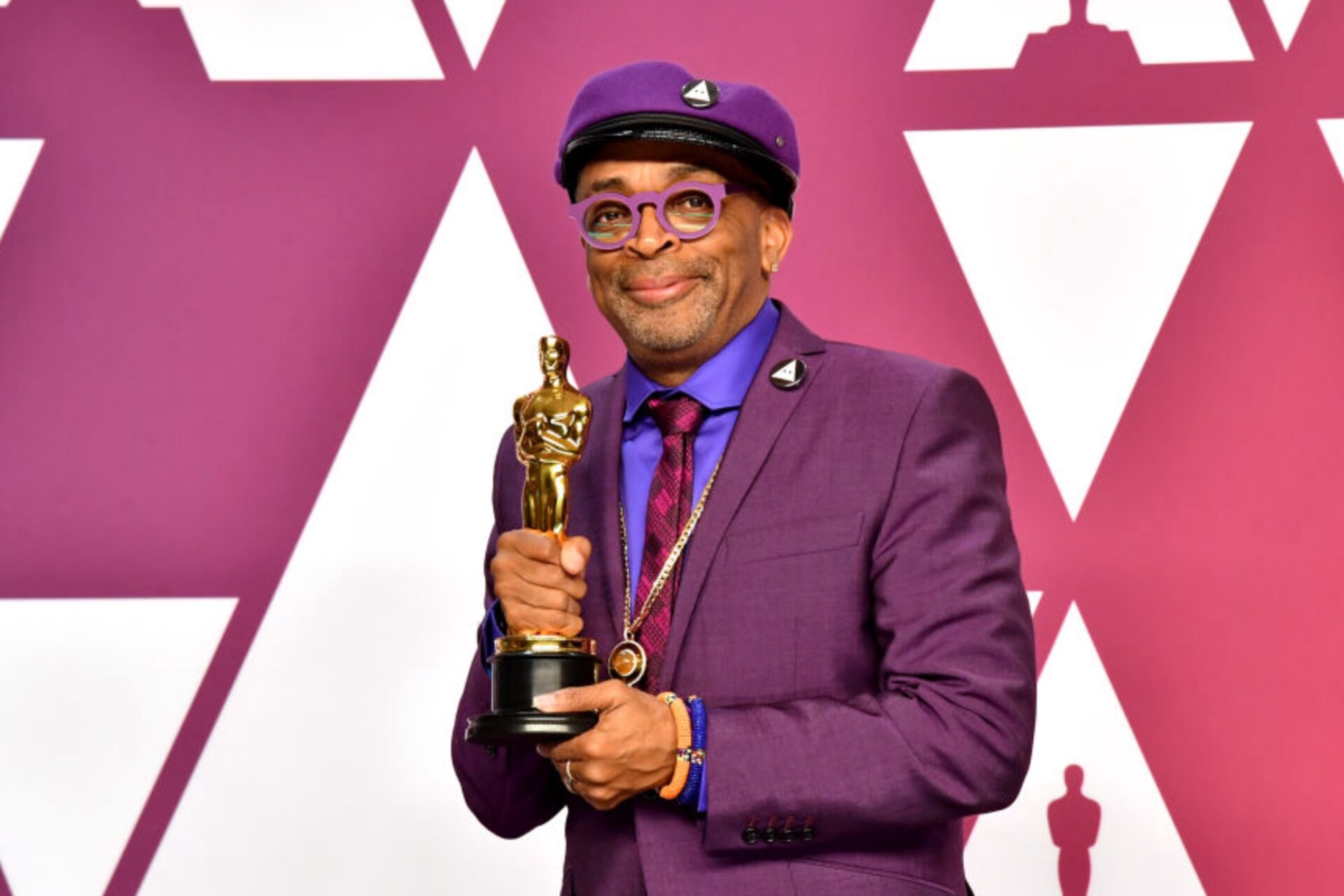
Spike Lee wanted Pope Leo XIV, the world’s first American Pope, to have a gift to remember U.S. sports culture. So on his visit to the The Vatican, the New York filmmaker and NBA super-fan gave him a New York Knicks jersey.
After the Pope spoke, Lee shook his hand and bestowed him the customized present, according to Sports Illustrated. The jersey not only featured the classic Knicks colors, royal blue and orange, but also “Pope Leo” on the back along with the number 14.
Catholic Sat reposted the footage as the duo showed off the very exclusive jersey.
Pope Leo XIV meeting Spike Lee this morning, the Oscar-winning director, who present the Chicago Bulls supporting-Pontiff, with a New York Knicks jersey sporting the Pope’s name and number. pic.twitter.com/FrrJPOxDzO
Lee was among many leaders in the film industry, including actress Cate Blanchett and actor Viggo Mortensen, invited by the pope to the Vatican.
Pope Lo, a Chicago native, spoke of the importance of cinema as it connects the world through storytelling.
“When cinema is authentic, it does not merely console, but challenges,” he said. “It articulates the questions that dwell within us, and sometimes, even provokes tears that we did not know we needed to express.”
While a longtime fan of the Knicks, Lee has also become a new fan of the recently-appointed Pope Leo. Lee also took the historic moment as a sign that his Knicks will finally win another championship.
On the other hand, Pope Leo remains loyal to his own sports teams in Chicago. The modern pope has become a worldwide phenomenon for his traditional American upbringing, including his own college years at Villanova, the alma mater of current Knicks players Jalen Brunson, Josh Hart, and Mikal Bridges.
Mariah Carey’s Daughter Says She Only Has One Brother From Dad Nick Cannon, Father of 12
The 14-year-old spoke on why she considers her twin to be her only sibling.
Mariah Carey’s daughter, Monroe Cannon, has her own take on her blended family.
The 14-year-old took to Instagram to share more insight on her family dynamics. She told her followers that she only has one brother, twin Moroccan Cannon, that she formally recognizes from her dad, Nick Cannon.
“Clearing something up guys,” she began, according toPeople. “i only have ONE brother who is @moroccan.cannon. i do have other half siblings from my dad but they are all many many years younger than me!”
Cannon has 12 children with multiple women, leaving Monroe and Morrocan with a lengthy roster of half-siblings.
Despite his busy co-parenting schedule, Cannon keeps a close relationship with his two oldest children. His ex-wife, Carey, gave birth to the twins in 2011 before Cannon filed for divorce in 2014.
He fathered a third child, Golden Cannon, with model Brittany Bell, in 2017. The 45-year-old went on to have two more with Bell. He had two other children with Alyssa Scott, including Zen Cannon, who died at 5 months from brain cancer in 2021.
Cannon went on to grow his legacy with several other children. However, he still looks to his first set of twins to keep him grounded.
“My daughter, really, she’s so in tune and in line and wise beyond her years,” he previously toldPeople about his relationship with Monroe. “I got a lot of therapists, but she’s probably my best therapist.”
“She keeps me in check. She’s so pure and honest. […] She’s my oldest child. Even though they’re twins, she came out first and she lets everybody know it. She’s helped me keep it strong.”
As for he and their superstar mom, that relationship remains under wraps as Carey opts to not speak about her ex-husband and children’s father.
O.J. Simpson’s Estate Agrees To Pay Nearly $58M To The Goldman Family
Executor accepts a negotiated settlement as the estate prepares to liquidate assets and prioritize major creditors.
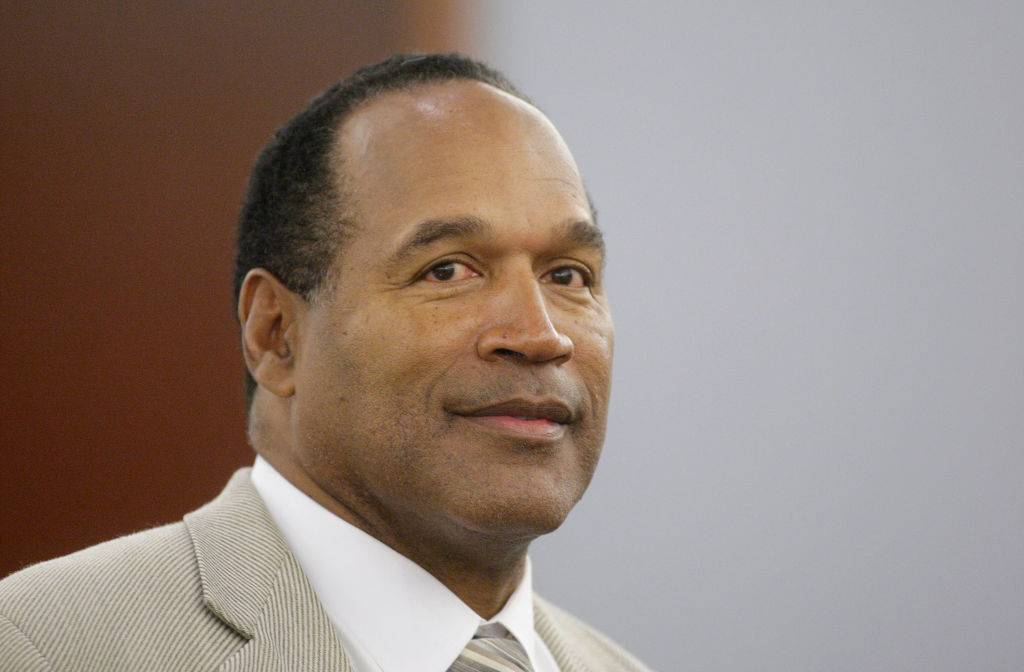
The long-running effort by the Goldman family to collect on their civil judgment against O.J. Simpson has taken a significant step forward. The executor of Simpson’s estate has agreed to honor a multimillion-dollar settlement that could finally deliver a substantial payment nearly three decades after a jury found Simpson liable for Ron Goldman’s death.
In newly filed court documents, estate executor Malcolm LaVergne formally accepted Fred Goldman’s creditor claim “in the amount of $57,997,858.12 (U.S.), plus judgment interest on the approved amount.” Goldman’s original filing sought more than $117 million, but LaVergne toldTMZ that the two sides ultimately settled on the lower figure after negotiations, saying he believes Goldman made “a good faith effort” to determine the appropriate total even if the interest calculation was disputed.
LaVergne said the estate intends to pay off as much of the approved amount as possible as it continues selling Simpson’s possessions. Some items, he noted, may have been taken without authorization. He said he is working with attorneys “to regain possession of some of these items.” He also plans to ask a judge to award Goldman an administrative fee for assisting him in navigating the estate’s management — an indication that relations between the two sides have grown more cooperative.
The executor added that the estate has rejected nearly all other creditor claims, except Goldman’s and one filed by the IRS.
According to LaVergne, federal taxes will be paid before any other outstanding obligations, including a claim from the State of California totaling “approximately $636,945,” which he said the state will need to sue to recover.
Simpson was acquitted in the 1995 criminal case involving the murders of Nicole Brown Simpson and Ron Goldman, but the Goldman family won a civil lawsuit the following year, securing a judgment of more than $33 million. Only a fraction was ever collected. Following Simpson’s death last year, LaVergne initially vowed not to approve the family’s claim — a stance he later reversed, leading to the agreement now moving through probate.
Former NBA Player Patrick Beverley Arrested In Texas Amid ‘Family Violence’ Allegation
According to the veteran guard, he found his younger sister — a minor — alone with an 18-year-old man.
Former NBA point guard Patrick Beverley is facing legal trouble in Texas after authorities arrested him on a felony assault charge tied to what officials described as a “family violence” situation. The Fort Bend County Sheriff’s Office confirmed the arrest and stated that the 37-year-old was taken into custody early Nov. 14 at a residence in Rosharon. His bond was set at $40,000.
Shortly after news of the arrest spread, Beverley addressed the situation online, urging his followers, “don’t believe everything you see on the internet.” He also shared an unsigned statement on his social media accounts that offered additional context about what reportedly led to the altercation.
Beverley’s attorney, Letitia Quinones-Hollins, shared a statement on Instagram. The statement read, “Patrick Beverley has no criminal record. He cares deeply about his little sister – a young lady, a minor.”
“Given that, when he unexpectedly found her alone in the home with an 18-year-old man in the middle of the night, he was understandably concerned, as any brother would be about his sister.”
According to the reposted message, Beverley had unexpectedly come upon his younger sister — a minor — alone with an 18-year-old man. “He was understandably concerned, as any brother would be about his sister,” the statement read. “However, we don’t believe what followed happened the way it’s been described, and we look forward to the opportunity to address that in court.”
Local officials have not publicly disclosed further details about the alleged confrontation, and court records have not yet provided additional information at the time of reporting.
Beverley, known around the league for his intensity and defensive edge, most recently played for the Milwaukee Bucks during the 2024 season. Over the course of his 12-year NBA career, he also logged time with several teams, including the Houston Rockets and the Los Angeles Clippers.
As the case moves forward, Beverley and his representatives appear prepared to challenge the account authorities have laid out, setting the stage for a legal dispute over what transpired inside the Texas home.
Michelle Obama: America Still ‘Not Ready’ For A Woman President
In a candid discussion about gender, power, and public expectations, the former first lady explained why she has no plans to run.
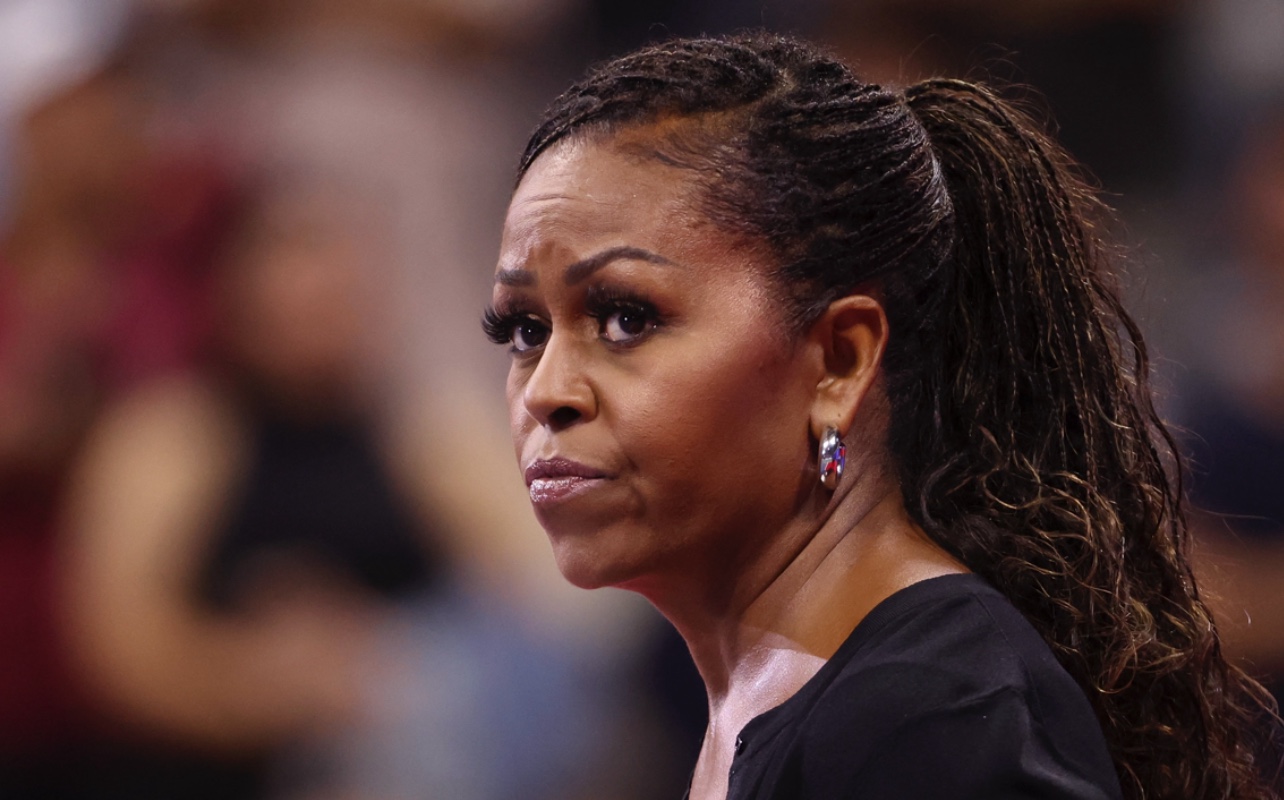
Former first lady Michelle Obama says Americans continue to struggle with the idea of a woman leading the nation — and that lingering resistance is exactly why she refuses to consider a presidential run. During a recorded conversation with Tracee Ellis Ross, released Nov. 14 on Obama’s YouTube channel, Obama said the United States has significant “growing up to do” when it comes to accepting women in positions of ultimate political authority.
“As we saw in this past election, sadly, we ain’t ready,” Obama said. “That’s why I’m like, don’t even look at me about running, because you all are lying. You’re not ready for a woman. You are not.
The discussion, held at the Brooklyn Academy of Music, coincided with the rollout of Obama’s new book, “The Look.” Ross asked whether the traditional expectations placed on first ladies — and the role’s ties to “wifedom and femininity” — have shaped the public’s willingness to imagine a woman in the Oval Office.
Obama didn’t hesitate. “So don’t waste my time,” she added. “We got a lot of growing up to do, and there are still, sadly, a lot of men who feel like they cannot be led by a woman, and we saw it. I think we still have growing to do in that regard.”
Although Obama has long been polled as one of the most admired women in America — and at times more popular than President Barack Obama during his administration — she has consistently rejected calls to run for office. A 2024 poll briefly floated her as the only Democrat capable of defeating Donald Trump, fueling fresh speculation, but Obama dismissed the possibility then and has repeated the same message since.
Her comments also acknowledged the reality facing women who have attempted to break that barrier. Two of the Democratic Party’s last three nominees — Hillary Clinton and Kamala Harris — were women, and both ultimately lost presidential elections to Trump. Obama campaigned heavily for Harris in 2024, drawing large crowds and urging voters, especially men, to support women’s leadership and reproductive rights.
Despite persistent public fascination with the idea of an Obama presidential run, she made clear once again that she has no intention of entering the race. The deeper concern, she suggested, is not her personal reluctance but the country’s readiness.
The nation, she argued, still has to prove that it is willing to elect a woman at all.
Caribbean Reparations Leaders Launch First-Ever UK Mission To Press Historic Claims
Caricom delegation begins high-level meetings in London.
The regional body at the forefront of the Caribbean’s push for slavery reparations is preparing for its first official mission to the United Kingdom, a visit leaders describe as a pivotal moment in the campaign for historical redress. From Nov. 17 to Nov. 20, representatives from the Caricom Reparations Commission (CRC) will hold a series of meetings in London with British lawmakers, Caribbean diplomats, academics, and civil society organizations.
As reported by The Guardian, the trip, organized alongside the Institute of Commonwealth Studies, aims to deepen international partnerships and broaden public understanding of the Caribbean’s demands for justice tied to centuries of enslavement and colonial rule.
Dr. Hilary Brown, a member of the delegation and Caricom’s program manager for culture and community development, called the visit “historic,” emphasizing its dual goal of education and advocacy. “The Caricom Reparations Commission advocacy visit to the UK is historic, as it is the first of what we anticipate will be a series of engagements to raise consciousness and awareness, correct misconceptions about the reparations movement and build strategic partnerships to take this critical agenda to right historical wrongs forward,” she said.
Between the 15th and 19th centuries, European powers forcibly transported more than 12.5 million Africans into slavery. For Caribbean governments, that history remains inseparable from modern-day inequalities, fueling demands for formal apologies and tangible forms of reparative support.
CRC Chair Prof. Sir Hilary Beckles, who is leading the six-person delegation, said the visit represents an opportunity to bolster the movement at a global level. “The global reparations movement is entering a new wave of impact, visibility and mobilization,” he noted, stressing that activists and academics in Britain have “a pivotal role to play in amplifying the gains and the message of enlightenment.” Beckles added that the CRC also hopes to express “solidarity and support as together we navigate Windrush and advance the just claim for reparatory justice.”
Reparations debates have intensified in the UK, particularly after the British government last year rejected calls for financial compensation or a formal apology during the Commonwealth leaders’ summit. Prime Minister Keir Starmer acknowledged that the slave trade was “abhorrent,” but argued that nations should prioritize present-day challenges, including climate change.
Even so, Britain later signaled its openness to discussing non-financial forms of redress, such as institutional reform and debt relief.
Public opinion is shifting as well. A March poll commissioned by the Repair Campaign found widespread gaps in historical knowledge but growing backing for Caribbean demands: 63% of respondents supported a formal apology, and 40% supported financial reparations.
Caribbean states remain firm in their pursuit of justice, guided by the CRC’s 10-point plan, which calls for measures ranging from apologies to debt cancellation.
At their July summit, Caricom leaders endorsed Jamaica’s petition requesting that King Charles seek legal guidance on whether Britain’s forced transport of Africans constituted a crime against humanity—and whether reparations are owed.
How Candi Dailey’s Potomac Hospitality Group Is Turning Storytelling & Dinner Into A Cultural Movement
Her signature event is the Fried Chick’n & Champagne Secret Supper Experience.
Candi Dailey’s version of hospitality is about more than food. The founder and CEO of Potomac Hospitality Group (PHG) has spent nearly a decade building experiences that honor culture, community, and connection — from Prince George’s County kitchens to luxury dining activations that could sit comfortably beside any five-star destination.
Her signature event, the Fried Chick’n & Champagne Secret Supper Experience, started as a small, heartfelt celebration for local changemakers. Today, it’s one of the DMV’s most anticipated cultural dinners — an evening that blends comfort food, elegance, and storytelling in a way only Dailey could imagine.
Photos Courtesy of Potomac Hospitality Group
“We do a lot of work in the community throughout the year,” she says. “We wanted to celebrate other people and companies doing the same thing. So we asked ourselves, how do we merge the comfort food people know us for with the luxury experiences we also create? And honestly, what’s better than champagne with fried chicken?”
This year’s sold-out Secret Supper carried a “Juke Joint” theme — a nod to the Southern spaces where food, music, and memory once lived side by side. The event took over Hennessy Creek in Brandywine, Maryland, where more than 200 guests gathered for a night that felt nostalgic and forward-moving at the same time.
Photos Courtesy of Potomac Hospitality Group
“For us, the juke joint was like home,” Dailey says. “But honestly, this one was more challenging for our team because these are things people may already be familiar with. So we had to figure out how to elevate that experience.”
The evening rolled out in three “movements,” starting with a bluesy cocktail reception before guests moved across the grounds for dinner. Chef Saon Brice (Food Network, Blk Swan) designed a menu that honored the era while pushing it into fine-dining territory, paired with Ezra Allen’s cocktails from CAnECollective. Later, “The Voice” alum Tamara Jade lifted the energy even higher with a live performance before the crowd entered the juke joint space to dance the night away.
Photos Courtesy of Potomac Hospitality Group
“We’re able to tell stories through food,” Dailey says. “When we work with chefs, we tell them: you have a story to tell, and this is your chance to shine a light on a moment in our history.”
PHG’s dinners have explored themes ranging from Moroccan traditions to farm-to-table cooking, always with an eye on the African diaspora. The juke joint dinner, held in a renovated barn on Black-owned land, captured that duality: honoring the past while making space for the present.
“It was our way of celebrating who we are as a people and how far we’ve come,” she says. “The space was beautiful, but figuring out how to transform it — that was the beautiful struggle.”
Photos Courtesy of Potomac Hospitality Group
Beyond the food, Dailey is intentional about how guests engage with one another.
“There’s power in serving someone else,” she says. “Our dinners are family-style on purpose. When you pass a plate to somebody, conversation starts. You ask where they’re from. And before you know it, you’re building community.”
Sometimes those connections grow into something even bigger. At PHG’s first Fried Chick’n & Champagne dinner three years ago, two guests — a politician and a businessman — met at the table. They later partnered on a $90 million development project in North Carolina.
“That’s not to say that happens at every dinner, but it goes to show you the true power of connection, right?” Dailey says.
Dailey and her husband, Jason, launched PHG in 2016. Today, the company has 42 employees and a footprint that reaches far beyond its Prince George’s County roots.
“When one of our employees buys a house or sends their child to college, I’m really happy,” she says. “It means as a business model, we’re doing something right. People depend on the work we’re doing — and that keeps us going.”
For Dailey, hospitality is in her blood. She traces it back to the tables of her childhood, her father plating mac and cheese, fried chicken, and all the fixings for anyone who needed a meal.
“Some of my first real memories are soul food and the art of hosting and taking care of people because my dad and grandmother were always cooking for people in the neighborhood,” she remembers. “My core memories are those things, serving people and then food. I’m very fortunate I get to do what I always was around since I was a kid.”
PHG puts that same spirit into the community it serves. The group supports local schools, leads gardening programs, hosts a Senior Friendsgiving dinner each year, and throws one of the area’s most beloved cultural events: Ruby’s Family Reunion, named after Dailey’s grandmother. For just $20 a ticket, nearly 20,000 people gather each summer to celebrate with food, music, and family.
“I hope people realize it’s more than just about serving food,” Dailey says. “It’s about really making an impact. Our goal is to serve for the greater good — through food and storytelling.”
As PHG approaches its tenth anniversary, Dailey is already planning the next chapter. In 2026, Fried Chick’n & Champagne will expand to California, with plans to host a Secret Supper experience at a Black woman–owned resort and winery near Sacramento. Additional dinners are slated for Martha’s Vineyard during Black Film Festival Week.
“We’ve already got four on the calendar, along with all the other events we do,” Dailey tells BLACK ENTERPRISE.
Beyond 2026, Dailey remains clear about what she hopes the long-term legacy of her business will be.
“The legacy is that we care,” Dailey tells BE. “We’re making people feel good through food, through connection, through culture. I hope at the end of the day, people are saying we do these amazing events that are intentional about celebrating who we are as a people, through food and how we help connect the dots for others. I would love for that to be our legacy.”
Philadelphia Drops Longstanding DEI Contracting Rules As Legal Pressures Mount
Mayor Cherelle Parker’s administration ends race- and gender-based contracting goals amid federal scrutiny, sparking backlash from city leaders and minority-owned businesses.
Philadelphia officials are dismantling long-established diversity, equity and inclusion benchmarks for city contracts, a dramatic policy shift that arrives as the Trump administration intensifies its campaign against DEI initiatives nationwide.
Mayor Cherelle Parker’s administration confirmed it will no longer enforce the goal that 35% of city contracts go to firms owned by women, minorities, or people with disabilities — a standard in place since 2016. Earlier versions of the policy date back to the 1980s, when the target was set at 25%. According to The Philadelphia Inquirer, the rollback could cost historically disadvantaged firms an estimated $370 million in annual opportunities.
The decision follows a similar move last fall, when the city discontinued DEI guidelines for publicly funded projects. Both changes have generated alarm in a city where the majority of residents are Black and Brown, and where business groups relied on these long-standing frameworks to maintain access to major public-sector contracts.
City Solicitor Renee Garcia told the Inquirer that the shift was driven by a “new federal legal precedent” restricting the use of race or gender in procurement decisions. She argued the city risked violating federal rules by using public dollars to “promote, reinforce or perpetuate discrimination.”
Her language closely echoes President Trump’s administration, which has threatened to withhold federal funding from governments and institutions that continue to rely on DEI-based standards.
Garcia said the revamped approach aims to create “an environment in which all businesses can thrive and contribute to the local economy,” with contracting priorities shifting toward supporting “small and local” firms rather than those tied to specific demographic groups.
According to The Philadelphia Inquirer, Parker has sought to avoid a direct clash with the Trump White House to prevent jeopardizing the hundreds of millions of federal dollars Philadelphia relies on to balance its budget. In October, the administration settled a lawsuit — filed by firms represented by America First Legal, an organization founded by Stephen Miller, Trump’s deputy chief of staff — which challenged the legality of the city’s previous workforce diversity contracts.
City Council Minority Leader Kendra Brooks condemned the rollback, saying she was “deeply troubled” by the administration’s decision. She argued the city should have explored alternatives, noting that “Chicago is looking at other ways. Baltimore is looking at other ways.”
Brooks added, “In Philly, we’re supposed to be a little grittier than that. I think constantly caving under the Trump administration’s thumb is definitely problematic, but I’m not the mayor.”
The changes leave many small and minority-owned businesses bracing for a more uncertain future — one shaped less by DEI mandates and more by shifting federal politics and legal constraints.
Paris Jackson’s current standing as a beneficiary limits her ability to challenge moves taken by the estate executors who have managed the estate since 2009. The decision follows months of legal back-and-forth over how the estate should operate. The estate, previously in financial distress, now has assets including major entertainment projects, licensing agreements, and ongoing catalog negotiations.
According to People, which reviewed the court’s ruling, Judge Mitchell Beckloff found that many of Paris Jackson’s requests are outside of the scope of law. Her insistence on insertion exceeds what California probate law allows for beneficiaries who are not co-trustees.
The ruling states that the court “cannot grant relief that would give a beneficiary powers equivalent to the trustees.”
Paris Jackson argued that certain estate transactions needed greater transparency. She raised concerns about the oversight of long-term business ventures as her father’s career continues to thrive posthumously. Michael Jackson’s middle child hopes to gather information about deals that, she believes, could affect the estate’s value.
The judge agreed to grant limited relief on procedural matters but upheld the estate’s legal authority to continue operating under its current structure. She will also be responsible for paying the estate a portion of its attorney’s fees.
Executors John Branca and John McClain have managed the estate since Michael Jackson’s death in 2009. Branca and McClain maintain that their stewardship has stabilized Jackson’s finances, settled debts, and expanded revenue streams.
The estate has earned more than $2 billion during its tenure. Two major scale productions have materialized under Branca and McClain’s leadership, MJ: The Musical, and the upcoming biographical film, Michael.
The court reiterated that only trustees may direct or halt business decisions unless they breach fiduciary duty, a threshold the judge said was not met.
Beneficiaries, including Paris Jackson and her brothers, Prince and Bigi, will continue to receive distributions from the trust. She did not publicly comment after the ruling.