Raleigh Teen Wins Million Dollar Lottery With Sister’s Lucky Pick
McLean won with the help of his sister's lucky pick of scratch-offs.
An 18-year-old in Raleigh, North Carolina won the lottery with the help of his sister. Jalen McLean earned a million dollars after his sibling picked a lucky ticket.
McLean spoke toABC 11 on how his sister’s choice in scratch-offs made him a millionaire. McLean gave Dasha Silas the option to choose a ticket that would change their life, with Silas picking the $10 Jumbo Bucks at gas station in Fayetteville on May 21. Upon realizing they won the jackpot, McLean bursted into glee.
“He had a huge smile on his face,” explained Silas to the news outlet. “Like so big. it looked like the movie character Venom.”
As for McLean, the shock has yet to wear off. With his young age in mind, he is well aware of the enormous opportunity this money can provide.
“I feel like the luckiest guy in the universe…How many 18-year-olds win something like this” questioned McLean.
The teenager had two options to receive his lottery earnings. He chose the $50,000 a year allotment instead of the $600,000 lump sum. He will take home the payout annually for the next 20 years. However, his first check took out nearly $15,000 in taxes, leaving him with nearly $36,000.
Despite this, McLean has big plans for his money, hoping to buy a luxury car with the stash. However, the outlet did not report if he will slide any of the funds to his sister, yet his sibling seems in full support of her brother’s win.
McLean is among the youngest lottery winners in the country, as the legal age to do so remains at 18. The youngest in U.S. history was also a fellow Carolinian, according to Oldest.org. At 19-years-old, Jay Vargas won over $35 million in 2008 after playing the Powerball in South Carolina.
In the meantime, McLean looks forward to driving around a new Audi as one half of the lucky sibling duo.
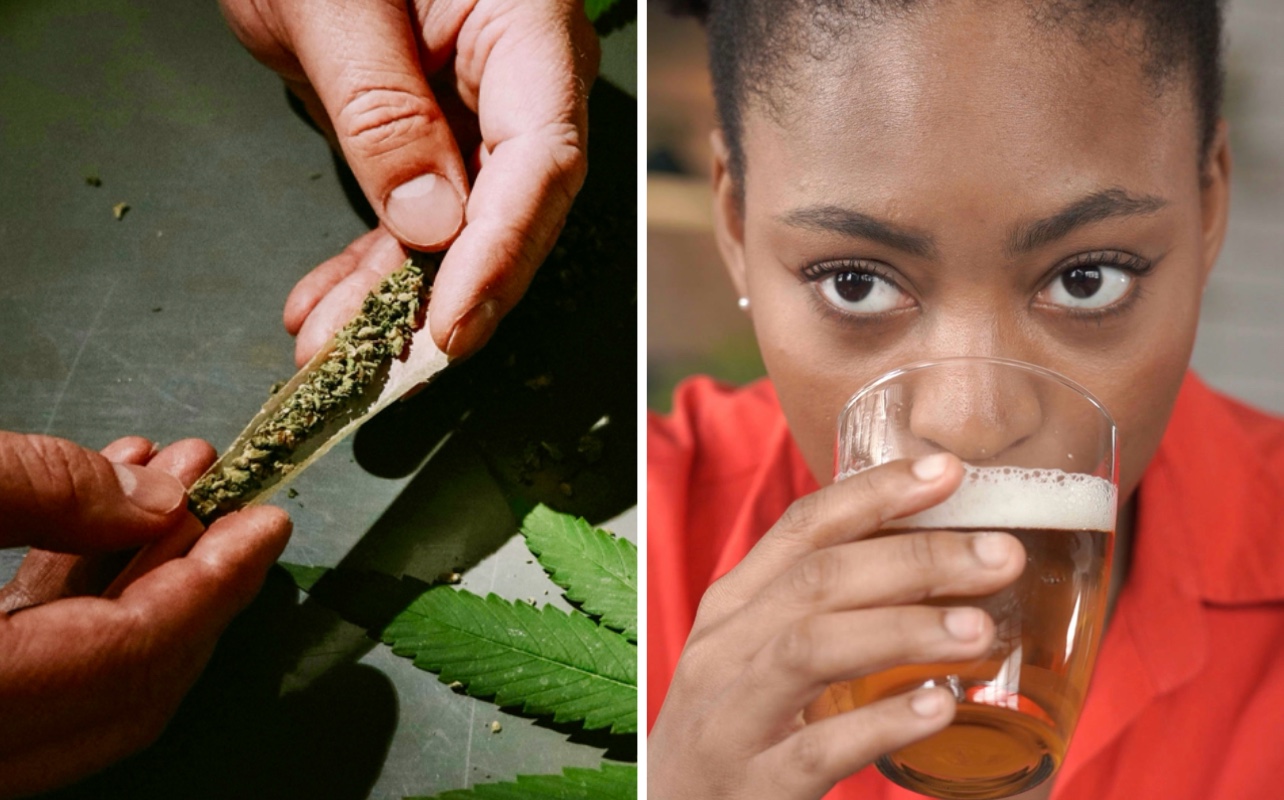
According to data from the National Survey on Drug Use and Health released on May 21, an intensive level of cannabis intake surpassed alcohol usage for the first time in 2022. Jonathan Caulkins, a cannabis policy researcher at Carnegie Mellon University and the study’s author, says alcohol is still in the running but not at the level it once was. “A good 40% of current cannabis users are using it daily or near daily, a pattern that is more associated with tobacco use than typical alcohol use,” Caulkins said.
There were approximately 17.7 million people who used marijuana daily or almost daily in 2022, in comparison to over 14 million drinkers. Between 1992 to 2022, the rate of every day, or close to, marijuana use increased 15-fold.
Policy changes in states can be looked at as a driving force. As recreational marijuana is legal in 24 states, according to CBS News, the U.S. Drug Enforcement Administration is reclassifying the drug to a less dangerous category. On the upcoming ballots in November 2024, Florida voters will decide on a constitutional amendment to allow recreational cannabis to be legal. But some experts feel the new data shows how addictive the drug can become.
Dr. David A. Gorelick, a psychiatry professor at the University of Maryland School of Medicine, says the growing number of daily users suggests a rise in people being at risk of developing problematic cannabis use. “High-frequency use also increases the risk of developing cannabis-associated psychosis,” a severe condition where a person loses touch with reality,” the professor said.
Addiction psychiatrist Colin Reiff attributes schizophrenia to excessive cannabis use in some young people, particularly young men, as their brains are still maturing at a young age. “The legalized age for cannabis should be around 33 years old, when people are outside the window of developing schizophrenia and bipolar disorder and a lot of other things,” Reiff said.
“Or most certainly it should be after 26, once the prefrontal cortex is done developing.”
Numbers from the University of Mississippi’s potency monitoring project show the average level of the main component of weed that triggers psychoactive effects, THC, increased from 4% in 1995 to over 15% in 2021.
However, that doesn’t seem to bother a certain demographic — people aged 18 to 24, with 69% preferring marijuana to alcohol. “I transitioned over into cannabis cause I saw that there’s limitless possibilities with the flavors,” said Matthew Everett, a smoker and Work ‘N’ Roll patron. “And I found like, hey, I don’t have a hangover the next day, too.”
Work ‘N’ Roll is an NYC-based cannabis-friendly coworking space where members, for as little as $15 a day, can smoke and work freely at the same time. Alcohol is banned on the premises, but bringing your own cannabis or having it delivered is allowed. Other members, Golda Moldavsky and Ellis Sudak, also in their twenties, say they don’t miss alcohol at all.
Nicki Minaj Threatens To Fire Her DJ For Signing Fan’s Bosom
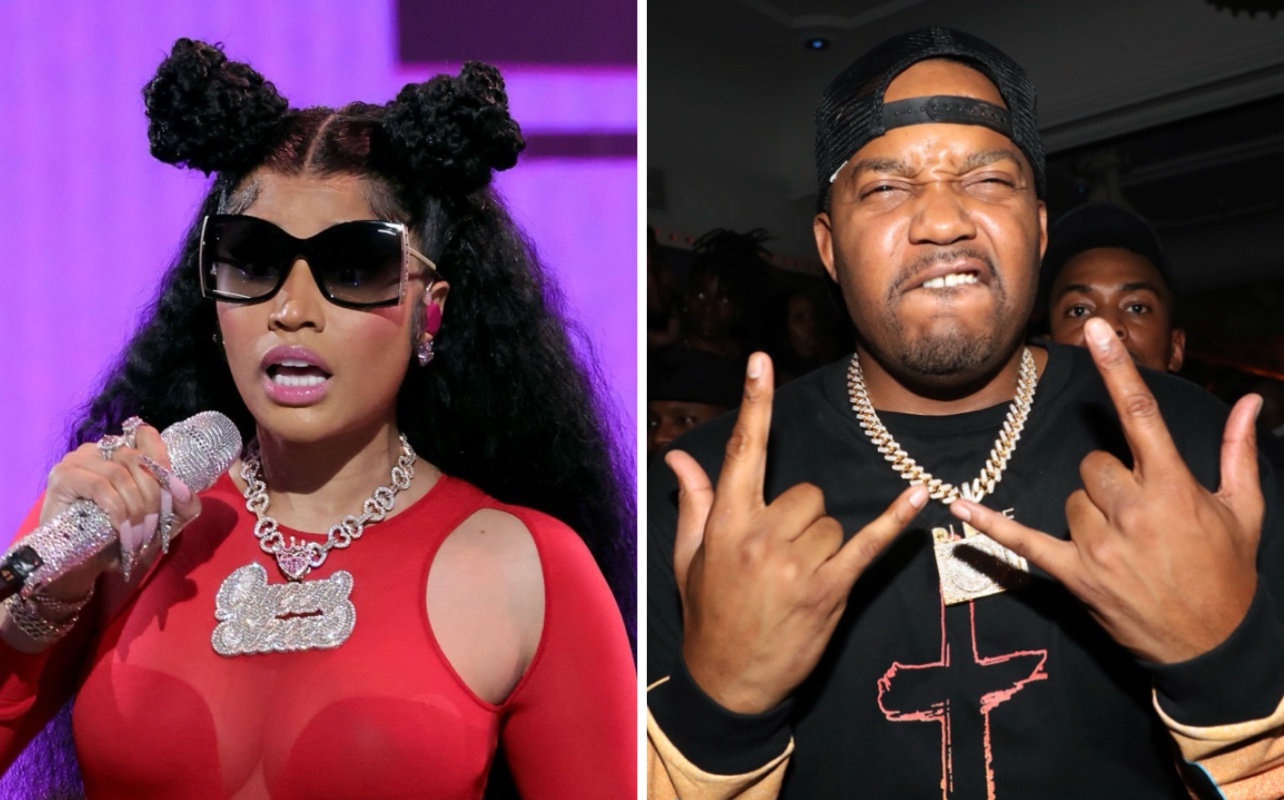
Just because Nicki Minaj rapped about signing her fan's "boobs" doesn't mean she's okay with her DJ following suit.
Just because Nicki Minaj rapped about signing her fan’s “boobs” doesn’t mean she’s okay with her DJ following suit.
The superstar rapper took to Twitter on Sunday, May 26, to respond to a photo showing her longtime DJ, DJ Boof, signing a fan’s breasts. While the X-rated autograph was at the fan’s request, Minaj still wanted the Barbz to know that she was not in support of her DJ’s actions.
A Minaj fan page reposted the photo DJ Boof shared on his Instagram Story showing him signing a fan’s breasts during one of Minaj’s recent European tour stops.
“I’m really famous. They asked me to sign their boobs,” Boof captioned the post.
Nicki Minaj’s boob autographs have been a signature for the “Everybody” rapper since the release of her 2009 mixtape debut Beam Me Up Scotty. It was on the track “Itty Bitty Piggy” when the Queens native rapped the line “You know I keep a bad bi*ch, let me sign your boobs.”
DJ Boof has been working with Minaj for over a decade, but Minaj made sure he and everyone else knew she would not to condone the behavior.
Last year, DJ Boof opened up about how seriously Minaj takes her live shows and how motherhood has changed her touring style.
“She always moved with a purpose, but now there’s another purpose with her being a mom,” he told Revolt. “With her preparation, she has to make sure of what her child is doing at that time. That comes first before anything.”
Boof went on to elaborate on how much of a “perfectionist” Minaj is about her performances.
“Everything has to be done just right. She never lets up. Artists now perform over their MP3 tracks, and Nicki really rhymes over TV tracks and remembers every word. She takes it very seriously,” he explained. “We might rehearse it 50, 60, or 100 times, and it feels like something else was added in there that we didn’t expect, but it always comes out great. We both pray a lot. The show’s only been getting better and better.”
With how seriously Minaj takes her live shows, she’s not willing to let her DJ impact the success of her tour by crossing the line with one of her fans. She just got released from jail following a brief arrest for drug possession in the Netherlands. The last thing she needs is her DJ catching a charge.
Wu-Tang’s ‘Once Upon A Time In Shaolin’ To Be Played In Australian Art Exhibit
A museum in Australia is giving Wu-Tang fans 10 days to listen to the group's rare album "Once Upon a Time in Shaolin."
Wu-Tang fans willing to travel to Australia will finally get a chance to listen to the one copy of its ultra-exclusive album “Once Upon a Time in Shaolin,” thanks to a 10-day museum exhibit.
The rare album, released in 2015, is on loan to Tasmania’s Museum of Old and New Art (Mona) from June 15 to June 24 and will be played as a 30-minute sample during small listening parties, BBC reports. As part of Mona’s “Namedropping” exhibit,” members of the public will get a chance to hear the most expensive record ever sold.
“Every once in a while, an object on this planet possesses mystical properties that transcend its material circumstances,” Mona Director of Curatorial Affairs Jarrod Rawlins said. “Once Upon a Time in Shaolin is more than just an album, so… I knew I had to get it into this exhibition.”
The legendary hip-hop group recorded the album in secret in New York City and produced it in Marrakesh between 2006 and 2013. “Once Upon a Time in Shaolin” includes all nine surviving members of the group and features pop icon Cher and “Game of Thrones” actress Carice Van Houten.
After finishing the album, Wu-Tang aimed to combat the power of the online streaming era and how it cheapened the value of music by using “a 400-year-old Renaissance-style approach to music, offering it as a commissioned commodity.” Designed as a piece of fine art, the album sits inside an ornate hand-carved nickel box and includes a leather-bound manuscript containing lyrics and a certificate of authenticity. The owner also receives a legal condition that they cannot release the 31 tracks for 88 years.
“It’s a unique original rather than a master copy of an album,” Rza said, likening the record to a Picasso art piece or Egyptian artifact.
Only a select few have listened to small parts of the 31-track album in the nearly 10 years since its release. In 2015, A group of potential buyers and media had the privilege of listening to a 13-minute section of the album before disgraced drug firm executive Martin Shkreli purchased the album for $2 million.
In 2016, Shkreli streamed snippets of thealbum on YouTube to celebrate Donald Trump’s presidential election win. Two years later, US prosecutors seized the album after the investor and businessman was convicted of fraud. He served over six years in federal prison and was fined over $70 million.
The album was eventually sold to digital art collective Pleasr, which purchased the album in 2021 for $4 million using cryptocurrency. They have since put the exclusive recording on loan to Mona for the “Namedropping” exhibit, which takes a deep dive into status, notoriety, and “the human pursuit.”
Mike Tyson ‘Doing Great’ After Medical Scare On Recent Flight
'He became nauseous and dizzy due to an ulcer flare-up 30 minutes before landing. He is appreciative to the medical staff that were there to help him.'
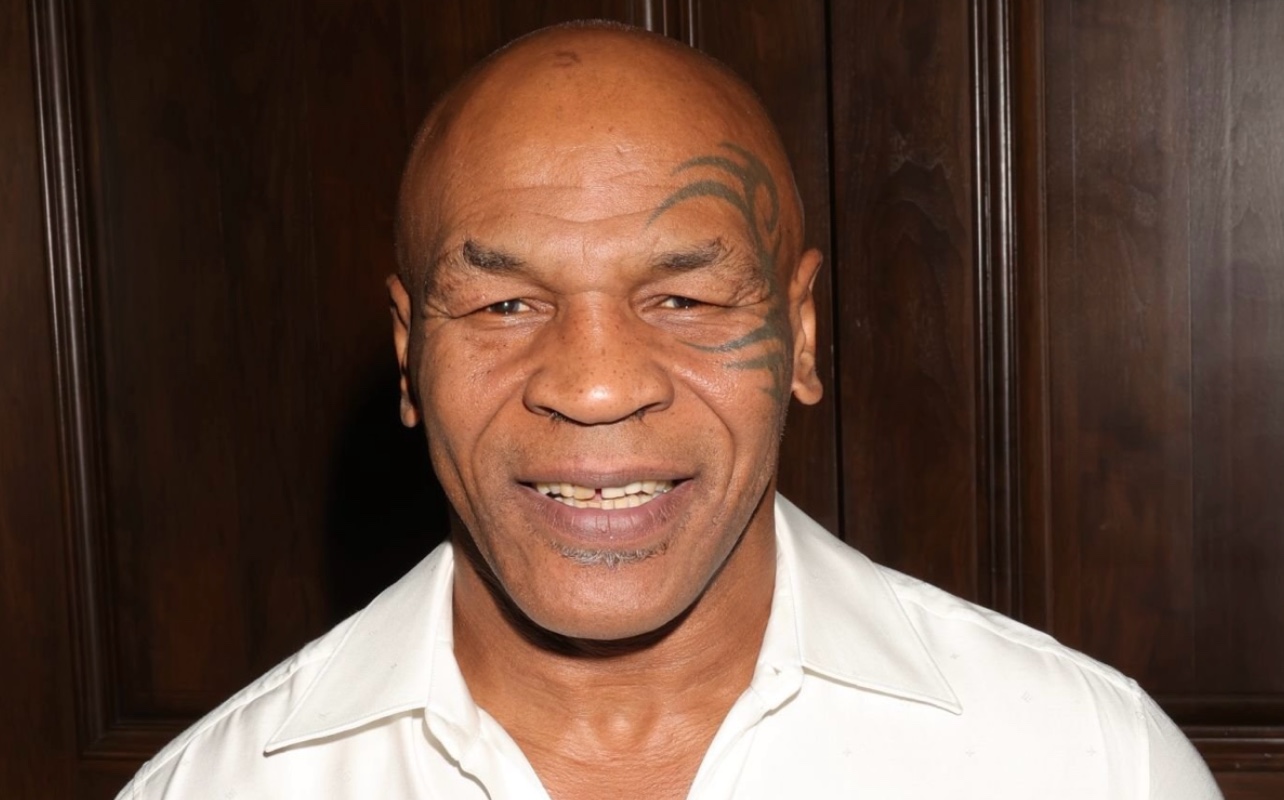
A representative for Mike Tyson said the former boxing champ is “doing great” following his health scare over the weekend
“Thankfully Mr. Tyson is doing great,” Tyson’s representative said. “He became nauseous and dizzy due to an ulcer flare-up 30 minutes before landing. He is appreciative to the medical staff that were there to help him.”
Although the flight was delayed two hours, according to In Touch Weekly, it had nothing to do with Tyson’s medical condition. The plane reportedly needed to cool down as Miami temperatures caused overheating.
Passengers received a pre-recorded message requesting the aid of medical personnel, about 30 minutes before landing.
“Mike had some kind of medical emergency on the plane and paramedics boarded,” an unidentified passenger told In Touch Weekly. “Before the paramedics arrived the flight issued an announcement asking for a doctor—the message even came on everyone’s screens.“
Tyson’s medical condition occurred a month before his high-profile boxing match with Jake Paul on July 20 in Arlington, Texas, at AT&T Stadium. The champion’s medical condition has not deterred him forging on with the scheduled event, as of yet.
The match, sanctionedin April by the Texas Department of Licensing and Regulations, will stream live on Netflix.
The Brooklyn-bred boxer, who will be 58 at the time of the match will fight Paul, 31 years his junior. The age gap between the two men is the largest in professional boxing history.
Tyson has a record of 50 wins and 6 losses. Paul has a professional boxing record of 9-1. According to CNN, the fight will be Tyson’s first since he faced Roy Jones Jr. in a November 2020 fight and his first professional match since 2005.
Gen-Z Graduates Face Employment Market Concerns About Pro-Palestine Protests
Huy Nguyen, a Chief Education and Career Development Advisor, sounded the alarm that companies who ask about potential employees engaging in protest risk crossing a line into potential discrimination over political views.
In November 2023, shortly after the Oct. 7 attack by Hamas that triggered several months of Israeli attacks on Gaza, news outlets talked to workers who shared that companies were targeting them for expressing pro-Palestinian views. Now, after students who protested the Israeli response in Gaza have graduated, some employers are allegedly not willing to hire them.
As CNBC reports, a survey of 1,268 business leaders conducted by Intelligent.com reflects an increased unwillingness from employers to hire new graduates, with some employers citing their belief that those graduates could exhibit ‘confrontational’ behavior in the workplace.
According to the survey, “The reluctance to hire protestors stems from concerns that they may exhibit confrontational behavior (63%), are too political (59%), or could potentially make workers uncomfortable (55%). Additionally, some business leaders perceive protestors as liabilities (45%), dangerous (40%), lacking adequate education (24%), or holding conflicting political ideologies to their own (23%).”
Employers across industries in the U.S. are firing employees and expelling students for expressing solidarity with Palestine.
The punishments could violate anti-discrimination laws and free speech rights. pic.twitter.com/tjdfrKATV6
Fresh graduates in the #UnitedStates looking to find a new job are instead met with employers not willing to hire them because of their political views and participation in pro-#Palestine protests. https://t.co/yQFUk4HQOH
— Al Mayadeen English (@MayadeenEnglish) May 27, 2024
This survey seems to indicate that the climate has worsened both for Gen-Z workers in general and those who have expressed pro-Palestinian views since a November 2023 report from Prism, which indicated that employers were retaliating against workers who expressed those views.
Corey Saylor, the research and advocacy director for the Council on American-Islamic Relations (CAIR), told the outlet that they received an outsized number of requests between Oct. 7-24, nearly three times their 16-day average, which reflects the bias in how those who support Palestine were treated.
“That gives you a sense of the disproportionate nature of the incoming complaints and reports of bias and requests for help that we’re seeing. Usually, as an activist, you get used to it. You get targeted; that is part of the deal,” Saylor said. “I cannot recall ever seeing individual people engaging in free speech, joining the political dialogue in this nation, getting targeted in the way that I’ve seen this time around.”
Ryna Workman, a law student at NYU and the former president of SBA, NYU’s Student Bar Association, was removed as president over a newsletter they sent out that called for a ceasefire and expressed solidarity with the Palestinian people. Now, increasingly common positions cost Workman their position at SBA and a potential employment opportunity.
As Workman told Prism, it was more important to them to speak up for what they believed than to stay silent, “Don’t let these consequences you are facing discourage you from speaking out for what you know to be true, for what you believe in, and for trying to stop this loss of human life,” Workman said. “Because that is more commendable than any honor, than any job than any award will ever be.”
Huy Nguyen, a chief education and career development advisor, sounded the alarm to Intelligent that companies who ask about potential employees engaging in protests risk crossing a line into potential discrimination over political views.
“This survey highlights the unfortunate reality where political issues, social activism, and divisiveness are spilling over into the workplace,” Nguyen said. “As political polarization intensifies, companies appear more likely to make biased judgments about recent graduates based on ideologies or personal behaviors, like protesting or social media activities.”
Nguyen continued, “This trend poses risks for companies by potentially creating a toxic work environment and may also have legal ramifications if they are discriminating based on political beliefs during the hiring process. It would be prudent for both employers and job seekers to keep politics out of the hiring process. Focusing on a candidate’s qualifications, demonstrable skills, and personal merit is the best way to consider how well someone might succeed in the given role they are applying for.”
More Customers Prefer ‘Quiet’ Hair Appointments At The Salon
One hair stylist believes the growing shift toward silent services comes from COVID-induced social anxiety.
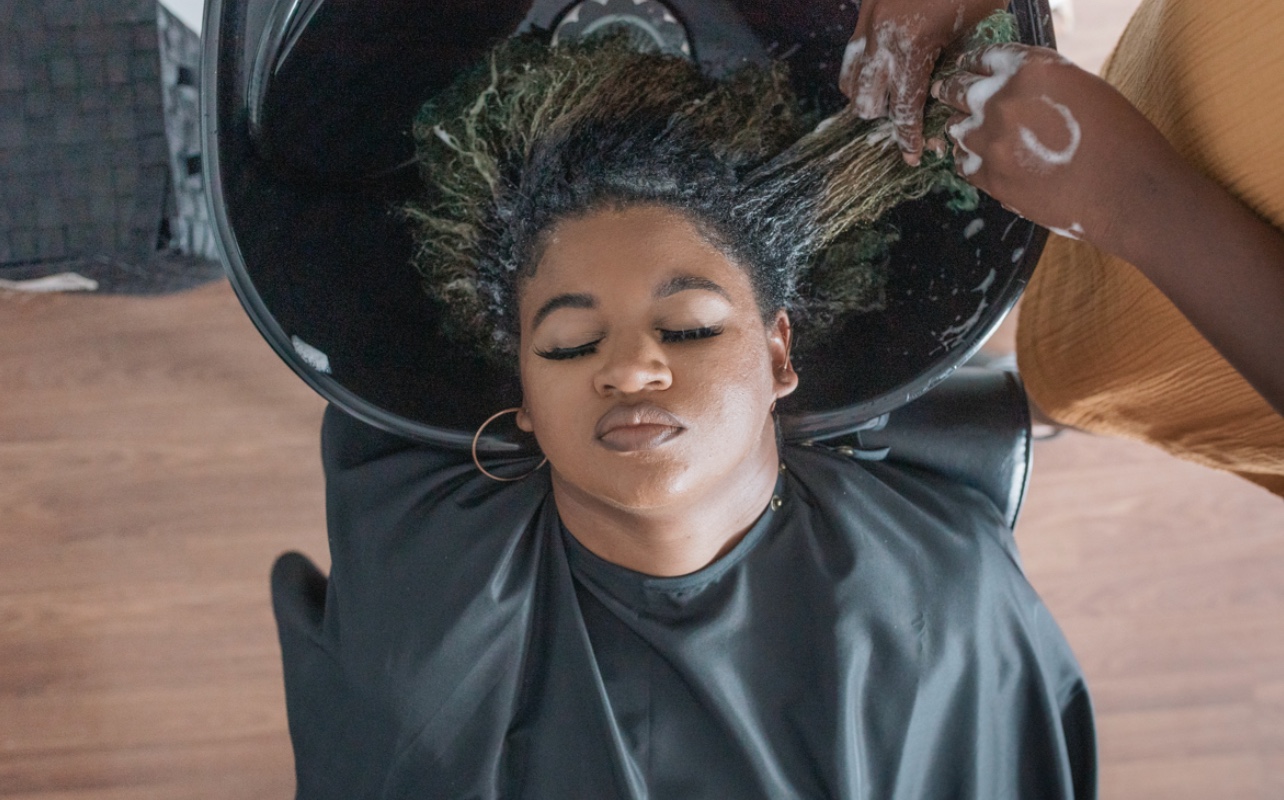
Hair salons are adapting to the needs of its more socially reserved clients. The option for a “quiet” hair appointment is gaining popularity among customers, FOX 5 Atlanta reports.
Traditionally at Black-owned salons, the beauty shop was the center of gossip and fellowship between clients and the stylists. However, that atmosphere is giving way to a less communal experience. Nowadays, customers can opt-in to silent services, where the only sounds heard come from the tools themselves.
Shocked at the shift, hair-stylists noticed that more clients are choosing to forego chatting in favor of silence. Jenna Bisk, a director at New York City’s San Bercato Salon, has witnessed the growing phenomenon at her shop. She correlates its popularity to the introduction of remote working.
“We didn’t think it would be as popular as it is right now. Probably we get about 1-2 [requests] a day,” explained Bisk to FOX 5 Atlanta. A lot of people are working remotely right now but they still want to come in and get their hair done and they can do that while they’re here.”
Moreover, the hair stylist believes that the social anxieties prompted by the COVID-19 pandemic may also be to blame.
“…There’s a lot of people who might be nervous to come in and have to make small talk with a service provider,” Bisk explained.
The number of anxiety disorders rose significantly during COVID-19. According to an article posted by the National Library of Medicine, these specific cases increased by 25.9 percent or an additioanl 76.2 million anxiety diagnoses worldwide.
Although the world has relaxed on COVID restrictions, side effects linger—social distancing in many instances is an unspoken norm in the grocery store. The full scope of COVID protocols’ negative impacts remain unclear, though the quiet hair appointment could marks a distinct change in how people engage with one another.
Durham, NC Seeks $37K Refund After Monica Is A No-Show At Bimbé Festival
A booking agent with Monica's team stated local Durham promoter, Christopher Weeks, never worked with anyone regarding the festival.
Durham, North Carolina, Mayor Leonardo Williams finds himself in the midst of a controversy after singer Monica allegedly failed to appear as the headliner at the 54th Annual Bimbé Cultural Arts Festival despite the city paying $37,000 to secure her performance.
Contracts reveal the city wrote checks totaling $45,000 to local Cary promoter Christopher Weeks to book Monica, with the final payment issued just a day before the event. According to CBS17, that check never cleared, leaving Durham out the sizable sum.
The outlet reported that Williams has defended himself since the matter unfolded, stating, “The mayor did not steal any money, and the mayor did not spend $37,000 to an unknown person.”
Weeks allegedly contracted with one of Monica’s booking agents regarding the performance. “She did not perform,” Weeks said. “Everything was done on the city’s and my part to ensure the show would happen…The discrepancies were on her end and had nothing to do with the City of Durham or myself.” However, Maurio Jackson, a booking agent with Monica’s BLUEICE Group, refuted Weeks’ statement. “Unfortunately, Chris did not work with anyone on Monica’s team for the mentioned event,” Jackson said.
The contract stipulated that a no-show of the artist would require a full refund. Weeks stated that the funds would be returned, and he would bring it back to the city once he received it.
Previously, Durham had stated, “Working with a booking agent, whom we’ve worked with and trusted for years, we have been under the impression since Jan. 19, 2024, and then reaffirmed again on Feb. 9, 2024, that arrangements had been secured for the singer to appear, and we began publicizing her appearance.”
A day before Bimbé, Monica took to social media to address the matter. In a now-deleted post, the “Angel of Mine” singer claimed she was entirely unaware of the event. She confirmed to fans that she would not appear at the festival due to other scheduled performances and having no prior knowledge of the event. According to Mayor Williams, festival attendees pulled up to support their community and other artists in the festival’s lineup despite their disappointment with Monica’s absence.
Williams assured that the money would be returned to Durham, and their open investigation would reveal more information about the incident.
Branding Strategist Talks Building Brand Assets Worth Millions
Originally Published May 23, 2002.
Maya Gray, founder and CEO of Day Dream Design Firm, a Little Rock, Arkansas-based branding company, is now teaching entrepreneurs how to build a brand asset worth millions to new and emerging businesses.
The Day Dream Design Firm is a company specializing in brand strategy, website development, and social media branding for service providers. As of today, the company is offering its workbook to take advantage of professional and high-quality branding, which otherwise may not have been possible for early-stage companies.
Maya comments, “Branding encompasses business operations, marketing strategies, customer and competition analysis, as well as the design aspect. We are currently building relationships nationwide to connect our clients with resources that help them grow their businesses.”
Day Dream Design Firm has been around since 2018 and has helped countless small to midsize businesses throughout the U.S. to gain access to luxury branding services at an affordable price.
In his statement, Kevin Williams of Arkansas Black Businesses said, “Maya created a brand that is a million-dollar brand for Arkansas Black Businesses. She revamped the brand, and I don’t cry often, but I’m telling you, I was in tears. It was that good.”
The company has a mission to empower entrepreneurs to live their legacy lifestyle by creating brands that are strategically designed to endure throughout generations. One way the company helps the community is by offering the “7 Questions You Never Asked Yourself About Your Brand”. The firm offers this workbook at no cost to business owners and entrepreneurs.
“‘Always Give Back’ is one of our core values. When I was 17-years-old, my church needed exposure but couldn’t afford to hire a graphic designer, let alone a marketing team. The church wanted to attract new members and increase enrollment. Unfortunately, I was unable to assist my church. This motivated me to pursue a career in brand development. This design firm is dedicated to a meaningful part in the success stories of others who are also striving to make a positive impact in the world,” said Gray.
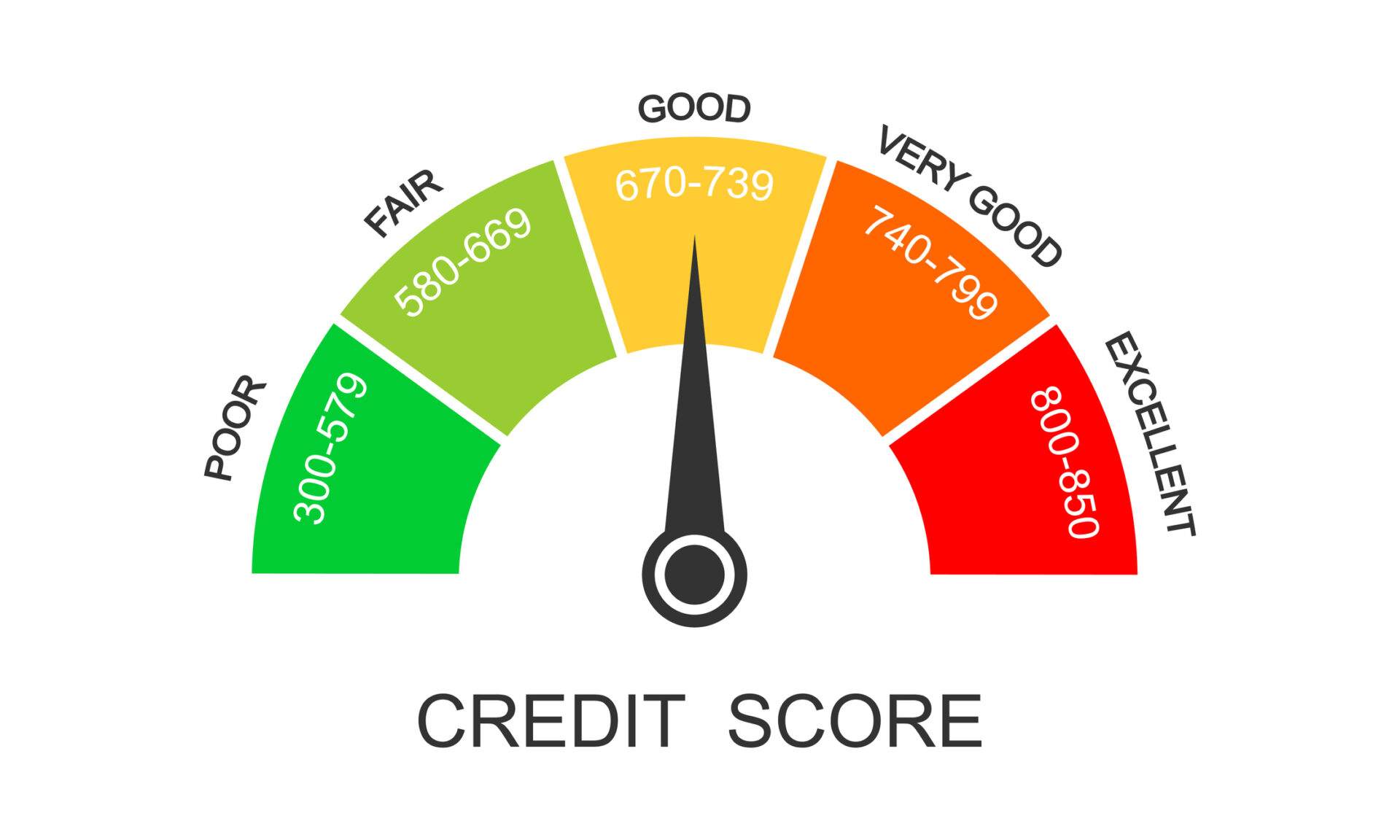
Credit is nothing to play with. It can work in your favor or completely work against you. BLACK ENTERPRISE caught up with founder Christia’n Annice of eMillions+, a credit repair agency, who gave us four tips on how to increase your credit score.
Pay your bills on time
Delinquent payments and collections can have a major negative impact on a credit score. According to FICO data, a 30-day delinquency could cause as much as a 90- to 110-point drop on a FICO Score of 780 for a consumer who has never missed a payment on any credit account.
In comparison, as stated on Equifax, a consumer with a 680 FICO Score and two late payments (a 90-day delinquency on a credit card account from two years ago and a 30-day delinquency on an auto loan from a year ago) would experience a 60- to 80-point drop after being hit with another 30-day delinquency.
Keep balances low on credit cards and other “revolving credit”
When your balance is low so is your utilization percentage, which is extremely important to your score. To boost your score, pay down a credit card with a high balance relative to its credit limit. Also, try and increase your credit limits. You can do this by calling credit card companies to negotiate.
Apply for and open new credit accounts only as needed
Applying for new credit accounts for about 10% of your FICO score, so the impact is relatively small but still important to consider.
Opening new accounts is a different scenario. If you only have had credit for a short time, don’t open a lot of new accounts too rapidly. As stated on MyFico, new accounts will lower your average account age, which will have a larger effect on your FICO Scores if you don’t have a lot of other credit information.
Pay off debt rather than moving it around
It is extremely important to pay off your debt. A lot of people use moving it to different cards as a strategy but, the only sure fire way to make sure that it is affecting your score in a positive way is to pay it off.