Men's Cognition, living conditions

Research Suggests Living Conditions Have An Effect On Black Men’s Cognitive Skills

According to the study, their findings align with existing research, but the study’s authors say that more attention on Black men is needed due to a lack of studies on factors that contribute to their cognitive declines.


A new study from the University of Kentucky linked the environments of Black men with an increased risk of developing Alzheimer’s Disease or other cognitive impairments. According to the study, more research about Black men’s risk of developing cognitive impairments could allow for those impairments to be prevented altogether. 

According to the study, their findings align with existing research, but the study’s authors say that more attention on Black men is needed due to a lack of studies on factors that contribute to their cognitive declines. 

“Black men are often underrepresented in scientific studies, leading to a lack of comprehensive understanding of factors influencing their health outcomes. This underrepresentation hinders the ability to draw accurate conclusions and develop targeted interventions that address the unique challenges faced by Black men,” the study warns. 

The Black men who participated in the study were asked by the authors of the study a range of questions about their living conditions and cognitive function, and their answers revealed that Black men, in particular, are susceptible to subjective cognitive decline (SCD) due to a range of contributing factors.

“We also found a significant relationship between bodily symptoms and SCD — increased bodily symptoms like pain, aches, pressures in the body, breathing difficulties, and tiredness increased the likelihood of Black men in the study reporting the presence of SCD,” the study stated.

The study also discovered that the longer that Black men live in their neighborhoods, the more significant the presence of SCD, which the study authors said could be due to prolonged exposure to environmental stresses, socioeconomic disadvantages, or social isolation. 

“While neighborhood problems had a trending association with SCD in this study, other studies showed that living in disadvantaged neighborhoods may increase the risk of cognitive decline. People in these neighborhoods experience poor access to quality education, healthcare facilities, and public resources, high pollution (e.g., noise, air), and poor living conditions. Therefore, it is reasonable to expect that longer stays in neighborhoods with greater problems will increase the risk of cognitive decline,” the study’s authors wrote.

They continued, “Overall, our findings highlight the role of SES, sleep difficulties, length of residency in a neighborhood, and bodily symptoms in shaping subjective cognitive experiences among Black men. It illuminates the importance of considering a holistic approach when examining cognitive health, incorporating both individual and contextual determinants. This study’s emphasis on understanding these factors can contribute to the early identification of individuals at risk for cognitive decline, enabling timely interventions, lifestyle modifications, and potential preventive measures. It contributes valuable insights to the broader understanding of cognitive health disparities, emphasizing the need for nuanced and culturally sensitive approaches to address subjective cognitive decline in Black men.”

In their conclusion, the study authors posited that the study’s findings illuminate the necessity of timely interventions, lifestyle changes, and potential preventative measures tailored to the unique needs of Black men. They recommended that the continued exploration of SCD within populations often ignored or underrepresented is critical to advancing the understanding of cognitive health disparities and promoting proactive measures for the overall well-being of said underrepresented populations. 

RELATED CONTENT: Alzheimer’s Drug That Slows Symptoms Of The Fatal Disease May Be Less Effective For Black Patients
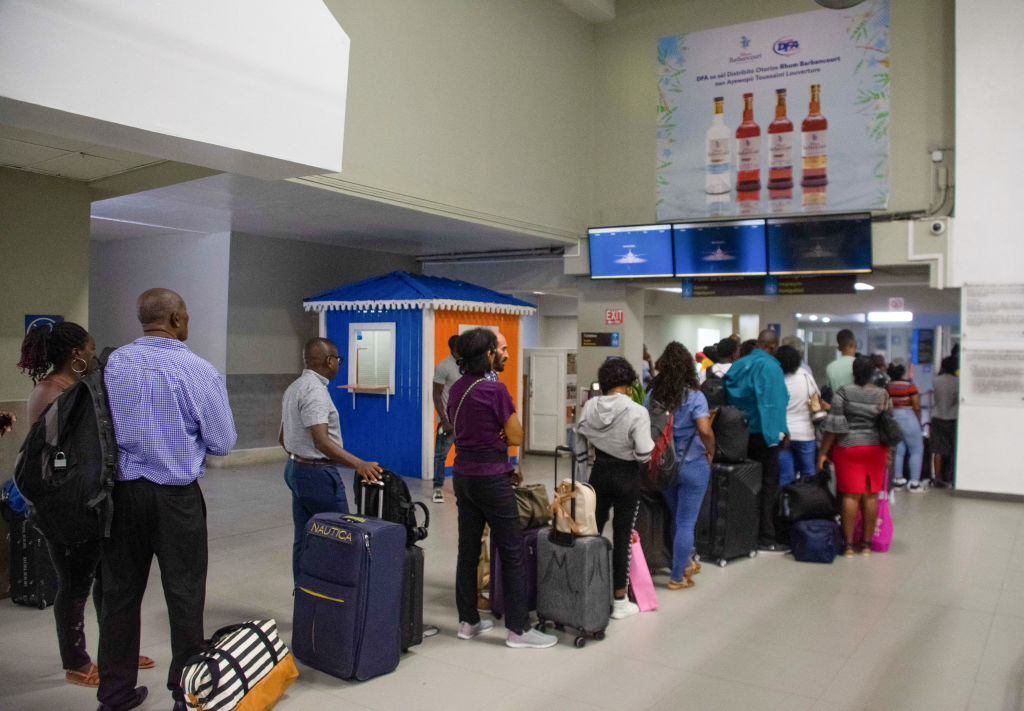
Haiti, Toussaint Louverture Airport in Port-au-Prince, International, Global, Horsford

Haitian Migrants Face Harsh Opposition In Small Alabama Town

Shouldn't everyone be welcomed?


A group of Haitians living in the small town of Albertville, Alabama, have anti-immigration residents up in arms, AL reports

As immigrants from the nation of Haiti came to town to work at a nearby chicken processing plant, a group of “concerned” citizens started a Facebook group to express their grievances online. Members of “Concerned About Albertville” openly highlighted why they are against Haitian immigrants living in Albertville, making racist and offensive remarks. “If they are coming from Hati (sic) … THEY ARE GANG members and the ones they put out of the prisons,” one now-deleted comment mentioned. 

“WHO KNOWS they are letting anyone come, could be the worst of the worst. They act like it.”

Similar sentiments were shared during an in-person public hearing on Aug. 13. One woman expressed concern about mass migration and suggested stopping it. “The issue today is the mass migration coming here and what we’re gonna do about it,” a woman said. “We have to cut off the housing, and that’s gonna be number one.”

As others agreed, another participant went a step further to say citizens of the Caribbean island have a certain smell to them. “I’m gonna tell you something else. I’ve been to Haiti. It’s got a smell to it. These people have smells to them. … These people are not like us. They don’t assimilate,” one man said. 

“They are not here to assimilate. They’re not here to be Americanized. They are not here to learn Alabama history, and they don’t care about our schools.”

For months, Haiti has been riddled with violence and political unrest. In March 2024, Haitian gangs launched massive attacks on at least three police stations in the capital city of Port-Au-Prince and carried them out the next day. President Joe Biden enlisted the United States’ help, announcing an 18-month extension for the temporary protection status for more than 300,000 unauthorized Haitian migrants. 

Unique Dunston, the founder of Reclaiming Our Time, who has been fighting to remove the Confederate flag for years, says he isn’t surprised by the pushback. “We saw the same pushback when the Hispanic community started coming in,” Dunston said. 

“Now we’re seeing that resurface with the Haitian community.”

However, not everyone is willing to turn the other cheek. During a second public hearing on Aug. 26, residents and some immigrants came together to try to ease tension between the groups. 

Hosted at the Mt. Calvary Baptist Church, according to Sand Mountain Reporter, Pastor David McMillen came together with Haitian Pastor Dukinson Merilien to help navigate the conversation of concerned residents, who formed the group as “Concerned About Alabama.” “If I were to ask us here today in a contemporary audience who is our neighbor? We would have to say, everybody, not just the person living on either side of us but every person in the world who crosses the streets of Albertville, Alabama, or Marshall County or the state of Alabama as a whole, folks, that’s our neighbor,” McMillen said. 

“Friends, this is not a white community, this is not a Hispanic community, this is not a Haitian community, this is a community of neighbors. It’s our community, so we need to see what we can do to help make each other’s circumstances and situations be better than what they are.”

Once a town with a 98% white population, Albertville is now home to close to 13% foreign-born residents as immigrants have made a home to work jobs at chicken plants.

hoodie, banned

Hoodies, Cell Phones, All-Black Clothing, Among Banned Items At Schools Nationwide

Kids who plan to use their cell phones are in for a rude awakening this school year.


A new school year has brought forth new bans at educational facilities nationwide.

CNN reports that the new sweep of banned items includes cell phones, hoodies, all-black clothing, and even removing mirrors from school bathrooms. Rules vary by state and school district. However, many welcome students back to school with new bans and dress code restrictions to improve safety and student engagement.

Many officials cite concerns for students’ physical or mental well-being as the rationale behind the new standards. Many teachers also have issues with students using their cell phones during class.

A June report by the Pew Research Center highlights that 72% of U.S. high school teachers say cell phone distraction is “a major problem in the classroom.” As a result, about a quarter of states have laws that restrict device use in schools or that recommend or encourage limiting it.

New bans against cell phones and other smart devices come with every new school year. Fort Wayne Community Schools in Indiana bans students from using any device or accessory that allows a user to access the internet during school hours.

Upon returning to school, students are given a Yondr pouch—a fabric bag no bigger than the average smartphone—that they bring to school each day to lock their cell phones and smart devices. At the same time, Fort Wayne has found a solution for its 28,000 students; New York City Public Schools and Los Angeles Unified School District are weighing how to handle the cell phone issue.

In New York City, hundreds of principals have asked New York City Public Schools Chancellor David Banks to “take the phones,” he says. However, some parents demand to stay in touch with their children in an emergency.

Dress codes are also being enforced nationwide. Bessemer City High School in Alabama banned open-toe slide sandals, hooded sweatshirts, and even Crocs or foam clogs. Students who are caught wearing any of these items could face suspension.

Students can’t wear tights, hats, sunglasses, bubble slide shoes, headbands, bonnets or bandannas, midriff shorts and shirts, tight-fitting bodycon dresses, shirts and skirts, and jeans with holes above the knees.

“This policy is a dress code to help foster a sense of community and reduce distractions, allowing students to focus on their studies,” the school stated on Facebook in July.

Charles Middle School in El Paso, Texas, placed a ban on all-black clothing this school year due to it being associated with mental health issues like depression.

“These changes include substituting color options for students, mandating safe footwear, and eliminating sweatshirts with hoods and pockets to reduce opportunities for hiding, using, and distributing prohibited items,” El Paso Independent School District spokesperson Liza M. Rodriguez said.

Some schools have removed bathroom mirrors to prevent meetups they learned were happening between students. Administrators in Alabama’s Alamance-Burlington School System removed mirrors in the girls’ bathrooms after they noticed middle school students taking more frequent bathroom breaks where up to 15 students would use the restroom at once.

The bathrooms “became a meetup place, and I think that they were seeing that some of the reasons were because they were making videos and things like that, while they were in the bathroom, in front of the mirror,” district spokesperson Emily-Lynn Adkins.

More bans could be on the way as more school administrators look for ways to improve student engagement and safety.

RELATED CONTENT: Staged ‘Slave Auction’ Prank Causes California High School Football Team To Forfeit Season

Knoxville, Black-Owned Restaurant

State Of Pennsylvania Increases Contracts To Black-Owned Businesses By 30%

Pennsylvania spent $136 million with Black-owned and Hispanic-owned businesses in 2022-23, a 30% increase from the $104 million reported the previous year.


More minority-owned businesses in Pennsylvania are receiving state contracting dollars. Of the nearly $700 million received under Gov. Josh Shapiro and Lt. Gov. Austin Davis for 2022-23, the state government spent $136 million with Black-owned and Hispanic-owned businesses. That is a 30% increase from the $104 million reported last year.

These figures, revealed in a news release, come months after Gov. Shapiro signed an executive order to create the Pennsylvania Advisory Council for Inclusive Procurement (PACIP). The 16-member council advises state agencies on ways to make state contracting opportunities more inclusive.

“Governor Shapiro and I recognize that small businesses and small, diverse businesses are the backbone of our economy and the beating heart of communities across the Commonwealth,” Lt. Gov. Austin Davis, who chairs PACIP, said in a statement. “When we took office, we pledged to increase and open up new doors of opportunities for these businesses to compete for — and win — state contracts.”

He adds, “I’m excited to see our efforts are already bearing fruit, but there is still much more work to be done as we work to expand economic opportunity and help Pennsylvania families build generational wealth.”

Steps To Make Procurement Process More Fair

Over the past year, the Shapiro-Davis administration has taken several steps to expand opportunities to improve the procurement process for small businesses in Pennsylvania. In addition to the executive order, the administration has launched an initiative to support Pennsylvania-based small and Black-owned businesses by purchasing products from them on Amazon Business.

The administration also created a Mentor-Protégé Program to help Black-owned small businesses compete for state contracting opportunities, reduced the time it takes for the Department of General Services—which manages most of the state’s contracts—to certify a small business and much more.

“These record-breaking investments in small businesses reflect the Shapiro-Davis Administration’s unwavering commitment to creating an inclusive economy. By empowering business owners of all backgrounds, we’re not only fostering economic growth but also ensuring that the benefits of prosperity are shared across every community in Pennsylvania,” said DGS Secretary Reggie McNeil.

RELATED CONTENT: New Jersey Small Black And LGBTQ Businesses Awarded $1.2M In Grants

work meeting, meetings, email, Southern Black Girls, Women's Consortium, dream fund

Southern Black Girls And Women’s Consortium’s Dream Fund Winner Announced

The consortium granted over $526k to these organizations focused on uplifting Black women and girls.


The Southern Black Girls and Women’s Consortium officially announced the Dream Fund winners on National Giving Day, Aug. 28.

The 2024 Black Girls Dream Fund bestows grant-funding opportunities and resources to Black-women-led organizations and projects. These recipients have worked toward uplifting Black girls and women across the southern United States. Led by a collective of Black women dedicated to philanthropy and activism, the consortium uplifts grassroots and national groups that align with its values.

The Dream Fund will promote missions to empower this demographic through this support. The winning organizations work in the consortium’s core funding categories: education, social justice, economics, and more. Grant winners include New Vision MSK and Hope For Youth, Inc. in Georgia, Black Birth Justice in Kentucky, and Justice for Black Girls in Virginia.

This year’s winners received 34 grants, ranging from $10K to $30K. Leadership announced that the grants totaled over $526K; the recipients came from 13 states.

“Announcing Black Girls Dream Fund winners is always a moment of immense pride and joy for us,” Interim Executive Director Chanceé Lundy shared in a statement to BLACK ENTERPRISE. “We are super excited to support a diverse group of projects and organizations making significant strides on behalf of Black women and girls in the South and beyond. Each grantee brings a unique vision and dedication to their work, and we look forward to the positive changes they will bring to their communities.”

Moreover, the Dream Fund provides these underserved groups with a critical pipeline of financial support. According to the Southern Rural Black Women’s Initiative, only 5.4% of $4.8 billion philanthropic investments allocated to the South went to programs centered on Black women and girls.

The Dream Fund also serves as a call to action for all to give more, financially or otherwise. The consortium hopes to shift the landscape of initiatives that change lives.

“Our commitment to transforming the landscape for Black women and girls through the Black Girls Dream Fund continues to drive us,” also stated the consortium’s founder, LaTosha Brown. “This year’s grant recipients represent the very essence of innovation and leadership within our communities. As we celebrate their achievements, we are reminded of the ongoing necessity to support and elevate Black-led initiatives that challenge systemic barriers and ignite change. Together, we are building radical futures where dreams are not just envisioned but realized, empowering the next generation to lead with both courage and conviction.”

The Southern Black Girl and Women’s Consortium also encourages everyone to visit its website to learn more about its mission and the winners.

RELATED CONTENT: Ebony Lumumba Selected 2025 AWP HBCU Faculty Fellow

taxi, wheel chair accessible

Judge Mandates All New York City Taxi Cabs Become Wheelchair Accessible

Small victories and big wins!


A federal judge ruled that all New York City taxi cabs will be required to be wheelchair accessible after a decades-long court-ordered obligation, New York Daily News reports.

On Aug. 30, Judge George Daniels ordered the Taxi and Limousine Commission (TLC) to make all new taxis wheelchair-accessible until the city meets the 50% requirement once agreed upon in a 2013 settlement. A host of disability advocates sued the group in early 2024 after they failed to reach the settlement terms, which included 50% of the city’s 13,587 yellow cabs being wheelchair accessible by 2020. 

The transportation options that flood the streets of the Big Apple have 3,752 handicapable yellow cabs accessible, only 28% of all cabs issued by TLC. However, 42% of taxis make regular trips. Daniels’ ruling now requires the group to abandon its practice of having just 50% of new cabs be accessible and move forward with requiring all new and renewed cabs to be accessible until they reach the goal. “…Retaining the current practice leaves [the TLC] with no concrete prediction for when they would meet the requirement, if at all,” the judge wrote.

Court documents reveal that TLC could have reached 50% accessibility with active cabs by the end of 2024 if every new cab is required to be wheelchair-accessible. TLC once claimed making half of the entire cab fleet wheelchair accessible was impossible, arguing that a stricter mandate would deter drivers away due to the expense of wheelchair-accessible vehicles. However, Daniels rejected their claim. “The record simply reflects a lack of will and creative solution,” he wrote.

According to a press release shared with Black Enterprise, legal representatives for the advocacy groups, which included Taxis For All Campaign, United Spinal Association, 504 Democratic Club, and Disabled In Action, said the groups are pleased with Daniels’ ruling, saying people using wheelchairs deserve the same accommodations as everyone else. The court rightly found that there are more tools the TLC can use to increase the accessibility of its taxi,” Senior Staff Attorney at Disability Rights Advocates Madeleine Reichman said. 

“Wheelchair users deserve to have as many opportunities to use the City’s iconic yellow taxi service as non-wheelchair users.” 

In a statement, TLC’s Commissioner David Do said the ruling is fair and that the city will abide by it.

“Our commitment to accessibility is unwavering, and we will move swiftly to propose rules reflecting Judge Daniels’s decision,” Do said. “Working to ensure that people with disabilities have exactly the same access to transportation as everyone else has always been one of our top priorities, and this only reinforces that commitment.”

At the time of the agreement, signed by Daniels in 2014, he called the settlement “one of the most significant acts of inclusion in this city since Jackie Robinson joined the Brooklyn Dodgers” as more than 98% of the city’s yellow cabs were inaccessible to passengers who used wheelchairs.

RELATED CONTENT: SEPTA Honors Black Trailblazers In Public Transportation

Ice Cream

Inside Lil’ Sumthin’ Sweet: The Newest Black-Owned Ice Cream Shop In The Washington D.C. Area

The co-owners started A Lil’ Sumthin’ Sweet Bar with a simple mission: to create delicious, high-quality baked goods that bring joy to their customers' lives, all while using the best ingredients.


Less than 10 miles outside of the Washington, D.C., area in downtown Silver Spring is Lil’ Sumthin’ Sweet. It’s the newest Black-owned ice cream and dessert shop helping to satisfy those sugar cravings.

The co-owners started A Lil’ Sumthin’ Sweet Bar with a simple mission: to create delicious, high-quality baked goods that bring joy to their customers’ lives, all while using the best ingredients.

“Our business is built on great service, quality products, and community engagement,” co-owner Camilia told Yelp MD Burbs. “We started to get involved with the community, bring joy to those around us, and add a little sweetness to people’s lives. Serving cakes, pies, cookies, brownies, and farm-fresh ice cream, we’ve got a little something for everyone.”⁠

The menu is divided into three sections: “Sumthin’ Special,” “Sumthin’ Scooped,” and “Sumthin’ Extra.”

Sumthin’ Scooped is a nod to ice cream, with more than 16 flavors. The original flavors are vanilla bean, strawberry, chocolate chip cookie dough, and butter pecan. But the restaurant stands out with some of its inventive and other delicious flavors, including apple pie, coconut joy, blueberry cheesecake, and orange pineapple—to name a few.

On the Sumthin’ Sweet part of the menu, guests will find other sweet treats such as cakes, pies, and cookies and seasonal options like cobblers and banana pudding.

The Sumthin’ Extra menu includes waffle bowls, milkshakes, ice cream nachos, and ice cream sandwiches.

“If you have never had ice cream nachos before, this is your chance,” Camilia stated.

The ice cream nachos come with two scoops of ice cream, waffle cone chips, and your choice of toppings, such as caramel sauces, cookie dough bites, and sprinkles.

The dessert shop opened at 8563 Fenton Street, the former home of Smoothie King. Lil’ Sumthin’ Sweet is open daily from 11:00 a.m. to 8:00 p.m.

RELATED CONTENT: Tyra Banks’ SMiZE & Dream Ice Cream Makes D.C. Debut

hamptons, Hamptons

Woman Says She Was ‘Humiliated’ After Hamptons Restaurant Owner Moved Her Table Because ‘Hair Was Too Big’

Rachel Tucker contacted her attorney after HBO star Zach Erdem allegedly threatened to call the police on her at his 75 Main restaurant.


Rachel Tucker, a curly-haired woman visiting 75 Main with her homegirls in The Hamptons, New York, said she felt humiliated after restaurant owner and HBO star Zach Erdem allegedly forced her to move tables because her “hair was too big.”

According to the woman who spoke to The Shade Room Investigates, the owner was summoned after a white family sitting at a table near her complained her hair was in the way. “As soon as I sat down, within five minutes, a man came over to me and said, ‘We have to move you because your hair is too big, and it’s in the way of the table behind you,'” she said.

Tucker’s family owns a home in the Hamptons, and she was enjoying a day out with her visiting friends, who are white. She said she’d never run into an issue during past visits to the restaurant; however, this time, she claimed Erdem asked her to move to a table in the back of his restaurant near the loud DJ booth. “We couldn’t hear a thing,” she said before her party was moved to another table outside.

The woman said she was shocked that hair was an issue at the Hamptons restaurant in 2024. Tucker only ordered a drink while her friends enjoyed full meals. She told her server that she wouldn’t be paying her bill due to the inconvenience. Although her server agreed, the 75 Main employees advised her to do so to avoid Erdem calling the police, which he threatened to do after a back-and-forth with Tucker. “I paid the bill and walked away,” Tucker said.

“I am not racist,” Erdem told TSR and proceeded to inform the outlet of his Black colleagues and Black girlfriends, stating, “I’m always with the Black people.” He denied commenting about Tucker’s hair being too big but claimed her hair was close to the complaining party whenever she backed up. “The guest was very uncomfortable,” he said. The 75 Main owner allegedly told a manager at the restaurant to cancel Tucker’s payment. “I hope it will make her happy,” he said.

Tucker has contacted her attorney, James Walker, regarding the incident at Erdem’s restaurant. Walker described the situation as “racial profiling” and stated the restaurant can’t discriminate just because they want to or put people through “emotionally traumatic” situations. According to the United States Census Bureau’s 2020 Decennial Census, just over 230 Black residents make up Southampton compared to the over 3,000 white residents in the area. The attorney is requesting a public apology and for 75 Main staff to participate in “sensitivity training.” Erdem said he is open to the training for his employees and issuing a public apology.

counterfeit drugs, Prescription

Yale Graduates Create Device Capable Of Detecting Counterfeit Drugs

RxAll now employs over 50 people and serves over 5,000 pharmacies in its network. The company's founding vision, however, still very much guides Alonge and Kao, who told the Yale School of Medicine as much.


Three Yale graduates created a device that can detect the presence of counterfeit drugs after launching a healthcare startup in 2016. Adebayo Alonge, Amy Kao, and Wei Lui launched RxAll in 2016 as a response to their experiences with counterfeit drugs.

According to Afrotech, the trio’s company soon created its first product, RxScanner, a device that lets users authenticate the quality of medicines within 20 seconds. The device pairs artificial intelligence with machine learning to produce a 99.99% accuracy rate.

The company’s vision has now scaled to match its ambitious first product; RxAll is now on a path to provide drug delivery services to over 3 million patients in Kenya, Nigeria, and Uganda and serves as a marketplace for pharmacies and wholesalers to make sure drugs are both safe and affordable for their patients.

“The vision is much broader now,” Alonge told the Yale School of Medicine. “Now, we’re raising the standards of health care delivery across Africa.”

The company has also scaled in size proportional to the funds it received from the Yale School of Health and its current round of Series A funding, which has raised $3.15 million for the young company.

RxAll now employs over 50 people and serves over 5,000 pharmacies in its network. The company’s founding vision, however, still very much guides Alonge and Kao, who told the Yale School of Medicine as much.

The trio founded their company after they experienced traumatic events relating to counterfeit drugs. Alonge told Techcrunch about an experience with counterfeit diazepam that landed him in a coma for nearly a month. 

“I survived a 21-day coma in Nigeria 15 years ago. My co-founder, Amy, was hospitalized in Thailand after taking counterfeit medicine. And Wei lost a family member due to contaminated drugs,” Alonge said.

He continued, “After going through that, information out there further confirmed that what we experienced wasn’t a one-off situation. It’s an ongoing problem; 100,000 Africans die from this problem every year. One million people die across the world from this problem.”

“Just knowing that we can prevent at least one person from having to go through the traumatic experiences that we went through—that’s very much the driving force,” Kao told the Yale School of Medicine.

The product has received rave reviews from Zachariah George, the managing partner at Launch Africa Ventures, a leader of the funding round for RxAll. 

George told Techcrunch, “Launch Africa Ventures is excited to be co-leading this round of financing into a strong, experienced team at RxAll. We believe that RxAll is bridging a major gap in access to quality healthcare in Africa by pioneering a drug delivery platform to enable pharmacies and patients to buy authenticated medicines online. The ability to achieve favorable unit economics and multiple revenue streams by leveraging anti-counterfeiting mobile spectrometer technology, owning the entire drug delivery supply chain and their own payment wallet, provides a massive growth and scaling opportunity across Africa and beyond.”

Duncan Turner, general partner at SOSV and managing director of HAX, told the outlet that he believes the company has a bright future. 

“We’ve been incredibly impressed by RxAll’s ability to scale and meet customer demand. In just the last year, the team has brought together world-class hard tech and operational excellence to solve pressing issues for over a million Nigerians, and we couldn’t be more excited by their vision for the broader pharmaceutical market.”

As Alonge told Harvard Innovation Labs, that vision revolves around ensuring Africans have access to quality controlled medication, a problem plaguing the continent.

“The other platforms in the digital health [space] were trying to replace the existing players… looking to roll up pharmacies…or wholesales,” Alonge told the outlet. “But the issue was [that] they were not really solving a problem; there was already an existing supply chain of wholesalers and pharmacies. What was missing was the quality piece. Most of the existing players were not doing any kind of quality assurance. There are very few businesses in Africa, or otherwise in the startup phase that get to this level of profitability at the frequency and speed at which we did.”

RELATED CONTENT: Carnival Cruises Shares Warning About Purchasing Medicines At International Ports

The Colored Girls, Kamala Harris

‘The Colored Girls’ Understood The Assignment As VP Harris Fought For Democratic Nomination

The Colored Girls said because they understood the rules, "no one" was going around Vice President Harris, "Period."


“The Colored Girls” understand how to move the chess pieces in politics. Thanks to the contributions of a group of iconic Black women political strategists, Vice President Kamala Harris was able to attain the Democratic presidential nomination.

“…That’s what the vice president had the benefit of — we understood the rules,” 2024 DNC Committee Chair Minyon Moore told MSNBC‘s Joy Reid in an exclusive interview. No one was going around Vice President Harris at the point when President Joe Biden decided he wouldn’t be moving forward in the 2024 presidential race, “Period,” the women agreed.

For decades, the women have worked together to help shape American politics, and according to Democratic strategist Donna Brazile, “anyone inside the Democratic Party…who decided to put their hat in the ring had to have dinner with the Colored Girls.” The women previously spoke with President Biden about their thoughts on Vice President Harris, what she represents, and the value she brings to the ticket. Brazile shared that all dinners with “The Colored Girls” are off the record, and the women still maintain lasting friendships with several individuals who sought out the presidential seat.

The Colored Girls thanked the president for supporting Vice President Harris as she assumed her position in the 2024 presidential race. However, the women credited the forward movement of American politics to the contributions of political and civil rights activist Jesse Jackson, who the women came up under. “I learned almost everything I knew from him,” said Yolanda Caraway, founder of The Caraway Group, who was moved to tears when Jackson was brought on stage during night one of the Democratic National Convention.

Tina Flournoy, former chief of staff to Vice President Harris, acknowledged Jackson’s contributions as a party insider. “Once he got inside and opened the door, he made sure the door stayed open for everybody else,” she said. “The number of Black people who became members of the DNC because of something that he negotiated led to all of us being involved in the DNC.” Rev. Leah Daughtry, CEO of the 2008 and 2016 DNC Committees, reflected on the first presidential campaign she helped run in parts of New Hampshire for Jackson after he guided her into the process as a student.

The women also recognized other Black women trailblazers who paved the way, like Coretta Scott King, Hazel Dukes, Cicely Tyson, and Maya Angelou. Daughtry mentioned service as a key factor for The Colored Girls. “We were there to serve, and we still are,” she said.

According to their published book “For Colored Girls Who Have Considered Politics,” the women have worked on presidential campaigns for Jackson, Walter Mondale, Michael Dukakis, Bill Clinton, Al Gore, Barack Obama, and Hillary Clinton. Read more about the women’s journeys and their contributions to politics.

RELATED CONTENT: Here’s How Divine 9 Sororities And Fraternities Are Turning Up The Heat For The 2024 Election 

×